
 Endodontic Rotary Files
 Finishing Burs
 High-Speed Burs
 Low-Speed Drills
 Cosmetic Accessories
 Home Whitening Kits
 Clinic Whitening Kits
 Implant Accessories
 Implant Fixtures
 Prosthetic Components
 Surgical Implant Tools
 CAD & CAM Materials
 Lab Consumables
 Lab Equipment
 Digital Dentistry Devices
 Endodontic Equipment
 General Clinic Equipment
 Restorative Equipment
 Surgical Equipment
 Hand Files
 Irrigation & Medicaments
 Post & Core
 Rotary Files
 Sealers
 Brackets & Wires
 Clear Aligners
 Orthodontic Accessories
 Bonding & Adhesive Systems
 Finishing & Polishing
 Matrix Systems
 Etching Materials
 Composite Materials
 Occlusion Checking
 Bone & Grafting Materials
 Surgical Accessories
 Surgical Consumables
 Cementation
 Impression & Registration Materials
 Temporary Restorations
 Periodontal Instruments & Accessories
 Periodontal Treatment Materials


Dental Zirconia Selection Guide: Strength, Translucency and Clinical Indications


Dental Zirconia Selection Guide should be evaluated through clinical evidence, workflow fit and local operating conditions. A sound dental zirconia selection guide decision connects verified performance with the team, patients and resources that will support it in daily practice.
Zirconia is often discussed as one material, but modern dental zirconia includes multiple compositions, translucencies and strength levels. A disc designed for high aesthetics is not automatically suitable for a long-span posterior bridge, and a very high-strength material may not provide the optical result needed in the anterior region.
Quick answer: Select zirconia by the restoration’s location, span, thickness, connector dimensions, aesthetic demand and the manufacturer’s validated indication. Strength and translucency must be balanced rather than considered separately.
Table of Contents
Why Zirconia Products Differ
Zirconia properties are influenced by yttria content, crystal phase, grain structure, pigmentation and manufacturing. Increasing translucency can be associated with changes in mechanical behavior.
Multilayer discs may include color, translucency or strength gradients. Laboratories should understand which type of gradient is present.
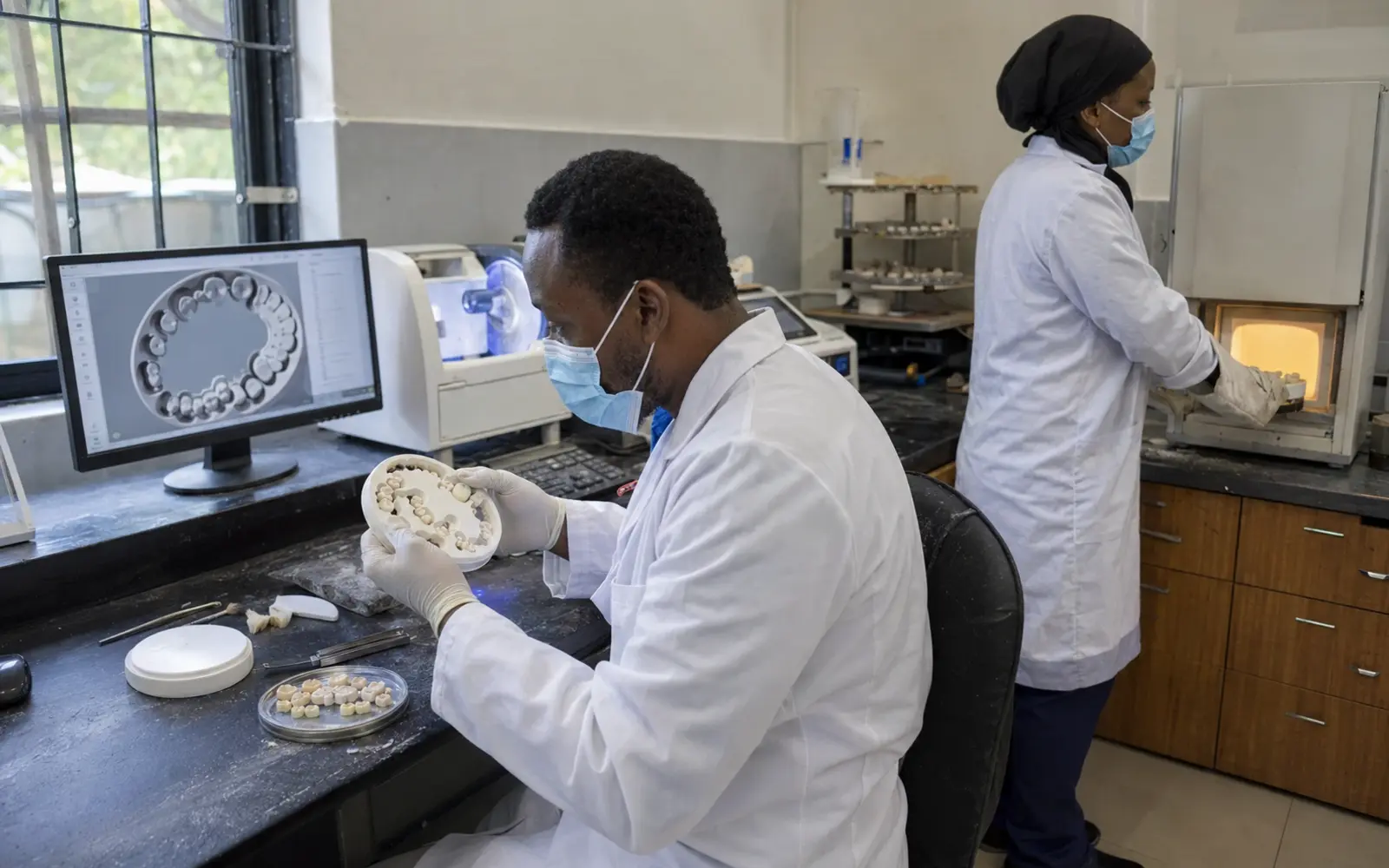
Strength vs Translucency
High-strength zirconia is useful where load and span demand mechanical resistance. More translucent zirconia may improve light transmission and aesthetics in anterior or thin restorations.
Do not select by a single flexural-strength figure. Review the exact indication, minimum thickness and connector requirements.
Monolithic Zirconia
Monolithic restorations are primarily milled from zirconia and characterized with stains or glaze. They can reduce veneering-ceramic chipping and support conservative thickness when the material is indicated.
Surface adjustment must be polished correctly to reduce antagonist wear.
Layered Zirconia
Veneering ceramic can improve form and optical depth, but introduces an interface and potential chipping. The laboratory should design the zirconia framework to support ceramic thickness.
Anterior Restorations
For anterior crowns and short restorations, evaluate translucency, shade, substrate color and stump opacity. Very discolored preparations may require more masking.
The final result also depends on cement color and restoration thickness.
Posterior Crowns
Posterior cases require suitable strength, occlusal design and material thickness. Check functional load, bruxism and available clearance. A strong material does not compensate for sharp internal angles or an inadequate preparation.
Long-Span Bridges
Use only zirconia specifically indicated for the span. Follow connector cross-section, pontic design and sintering recommendations. A highly translucent disc intended for single units should not be extended beyond its validated range.
Sintering
Sintering affects final dimensions, density and shade. Use the validated program, calibrated furnace and correct support. Rapid cycles should be used only when approved for the material and restoration.
Mixing different materials in a cycle may create inconsistent results if their schedules differ.
Milling and Finishing
Maintain burs and machine calibration. After sintering, use zirconia-appropriate instruments with controlled pressure and cooling. Polish adjusted occlusal surfaces before glazing or delivery.
Cementation
Preparation retention and material instructions determine whether conventional or adhesive cementation is appropriate. When adhesive bonding is needed, follow a zirconia-specific surface protocol and avoid inappropriate hydrofluoric-acid etching.
Inventory Strategy
A laboratory can reduce stock by analyzing common shades, disc heights and indications. A controlled range may include:
- High-strength posterior and bridge zirconia.
- High-translucency anterior zirconia.
- Multilayer options for efficient aesthetics.
- Common shades and disc heights.
Aidite Zirconia Through Denta24
Denta24 lists Aidite products for dental laboratories. Review each disc’s current technical data, indication, strength, translucency, sintering program and shade system before use.
African Laboratory Considerations
Stable furnace power, replacement burs and material supply are essential. Keep digital records of disc lot, nesting, program and finishing so remakes can be investigated objectively.
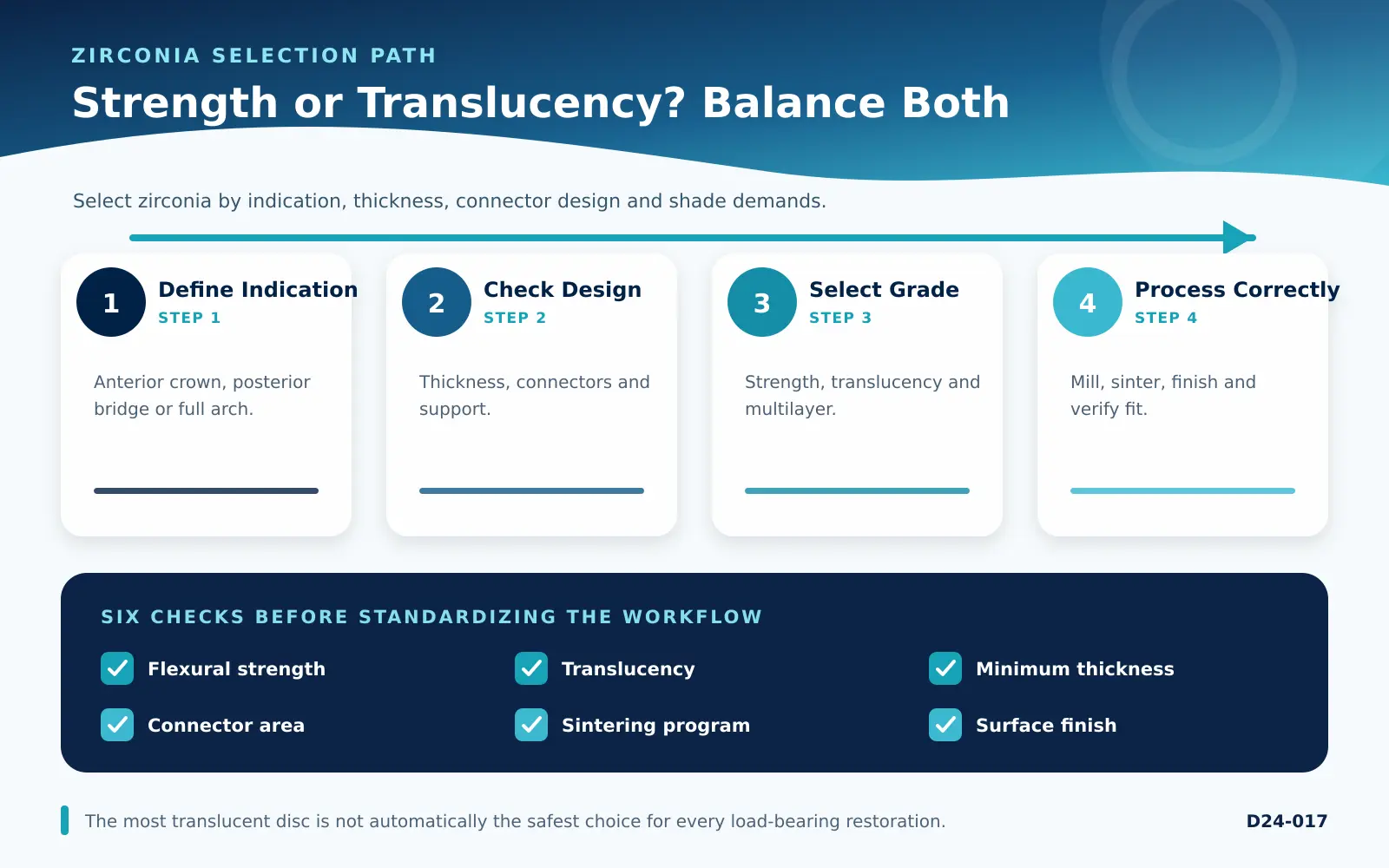
Dental Zirconia Selection Guide: Practical Checks for African Clinics
For African clinics, dental zirconia selection guide is not a product-only decision. It must also account for disc availability, furnace compatibility, validated sintering cycles, electricity stability, shade demand, wall thickness, connector design, finishing and remakes. A resilient dental zirconia selection guide plan should remain workable when supply, connectivity, service access or patient follow-up is less predictable than expected.

Before adoption, document who is responsible, which current instructions for use apply, how outcomes will be measured and what will trigger referral, retraining or a change in protocol. The goal of dental zirconia selection guide is to match the zirconia grade to the restoration rather than using one high-translucency material for every indication and follow the manufacturer’s validated workflow.
- Verify disc availability before implementation or purchase.
- Verify furnace compatibility before implementation or purchase.
- Verify validated sintering cycles before implementation or purchase.
- Verify electricity stability before implementation or purchase.
- Verify shade demand before implementation or purchase.
- Verify wall thickness before implementation or purchase.
- Verify connector design before implementation or purchase.
Use dental zirconia selection guide as an operational decision that is reviewed after real cases. Record complications, remakes, chair time, consumable use, stock-outs and team feedback, then refine the protocol from evidence rather than marketing claims.
Related Denta24 reading: digital dentistry equipment and material trends. This context helps place dental zirconia selection guide within a broader clinical and digital strategy.
Conclusion
Dental Zirconia Selection Guide succeeds when the evidence, local workflow and review plan remain aligned. Zirconia selection should begin with the restoration rather than the disc. Matching material class to indication, thickness and workflow improves aesthetics, strength and inventory control.
Frequently Asked Questions
Why does zirconia have different strengths?
For context, dental zirconia selection guide should always be adapted to the individual case and the current evidence. Composition, yttria content, crystal phase, processing and translucency design influence mechanical properties.
Does higher translucency mean lower strength?
Often there is a trade-off, although multilayer materials may combine different zones.
What zirconia suits long-span bridges?
Use only products whose manufacturer indication and connector requirements cover the planned span.
Can one multilayer disc be used for every case?
No. Demanding posterior, long-span or highly aesthetic cases may require different material classes.
What is monolithic zirconia?
The restoration is milled primarily from zirconia without a full veneering layer.
Why is sintering important?
Temperature, time, furnace calibration and support affect dimensions, shade and properties.
Can zirconia be adjusted after sintering?
Yes, using appropriate instruments and polishing to reduce surface damage.
How should zirconia be cemented?
Use the preparation design and material instructions to choose conventional or adhesive cementation.
What information should the lab record?
Record disc lot, shade, height, nesting, milling, sintering and finishing.
How can inventory be reduced?
Analyze case mix and stock a controlled range of strengths, shades and disc heights.
References and Further Reading
- Aidite 3D Pro Zir zirconia
- Aidite zirconia guide
- Aidite on Denta24
- Evidence on additively manufactured dental zirconia
- Artificial ageing and optical properties of dental zirconia
Professional disclaimer: Material indications, minimum thickness and sintering programs are product-specific and must be verified before production.