 Endodontic Rotary Files
 Finishing Burs
 High-Speed Burs
 Low-Speed Drills
 Cosmetic Accessories
 Home Whitening Kits
 Clinic Whitening Kits
 Implant Accessories
 Implant Fixtures
 Prosthetic Components
 Surgical Implant Tools
 CAD & CAM Materials
 Lab Consumables
 Lab Equipment
 Digital Dentistry Devices
 Endodontic Equipment
 General Clinic Equipment
 Restorative Equipment
 Surgical Equipment
 Hand Files
 Irrigation & Medicaments
 Post & Core
 Rotary Files
 Sealers
 Brackets & Wires
 Clear Aligners
 Orthodontic Accessories
 Bonding & Adhesive Systems
 Finishing & Polishing
 Matrix Systems
 Etching Materials
 Composite Materials
 Occlusion Checking
 Bone & Grafting Materials
 Surgical Accessories
 Surgical Consumables
 Cementation
 Impression & Registration Materials
 Temporary Restorations
 Periodontal Instruments & Accessories
 Periodontal Treatment Materials


Pit and Fissure Sealants: Case Selection, Placement and Retention


Pit And Fissure Sealants should be evaluated through clinical evidence, workflow fit and local operating conditions. A sound pit and fissure sealants decision connects verified performance with the team, patients and resources that will support it in daily practice.
Pit and fissure sealants are among the most conservative interventions in preventive dentistry. They create a barrier over susceptible grooves where plaque and food stagnate and where toothbrush bristles may not clean effectively.
Sealants are particularly relevant in high-caries-risk populations and community programs, but success depends on correct diagnosis, isolation, complete coverage and recall.
Quick answer: Apply pit and fissure sealants to susceptible surfaces in patients who will benefit, using strict moisture control and regular review. Sealants can be placed over selected non-cavitated lesions when diagnosis and monitoring are appropriate.
Table of Contents
Why Pits and Fissures Are Vulnerable
Deep occlusal anatomy can retain plaque and limit cleaning. Newly erupted molars may be especially difficult to keep dry and clean. Fluoride protects smooth surfaces well, but fissures may remain at risk.
Who Benefits?
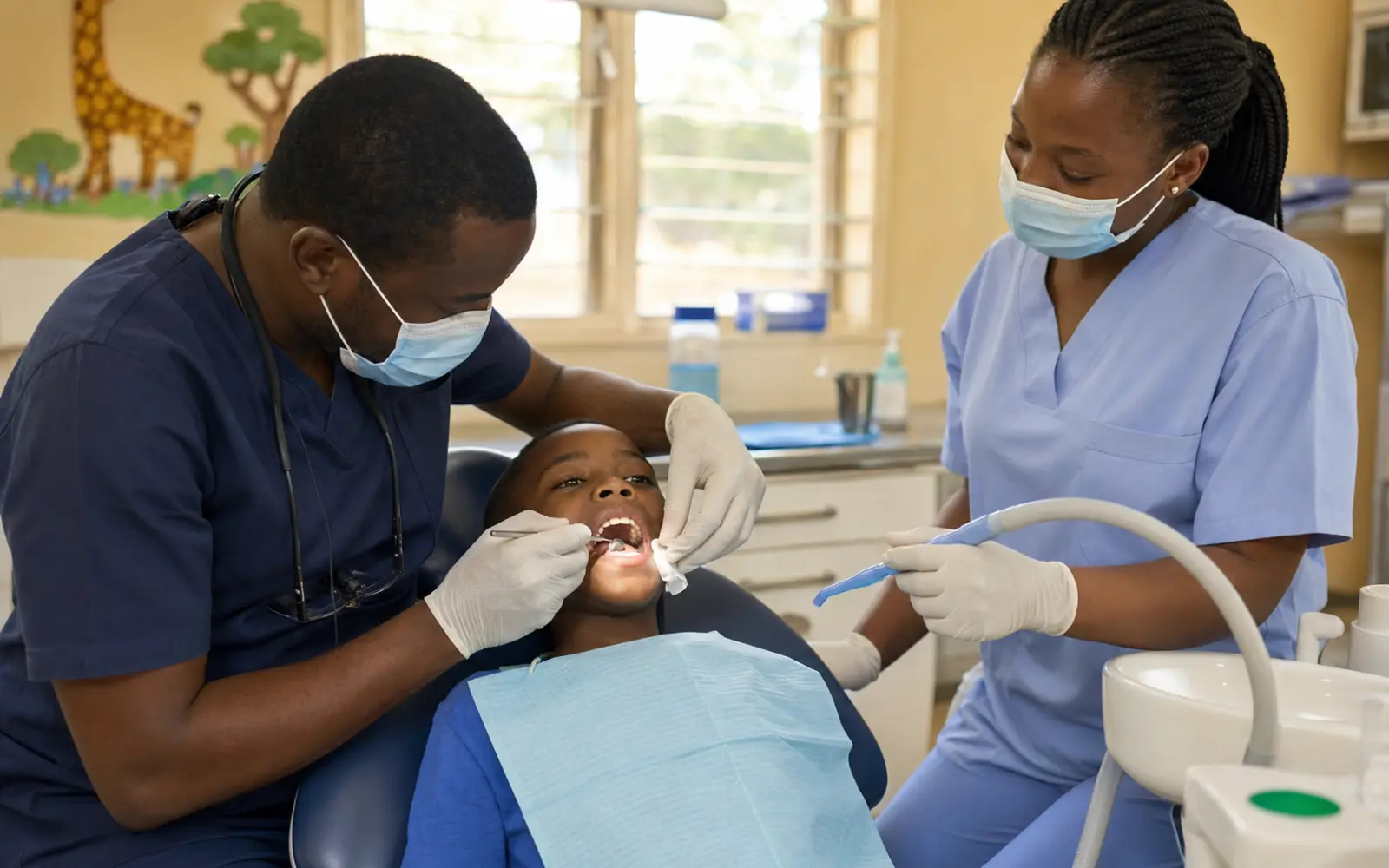
Consider sealants for:
- Children or adolescents with elevated caries risk.
- Newly erupted permanent molars with deep fissures.
- Patients with previous caries experience.
- Teeth with contralateral or adjacent caries.
- Adults with susceptible anatomy and ongoing risk.
- Community or school prevention programs.
Do not apply automatically to every groove. Assess eruption, anatomy, activity and ability to isolate.
Can Sealants Be Placed Over Early Lesions?
Evidence supports sealing selected non-cavitated occlusal lesions when the surface can be isolated and the tooth can be monitored. The seal should deprive the lesion of nutrient access.
Cavitated or uncertain lesions require appropriate diagnosis and restorative planning.
Material Options
Resin-based sealants generally provide strong retention when isolation is excellent. Glass-ionomer materials may be considered when moisture control is difficult, although retention and use differ.
Follow material-specific etching, conditioning and curing protocols.
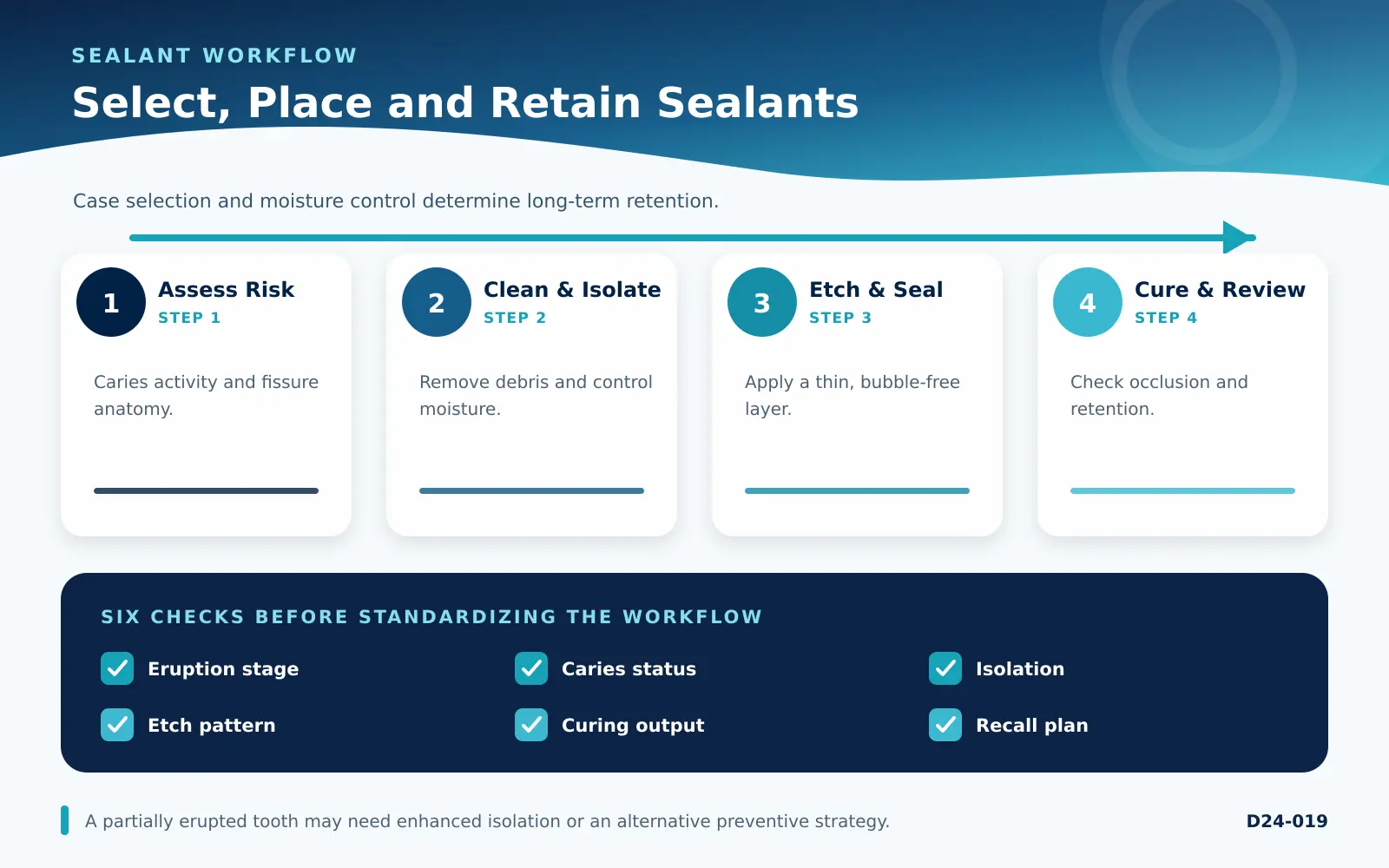
Clinical Technique
- Clean the surface without leaving residue.
- Isolate thoroughly.
- Etch or condition according to the IFU.
- Rinse and dry as directed.
- Apply sealant without bubbles.
- Ensure complete fissure coverage.
- Cure with a verified light.
- Check retention and occlusion.
Why Isolation Is Critical
Saliva contamination after etching can reduce resin retention. Use rubber dam or effective cotton-roll and suction isolation. If contamination occurs, follow the product’s recovery protocol rather than continuing without correction.
Opaque vs Clear Sealants
Opaque materials can be easier to see during placement and recall. This helps identify partial loss or margins that need repair. Clear materials may allow observation of the underlying surface, but are more difficult to inspect.
Curing Light Control
Use the exposure time and wavelength recommended for the material. Keep the tip close and perpendicular. Clean the light guide and test output regularly.
Occlusion
Check the bite after curing. Remove only excessive material while preserving fissure coverage. High spots may cause discomfort or fracture.
Recall and Repair
A sealant is not a one-time procedure without follow-up. Inspect at routine visits. Repair partial loss, reassess caries activity and reinforce prevention.
FGM Prevent Opaque White
FGM Prevent Opaque White is listed by Denta24 as a dental sealant. Review the current etching, application, curing and indication instructions before use.
Use in African Prevention Programs
Sealants can be integrated into school or outreach programs when patient selection, infection control, curing-light performance and recall are planned. A program should track teeth treated, retention and caries outcomes rather than counting applications alone.
Pit And Fissure Sealants: Practical Checks for African Clinics
For African clinics, pit and fissure sealants is not a product-only decision. It must also account for caries risk, newly erupted molars, isolation, school or community programs, curing-light output, material supply, patient recall and repair protocols. A resilient pit and fissure sealants plan should remain workable when supply, connectivity, service access or patient follow-up is less predictable than expected.

Before adoption, document who is responsible, which current instructions for use apply, how outcomes will be measured and what will trigger referral, retraining or a change in protocol. The goal of pit and fissure sealants is to prioritize high-risk teeth and patients, protect the etched surface from contamination and schedule retention checks rather than treating placement as a one-time procedure.
- Verify caries risk before implementation or purchase.
- Verify newly erupted molars before implementation or purchase.
- Verify isolation before implementation or purchase.
- Verify school or community programs before implementation or purchase.
- Verify curing-light output before implementation or purchase.
- Verify material supply before implementation or purchase.
- Verify patient recall and repair protocols before implementation or purchase.
Use pit and fissure sealants as an operational decision that is reviewed after real cases. Record complications, remakes, chair time, consumable use, stock-outs and team feedback, then refine the protocol from evidence rather than marketing claims.
Related Denta24 reading: choosing high-quality dental materials. This context helps place pit and fissure sealants within a broader clinical and digital strategy.

Conclusion
Pit And Fissure Sealants succeeds when the evidence, local workflow and review plan remain aligned. Pit and fissure sealants are effective when placed on the right teeth and maintained. Isolation and recall are the two factors most likely to determine whether the preventive benefit continues.
Frequently Asked Questions
What are pit and fissure sealants?
For context, pit and fissure sealants should always be adapted to the individual case and the current evidence. They are materials placed in susceptible grooves to create a barrier against plaque and substrates.
Which teeth benefit most?
Newly erupted permanent molars and other deep fissures in high-risk patients are common candidates.
Can sealants be placed over early caries?
Selected non-cavitated lesions may be sealed when diagnosis, isolation and monitoring are appropriate.
Are sealants only for children?
No. Adolescents and adults with susceptible fissures and elevated risk may benefit.
Why is isolation critical?
Saliva contamination can significantly reduce resin-sealant retention.
What if isolation is difficult?
Improve moisture control or consider a material and protocol validated for the situation.
Why use an opaque sealant?
Visibility helps placement, recall inspection and repair.
Should occlusion be checked?
Yes. Remove high excess while preserving the sealed anatomy.
How often should sealants be reviewed?
Inspect them at routine recall visits and repair lost areas according to caries risk.
Why do sealants fail?
Contamination, incomplete etching, inadequate curing, poor penetration and missed recalls are common causes.
References and Further Reading
- FGM Prevent Opaque White on Denta24
- ADA pit-and-fissure sealants clinical practice guideline
- FGM Prevent official product information
Professional disclaimer: Sealant decisions should be based on caries-risk assessment, clinical diagnosis and the material’s current instructions.