 Endodontic Rotary Files
 Finishing Burs
 High-Speed Burs
 Low-Speed Drills
 Cosmetic Accessories
 Home Whitening Kits
 Clinic Whitening Kits
 Implant Accessories
 Implant Fixtures
 Prosthetic Components
 Surgical Implant Tools
 CAD & CAM Materials
 Lab Consumables
 Lab Equipment
 Digital Dentistry Devices
 Endodontic Equipment
 General Clinic Equipment
 Restorative Equipment
 Surgical Equipment
 Hand Files
 Irrigation & Medicaments
 Post & Core
 Rotary Files
 Sealers
 Brackets & Wires
 Clear Aligners
 Orthodontic Accessories
 Bonding & Adhesive Systems
 Finishing & Polishing
 Matrix Systems
 Etching Materials
 Composite Materials
 Occlusion Checking
 Bone & Grafting Materials
 Surgical Accessories
 Surgical Consumables
 Cementation
 Impression & Registration Materials
 Temporary Restorations
 Periodontal Instruments & Accessories
 Periodontal Treatment Materials


Rubber Dam Isolation: Fixing Leaks and Difficult Cases

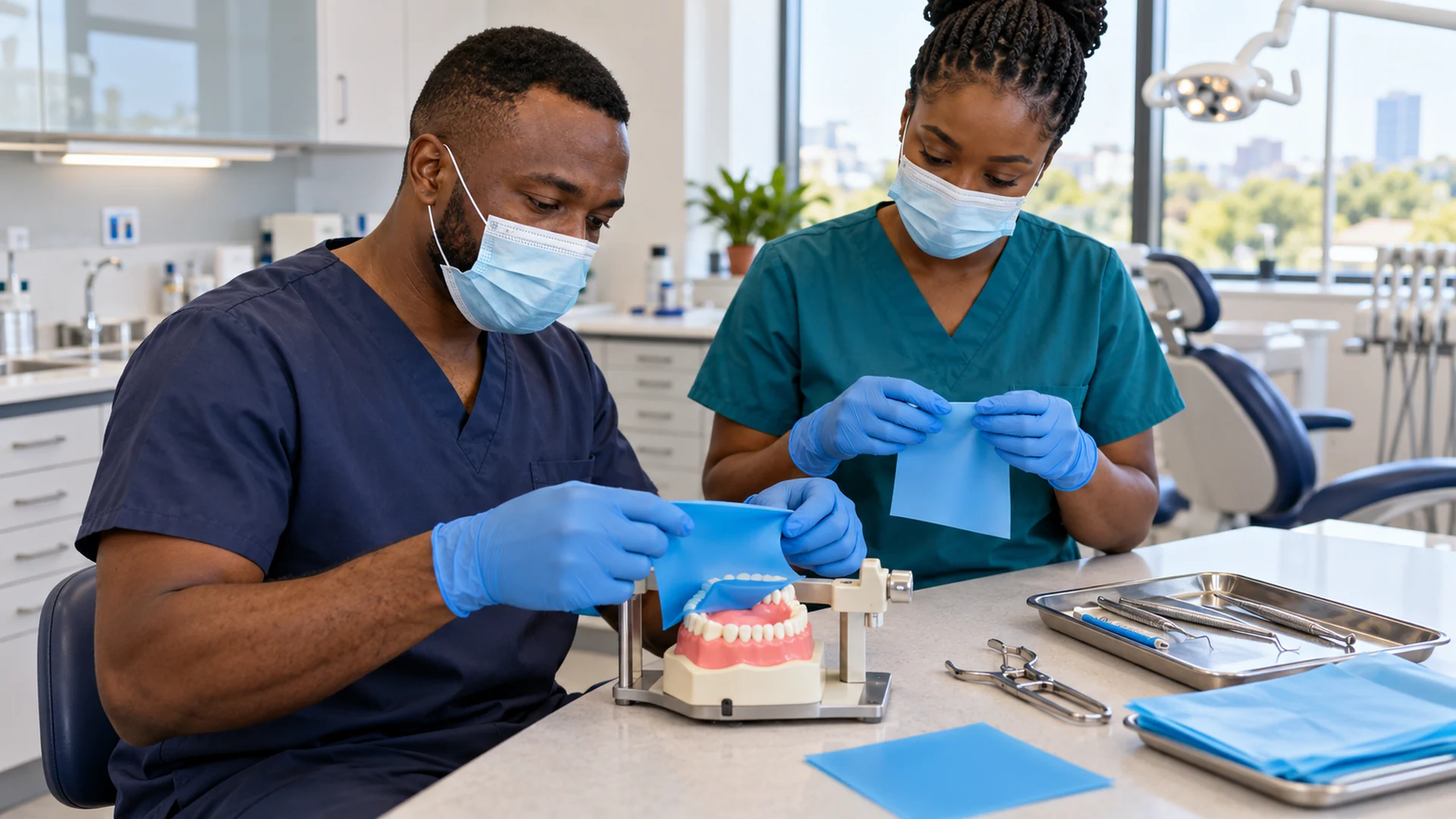
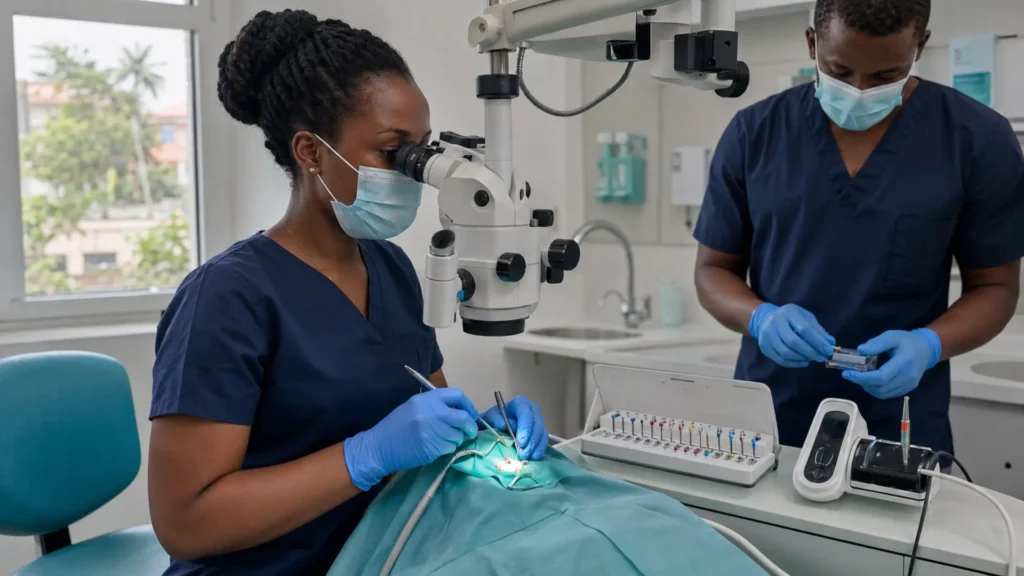
The clamp is seated, the blue sheet is stretched across the frame, and saliva still reaches the access cavity. That is a failed seal, even though the dam looks complete. Reliable rubber dam isolation requires a stable setup, a seal around the tooth and a patient who can tolerate the arrangement.
This troubleshooting guide is for dental teams carrying out endodontic treatment and adhesive procedures. It helps separate a problem with the sheet, clamp, tooth or appointment plan so the team can correct the cause instead of repeatedly patching the same leak.
Why the seal matters before treatment begins
The American Association of Endodontists identifies dental dam isolation as the standard of care in its Dental Dams position statement. Its roles include reducing contamination and helping protect the patient from instruments and materials. Cotton rolls and suction serve useful purposes but do not reproduce that physical barrier during root canal treatment.
Make the rubber dam isolation check a distinct step before access, irrigation or instrumentation. The operator should be able to see the working area, the assistant should know how suction will be managed, and the patient should understand how to request a pause.
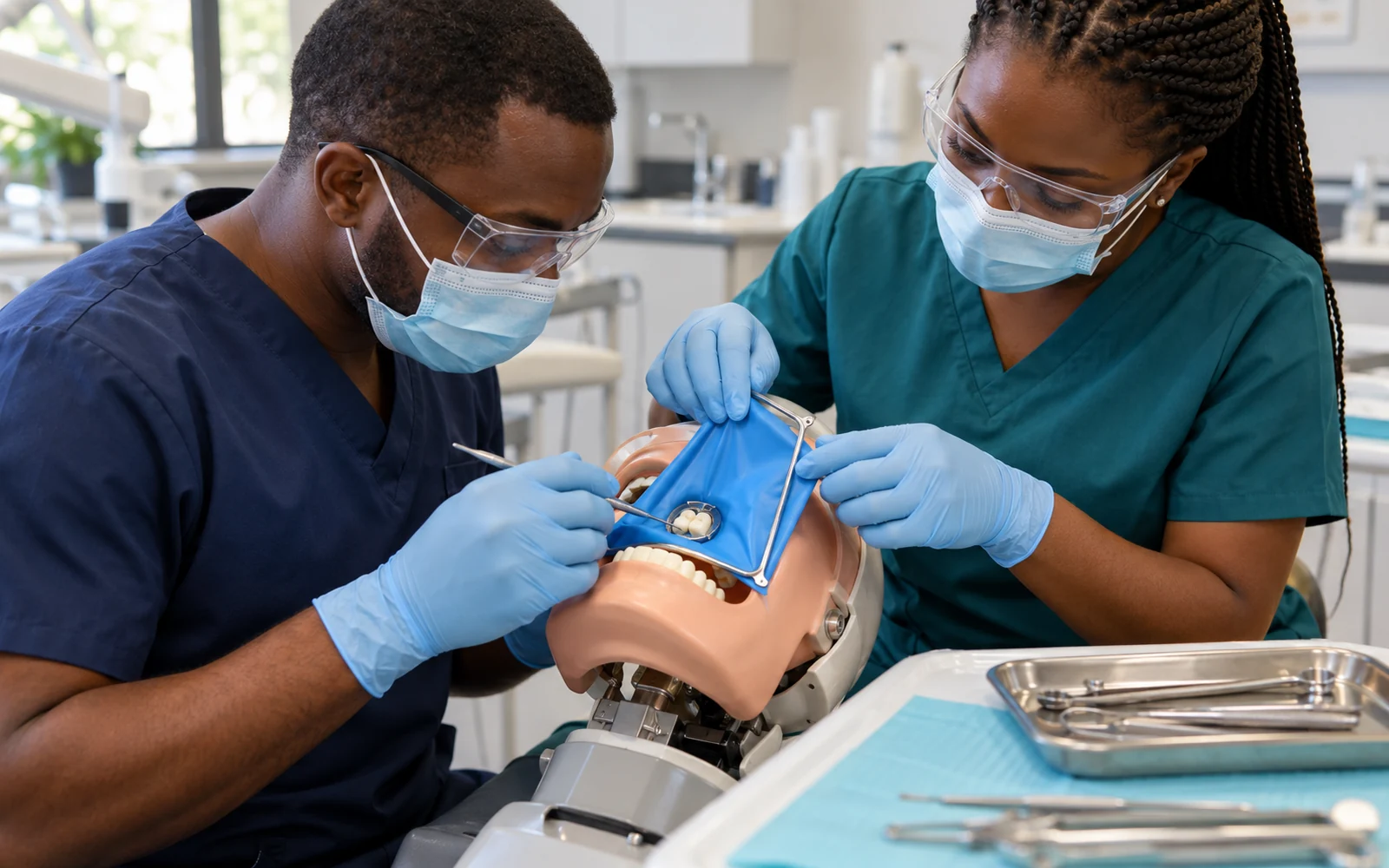
Rubber dam isolation: locate the leak
| What you notice | Check before continuing |
|---|---|
| Fluid collecting beside the tooth | Hole size, sheet adaptation, inversion and whether the tooth can be adequately isolated. |
| Sheet tearing during placement | Sharp contacts or restoration edges, damaged material and excessive stretch. |
| Clamp rocking | Clamp-to-tooth adaptation, tooth structure and stability on direct examination. |
| Dam pulled away when the frame moves | Frame position, tension and interference from the patient’s lips or equipment. |
| Repeated leakage below a broken margin | Whether a pre-endodontic restoration or a revised treatment plan is needed. |
Do not regard a temporary surface patch as a solution to an unstable foundation. Reposition or replace the relevant component, or revise the plan when the tooth cannot be predictably isolated. Check the seal again after any adjustment.
Rubber dam isolation: plan the clamp and tooth together
A clamp number is a starting point, not proof of fit. Inspect the tooth and the proposed contact points, then assess stability and soft-tissue clearance. A badly broken tooth may not support a routine setup. Decide whether the remaining structure needs reconstruction before treatment or whether the case needs referral.
During rubber dam isolation, secure small components according to the clamp system instructions and the clinician’s established technique. Keep the forceps and required replacement components within reach. The assistant should not have to leave the operatory while the operator is maintaining a difficult setup.
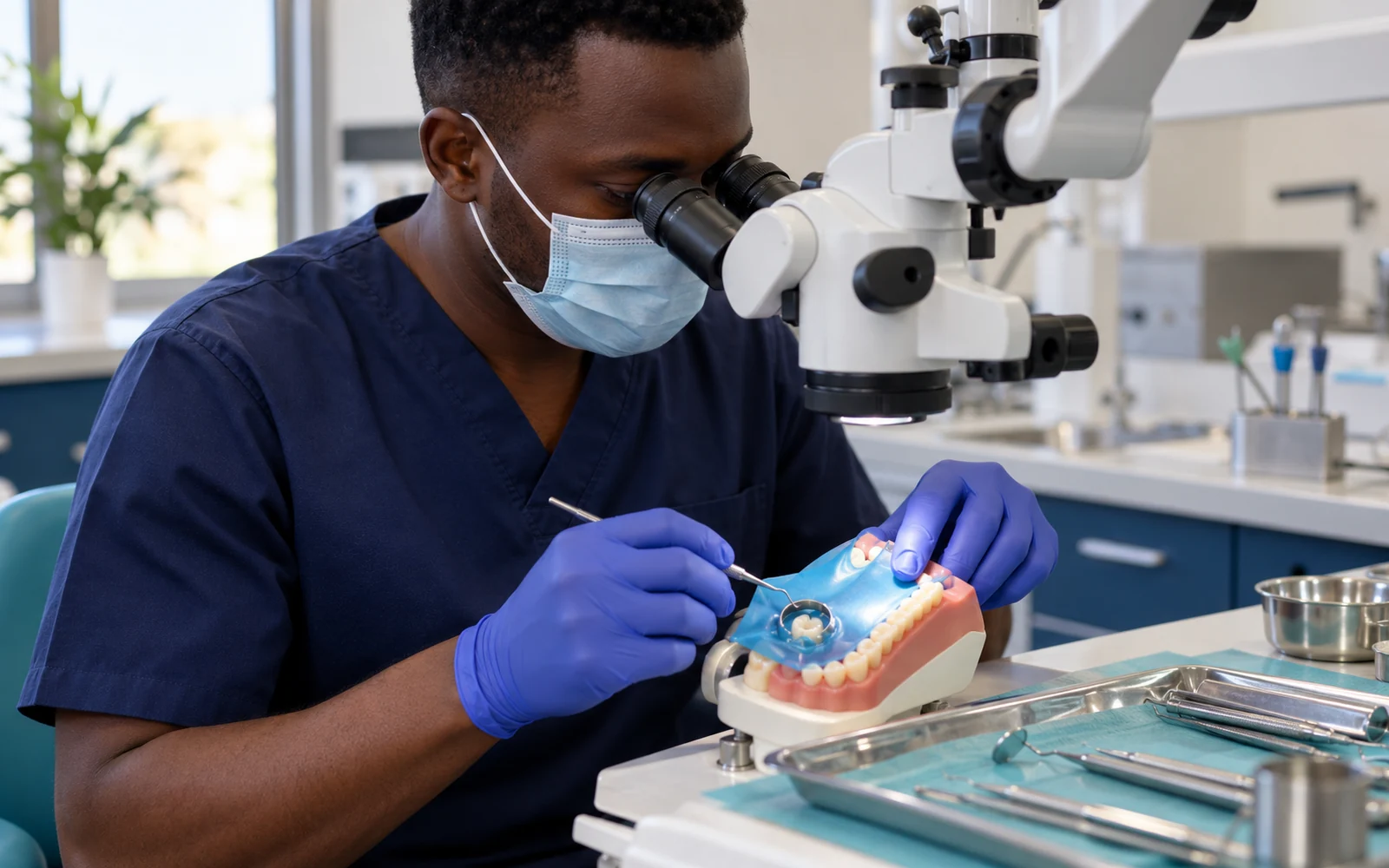
Screen for latex allergy before choosing the sheet
Ask about previous reactions to gloves, balloons or dental products and document the history. An allergy concern requires material selection across the setup, not merely a change of operator gloves. The AAE’s patient information on natural rubber latex allergy explains the need for appropriate alternatives and precautions.
The supplier catalogue identifies RubyDent Dental Dam as natural rubber latex. The RubyDent Blue Dental Dam listing should therefore not be treated as a latex-free option. Verify the material of any alternative, including accessories, before the appointment. “Low powder” and “latex-free” describe different properties.
Build comfort into the appointment
Explain the purpose of isolation before placing the frame. Agree on a stop signal, assess the patient’s ability to tolerate the arrangement and allow time to check breathing and comfort. A calm explanation and a trial setup can reveal a problem before the tooth is accessed.
For a patient travelling a long distance, include rubber dam isolation assessment and possible pre-endodontic reconstruction in the booking. Avoid a booking template that assumes every damaged tooth will be ready for immediate instrumentation. Keep the restoration and isolation decision connected.
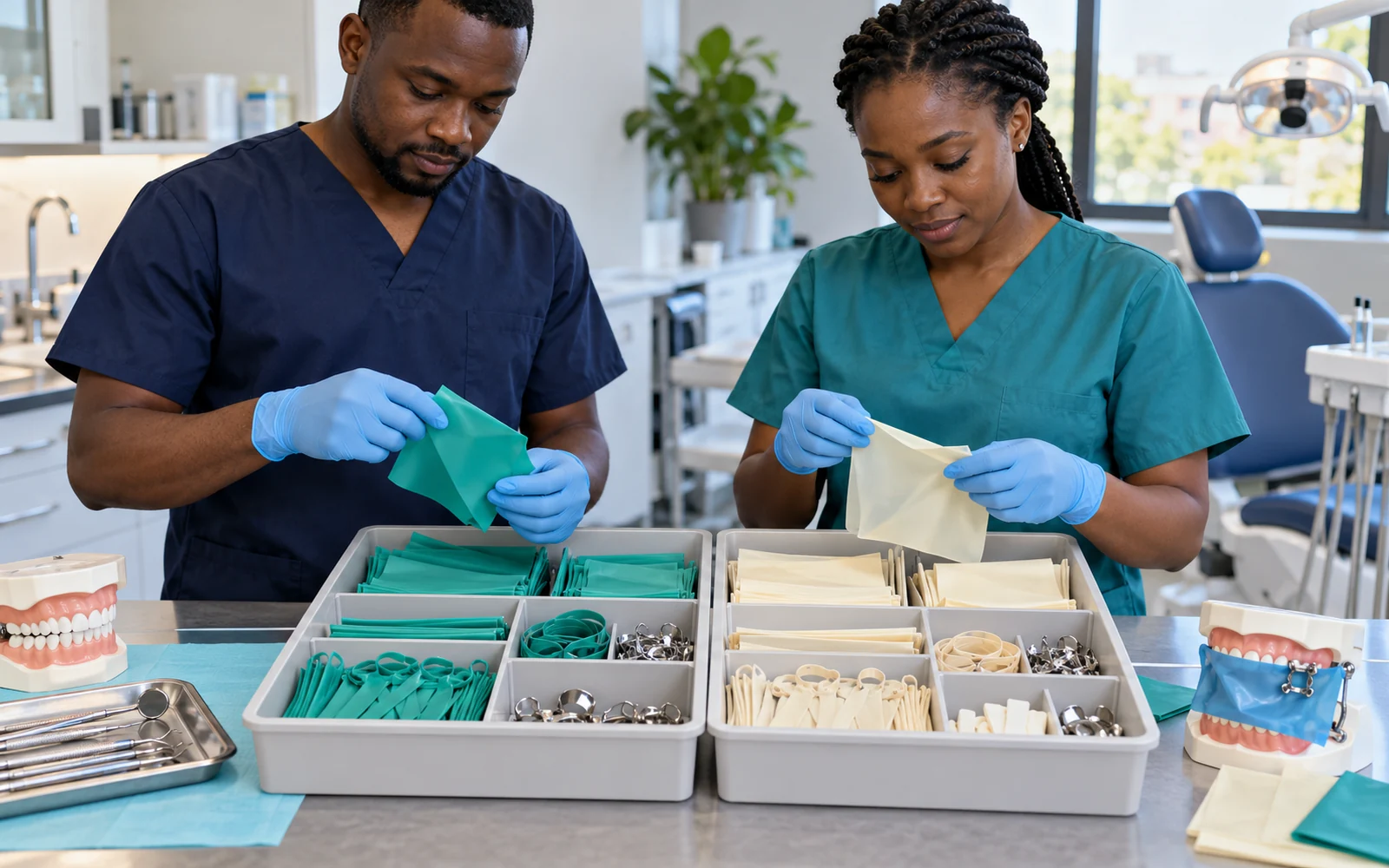
Keep isolation compatible with the rest of the workflow
During adhesive care, saliva control must remain effective through the stage specified by the adhesive and restorative instructions. If contamination occurs, follow the relevant product’s corrective procedure rather than improvising a universal rinse-and-repeat sequence. The selective-etch and total-etch guide explains why the adhesive system changes the clinical sequence.
During endodontic treatment, the dam complements the preparation and irrigation plan. It does not remove the need for controlled instrumentation or safe irrigant delivery. Match these decisions with the canal preparation system being used.
Denta24 also lists Endo Dam Angelus. Review that product’s indication and material information instead of assuming that products carrying the word “dam” are interchangeable sheets. Use the catalogue and current manufacturer instructions to identify what each item actually does.
A practical check before the first instrument
- Confirm the recorded allergy history and the materials selected for the patient.
- Check the tooth and restoration margins for a predictable isolation plan.
- Assess clamp stability, sheet integrity and frame tension.
- Inspect the seal around the tooth and the route for suction.
- Confirm patient comfort and the agreed stop signal.
- Recheck isolation when the setup is disturbed during treatment.
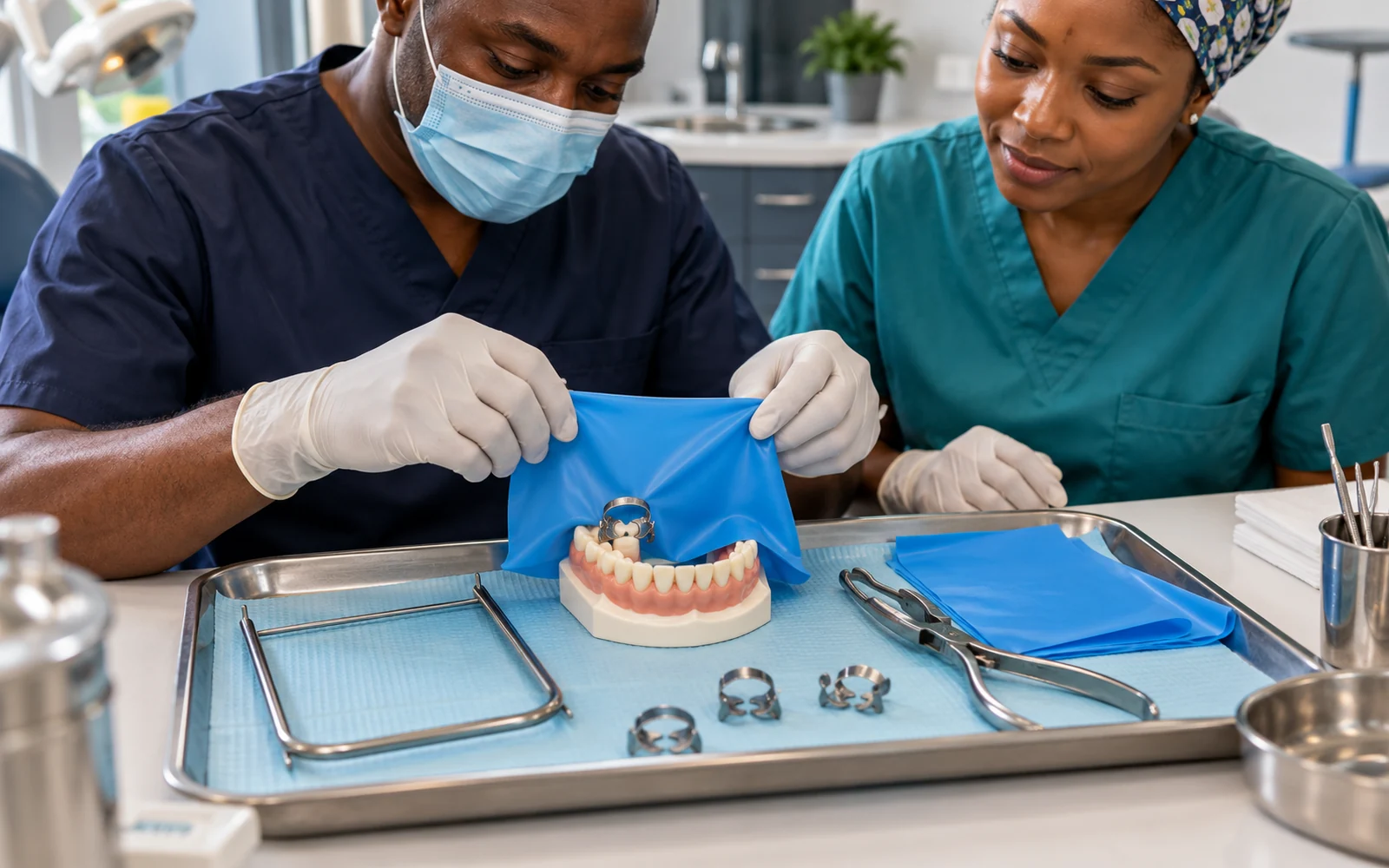
Record recurrent rubber dam isolation problems in a short team log: tooth condition, component selected, leak location and the correction that worked. This creates a useful purchasing and training record. An isolation kit earns its place through reliable use on the clinic’s actual cases, rather than through the number of accessories in its box.
FAQs: rubber dam isolation
Can a dam be present without effective isolation?
Yes. Rubber dam isolation can still leak if the hole, sheet or clamp is unsuitable. Check the seal before proceeding.
What is the first response to a persistent leak?
Identify whether the cause is the sheet, clamp, tooth margin or frame tension. Correct the cause and reassess the seal.
Is rubber dam isolation optional for routine root canal treatment?
The AAE identifies dental dam isolation as the standard of care. Plan the case so appropriate isolation can be achieved before treatment.
Can cotton rolls replace a dental dam in endodontics?
They do not provide the same physical barrier against instruments, materials and oral contamination during root canal treatment.
What if a clamp rocks on the tooth?
Reassess its fit and the remaining tooth structure. Do not begin treatment with an unstable setup.
Does low-powder mean latex-free?
No. Powder level and latex content are different characteristics. Confirm the material from the current product documentation.
Is RubyDent Blue Dental Dam latex-free?
The supplied catalogue describes natural rubber latex. It should not be selected as a latex-free alternative.
How should a suspected latex allergy affect planning?
Clarify and document the history, identify suitable materials throughout the setup and arrange the appropriate precautions before the appointment.
Can severely broken teeth always be isolated immediately?
No. Some need pre-endodontic reconstruction, a different isolation strategy or referral before treatment can be carried out predictably.
What should the assistant prepare in advance?
The selected isolation components, appropriate replacement items, suction arrangements and the patient’s allergy information, with the operator’s planned workflow understood.
This is professional isolation guidance. Follow the relevant component instructions and do not proceed when the tooth cannot be safely isolated.
Images are AI-generated editorial illustrations, not patient records or photographs of specific branded products.