 Endodontic Rotary Files
 Finishing Burs
 High-Speed Burs
 Low-Speed Drills
 Cosmetic Accessories
 Home Whitening Kits
 Clinic Whitening Kits
 Implant Accessories
 Implant Fixtures
 Prosthetic Components
 Surgical Implant Tools
 CAD & CAM Materials
 Lab Consumables
 Lab Equipment
 Digital Dentistry Devices
 Endodontic Equipment
 General Clinic Equipment
 Restorative Equipment
 Surgical Equipment
 Hand Files
 Irrigation & Medicaments
 Post & Core
 Rotary Files
 Sealers
 Brackets & Wires
 Clear Aligners
 Orthodontic Accessories
 Bonding & Adhesive Systems
 Finishing & Polishing
 Matrix Systems
 Etching Materials
 Composite Materials
 Occlusion Checking
 Bone & Grafting Materials
 Surgical Accessories
 Surgical Consumables
 Cementation
 Impression & Registration Materials
 Temporary Restorations
 Periodontal Instruments & Accessories
 Periodontal Treatment Materials


Dental Implant Components: Fixtures, Abutments, Scan Bodies and Compatibility

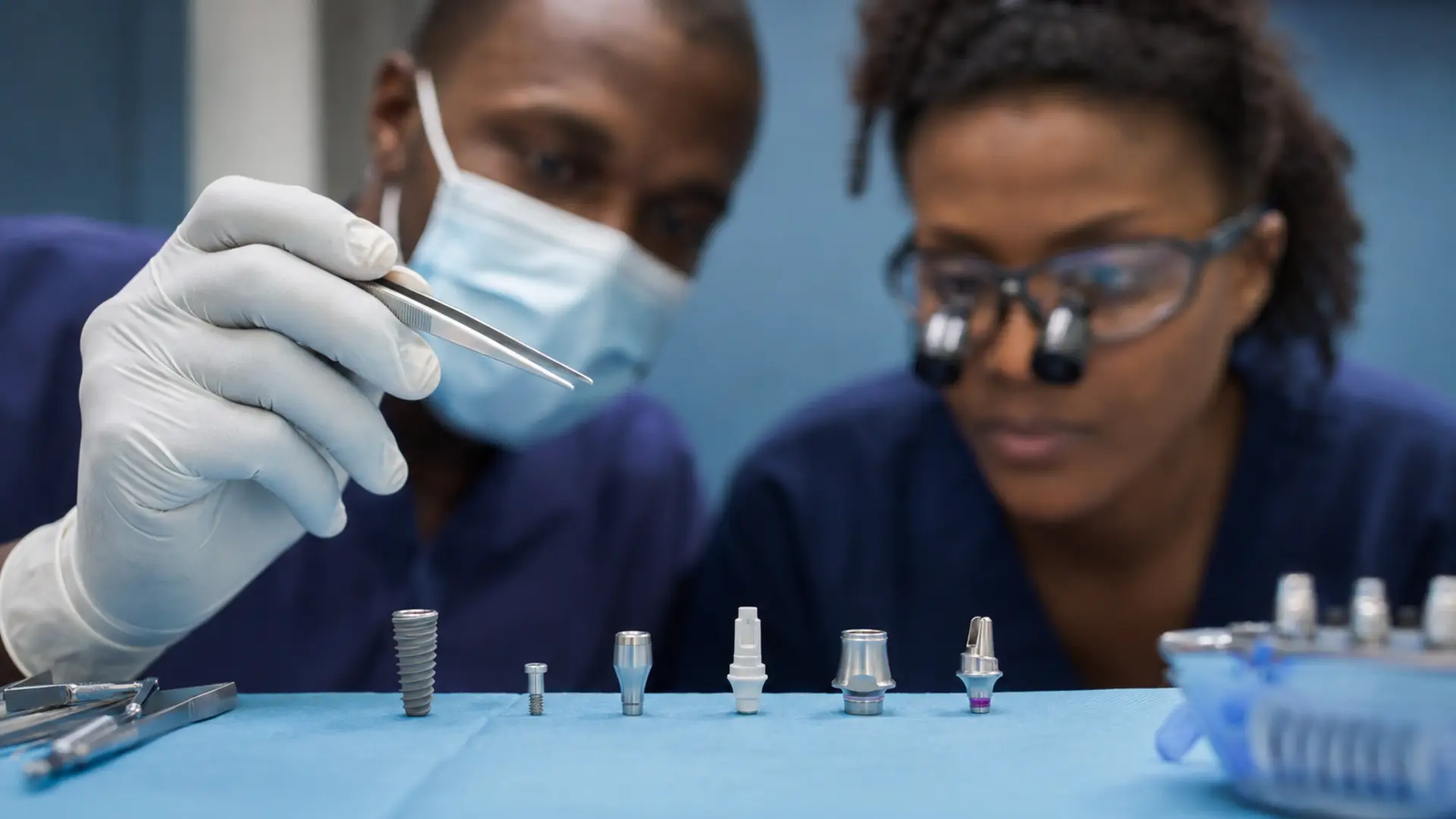
Dental Implant Components should be evaluated through clinical evidence, workflow fit and local operating conditions. A sound dental implant components decision connects verified performance with the team, patients and resources that will support it in daily practice.
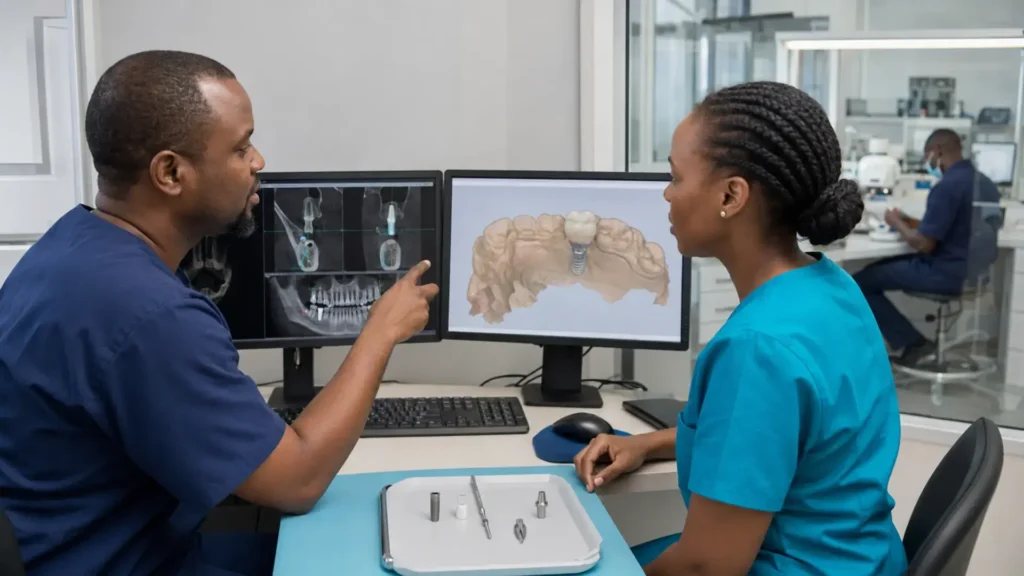
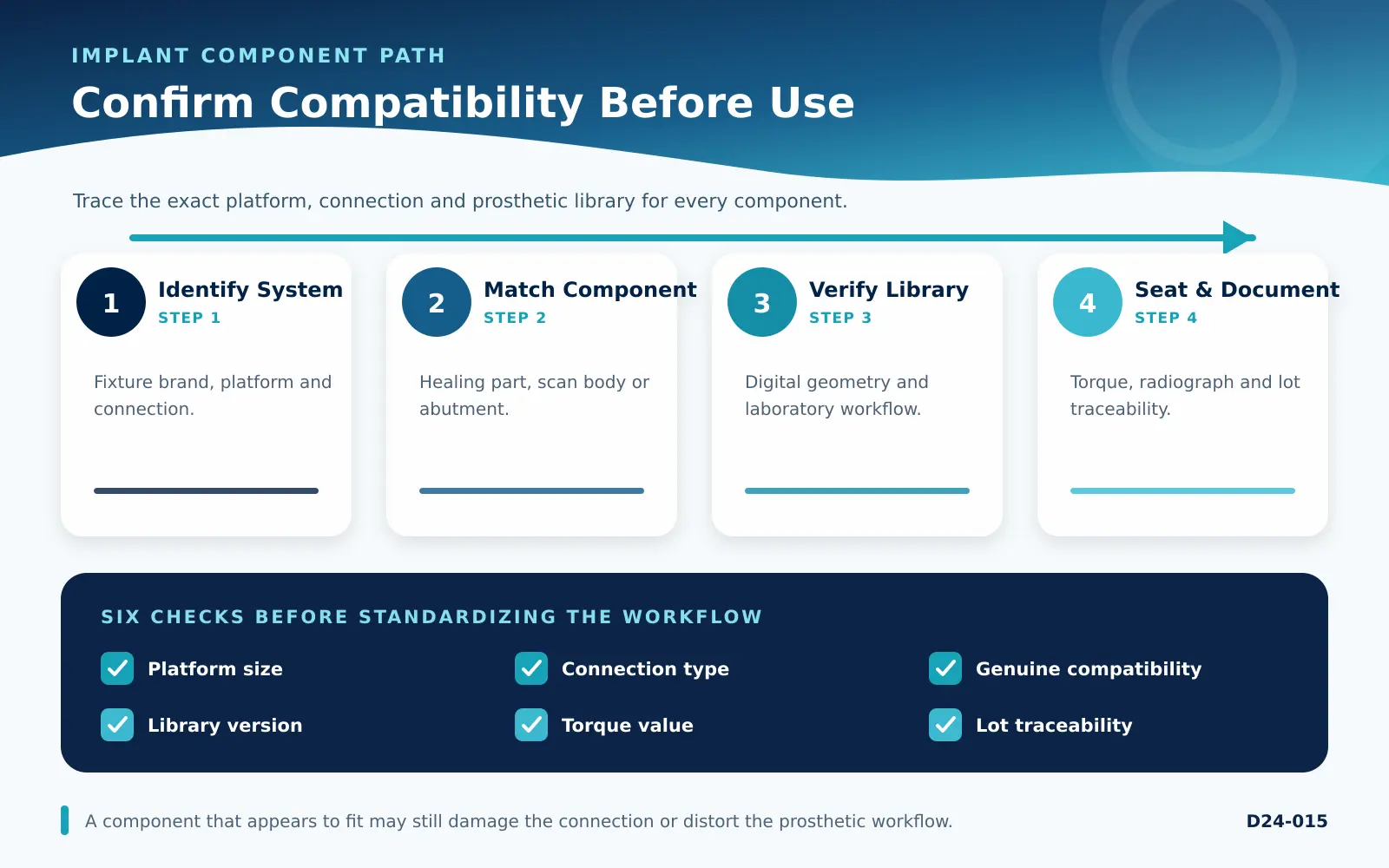
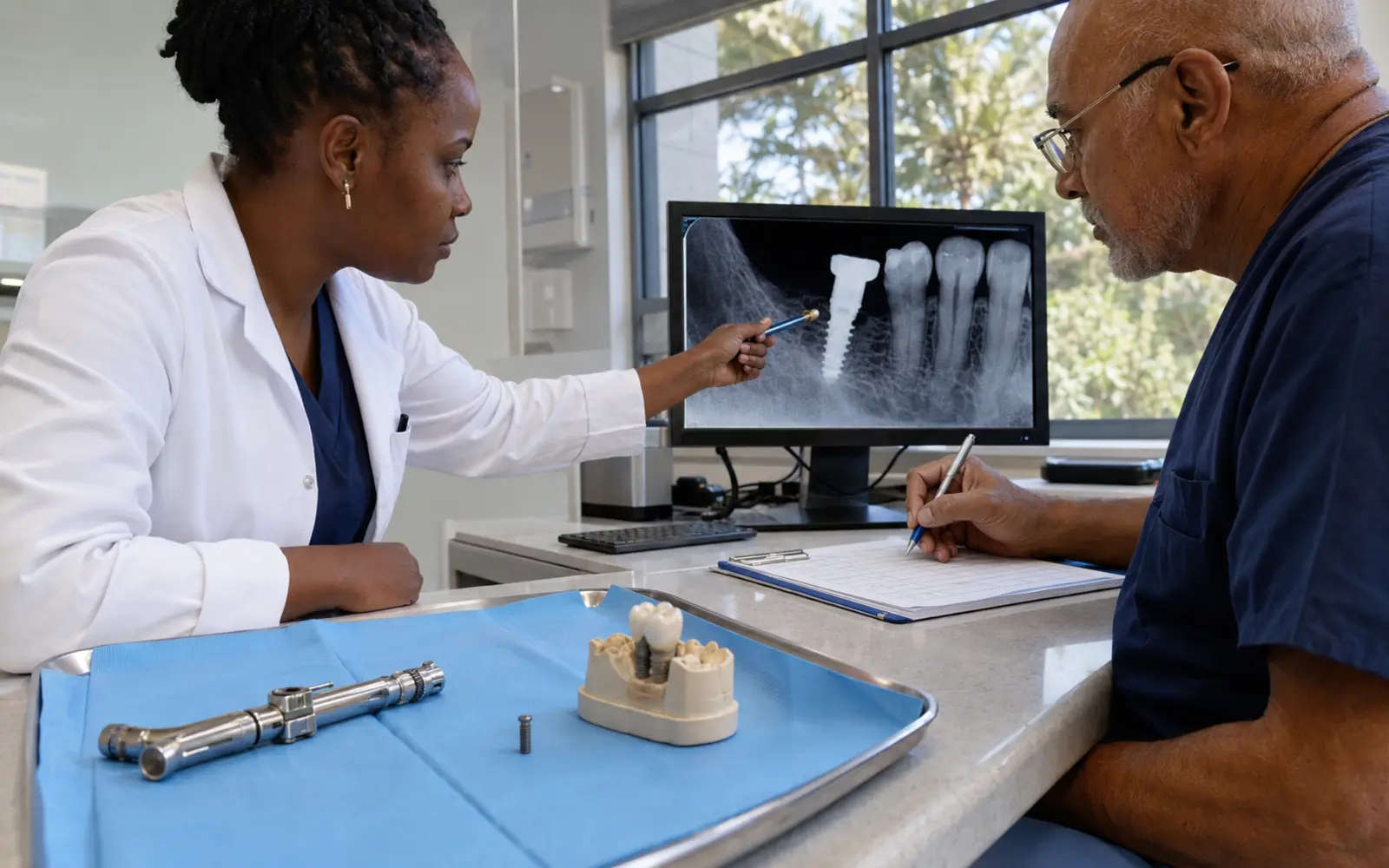
Dental implant treatment involves more components than the fixture visible on a radiograph. Cover screws, healing abutments, impression copings, scan bodies, analogs, ti-bases and prosthetic screws must all match the implant system and restorative plan.
Ordering errors are common when the implant brand, connection or platform is unknown. In markets where replacement components require international shipping, one mismatch can delay treatment for weeks.
Quick answer: Implant components are system-specific. Record the implant brand, connection, platform, diameter and restorative level for every patient before ordering any accessory or prosthetic part.
Table of Contents
The Implant Fixture
The fixture is placed in bone and provides the foundation for the restoration. Important identifiers include:
- Brand and system.
- Implant diameter and length.
- Platform size.
- Connection type.
- Lot number.
- Placement date and position.
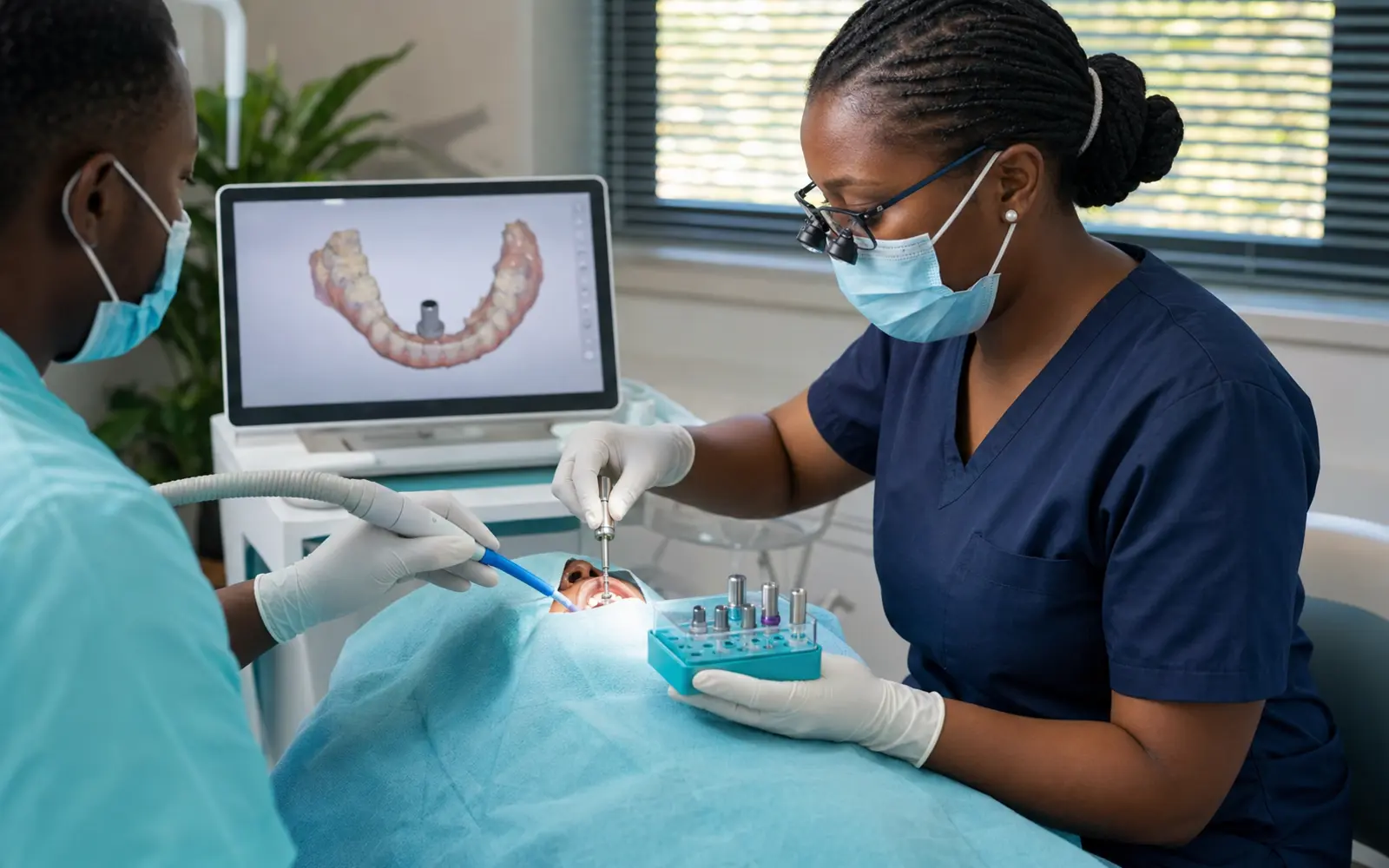
Cover Screw
A cover screw seals the implant connection during submerged healing. It is placed at surgery and covered by tissue. During second-stage surgery, it is removed and replaced by a healing component.
Healing Abutment
A healing abutment extends through the soft tissue and supports maturation of the emergence profile. Selection depends on platform, tissue height, diameter and desired contour.
An abutment that is too short may be covered by tissue; one that is too wide or high may create pressure or discomfort.
Impression Coping
In conventional workflows, an impression coping transfers implant position to an impression. Open-tray and closed-tray versions are used for different techniques.
The coping must be fully seated. A radiograph may be indicated when the connection cannot be verified clinically.
Implant Analog
An analog reproduces the implant connection in a physical cast. It must match the impression coping and implant system. Inaccurate assembly transfers error to the prosthesis.
Scan Body
A scan body has known geometry that allows software to identify the implant position and orientation. It must match the implant or intermediate abutment and the correct digital library.
Check full seating, orientation, surface cleanliness and visibility in the scan.
Temporary and Definitive Abutments
Abutments support the restoration and manage emergence. They may be prefabricated, customized, straight or angled. Selection considers tissue height, restorative space, implant angulation and cement- or screw-retained design.
Ti-Base
A titanium base connects a CAD/CAM restoration to the implant or abutment. The restoration is designed and bonded to the ti-base using a validated laboratory protocol.
Multi-Unit Abutment
Multi-unit abutments create a restorative platform for multi-implant prostheses and can help manage tissue level and angulation. The complete system includes specific copings, cylinders, screws and scan bodies.
Prosthetic Screws and Torque
Screws are not interchangeable simply because they fit. Use the correct screw and torque recommended by the manufacturer. A calibrated torque wrench and clean connection are essential.
Why Compatibility Errors Occur
- Patient does not have an implant identification record.
- Brand is inferred from radiographic appearance.
- Platform and connection are confused.
- Third-party components are used without validation.
- Laboratory library does not match the scan body.
- Restorative level is not communicated.
Procurement Checklist
Before ordering, document:
- Implant manufacturer and system.
- Internal or external connection.
- Platform and diameter.
- Implant-level or abutment-level restoration.
- Tissue height.
- Required component and reference.
- Temporary or definitive use.
- Compatible screw and instrument.
Denta24 Implant Categories
Denta24 organizes Implant Fixtures, Accessories, Prosthetic Components and Surgical Implant Tools. Use these categories to build a complete order, but verify compatibility with the exact system before purchase.
African Market Considerations
Keep a digital implant passport for each patient and provide a copy to the patient. Maintain a small controlled stock of high-use components, but avoid holding expensive components with low turnover and uncertain expiry or system demand.
Dental Implant Components: Practical Checks for African Clinics
For African clinics, dental implant components is not a product-only decision. It must also account for platform compatibility, authentic components, lot traceability, torque guidance, restocking lead time, laboratory libraries, emergency replacements and staff identification. A resilient dental implant components plan should remain workable when supply, connectivity, service access or patient follow-up is less predictable than expected.

Before adoption, document who is responsible, which current instructions for use apply, how outcomes will be measured and what will trigger referral, retraining or a change in protocol. The goal of dental implant components is to standardize component records by system, platform and diameter and verify every part before surgery, impression, scanning or prosthetic delivery.
- Verify platform compatibility before implementation or purchase.
- Verify authentic components before implementation or purchase.
- Verify lot traceability before implementation or purchase.
- Verify torque guidance before implementation or purchase.
- Verify restocking lead time before implementation or purchase.
- Verify laboratory libraries before implementation or purchase.
- Verify emergency replacements and staff identification before implementation or purchase.
Use dental implant components as an operational decision that is reviewed after real cases. Record complications, remakes, chair time, consumable use, stock-outs and team feedback, then refine the protocol from evidence rather than marketing claims.
Related Denta24 reading: technology in modern implant procedures. This context helps place dental implant components within a broader clinical and digital strategy.
Conclusion
Dental Implant Components succeeds when the evidence, local workflow and review plan remain aligned. Implant dentistry depends on precise component identification. A disciplined documentation and ordering process reduces delays, mechanical risk and unnecessary cost.
Frequently Asked Questions
What is an implant fixture?
For context, dental implant components should always be adapted to the individual case and the current evidence. It is the component placed in bone that supports the prosthetic restoration.
What is a cover screw?
It seals the connection during submerged healing.
What is a healing abutment?
It supports soft-tissue healing and emergence around the implant.
What is an impression coping?
It transfers implant position to a conventional impression and cast.
What is an implant analog?
It reproduces the implant connection in a laboratory model.
What is a scan body?
It provides reference geometry for locating the implant in a digital scan.
What is a multi-unit abutment?
It creates an intermediate restorative platform for selected multi-implant prostheses.
What is a ti-base?
It is a titanium bonding base for a CAD/CAM restoration.
Why are components not universally interchangeable?
Connections, platforms, screws and tolerances differ and can create mechanical or biological risk.
What information is needed when ordering?
Record brand, system, connection, platform, diameter, restorative level and required height or angulation.
References and Further Reading
Professional disclaimer: Use only components confirmed as compatible with the implant system and follow manufacturer torque and restorative instructions.