 Endodontic Rotary Files
 Finishing Burs
 High-Speed Burs
 Low-Speed Drills
 Cosmetic Accessories
 Home Whitening Kits
 Clinic Whitening Kits
 Implant Accessories
 Implant Fixtures
 Prosthetic Components
 Surgical Implant Tools
 CAD & CAM Materials
 Lab Consumables
 Lab Equipment
 Digital Dentistry Devices
 Endodontic Equipment
 General Clinic Equipment
 Restorative Equipment
 Surgical Equipment
 Hand Files
 Irrigation & Medicaments
 Post & Core
 Rotary Files
 Sealers
 Brackets & Wires
 Clear Aligners
 Orthodontic Accessories
 Bonding & Adhesive Systems
 Finishing & Polishing
 Matrix Systems
 Etching Materials
 Composite Materials
 Occlusion Checking
 Bone & Grafting Materials
 Surgical Accessories
 Surgical Consumables
 Cementation
 Impression & Registration Materials
 Temporary Restorations
 Periodontal Instruments & Accessories
 Periodontal Treatment Materials


Intraoral Scanner ROI in Africa: A 2026 Buying Guide for Dental Clinics

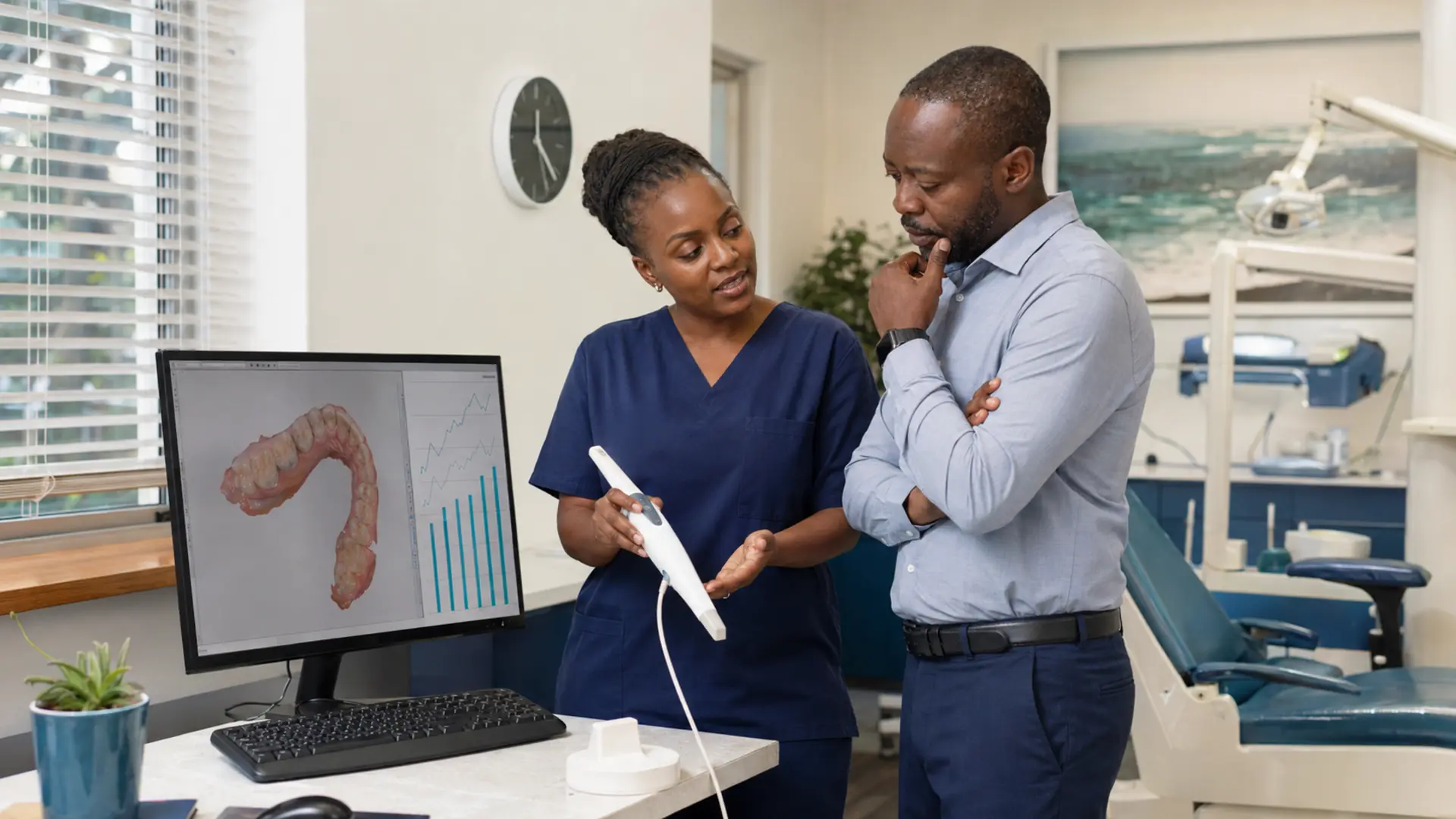
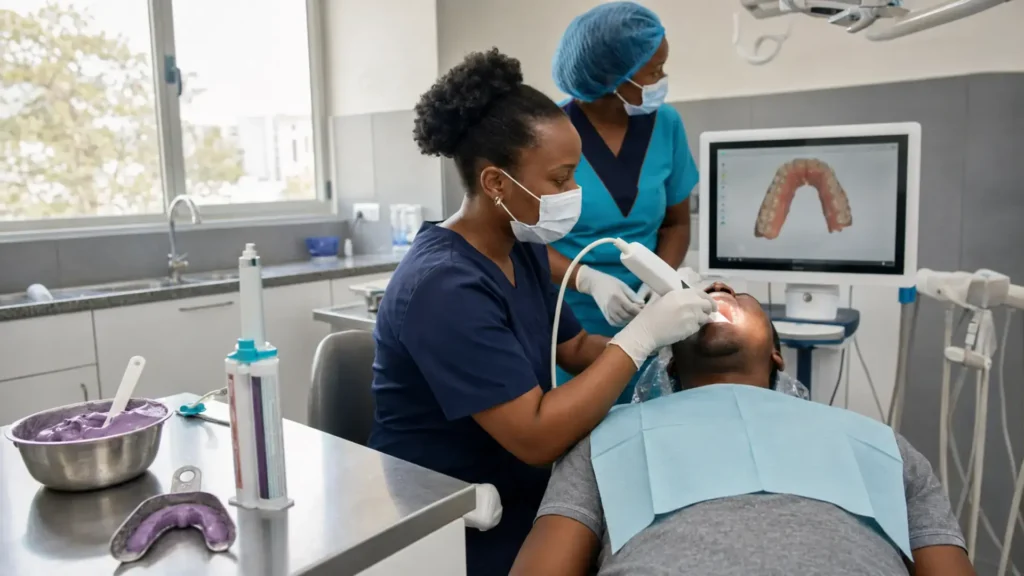
Intraoral Scanner ROI should be evaluated through clinical evidence, workflow fit and local operating conditions. A sound intraoral scanner ROI decision connects verified performance with the team, patients and resources that will support it in daily practice.
For many dental clinics, an intraoral scanner looks like a major technological upgrade. The more useful question, however, is not whether digital scanning is impressive. It is whether the scanner will improve clinical workflow, reduce avoidable costs and generate enough additional value to justify ownership.
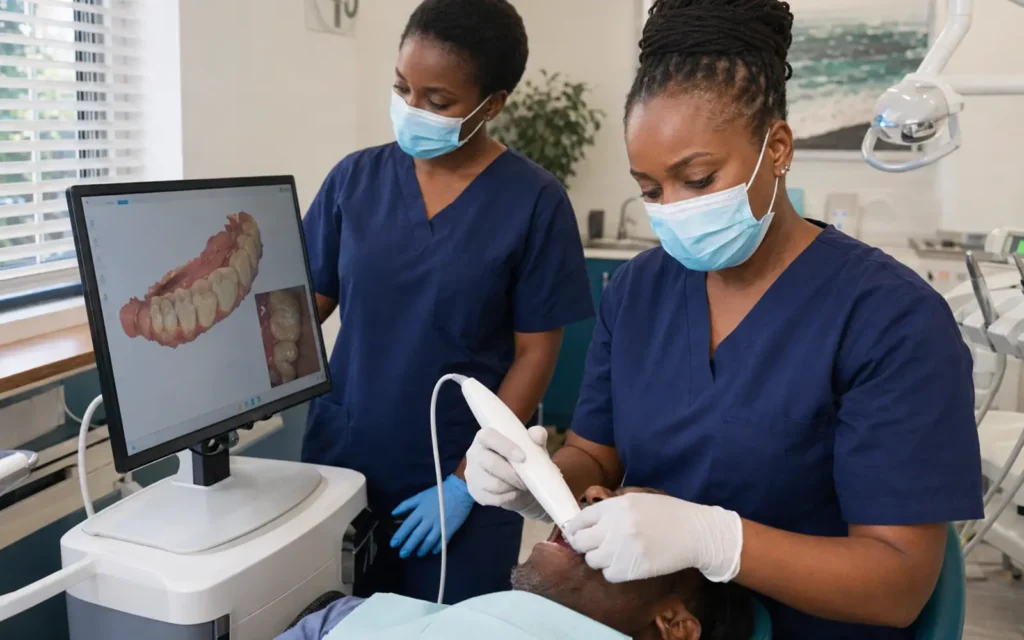
This question is especially important for clinics across Africa, where case volume, laboratory distance, import costs, technical support and internet reliability can vary widely. A scanner that produces an excellent digital impression but remains underused will not deliver a strong return. A carefully selected system, used consistently for the right cases, can change how a clinic communicates with laboratories, presents treatment and manages restorative, orthodontic and implant workflows.
Quick answer: Intraoral scanner ROI should be calculated from the total cost of ownership—not only the purchase price—against measurable savings in impression materials, courier costs, remakes and chair time, plus revenue from services enabled or improved by digital scanning.
Table of Contents
What Does ROI Mean in Digital Dentistry?
Return on investment is the relationship between the value created by the scanner and the amount spent to own and operate it. The calculation should include both direct financial gains and operational improvements that can be measured in money.
A basic formula is:
ROI = (Financial benefit − Total ownership cost) ÷ Total ownership cost × 100
The difficult part is not the formula. It is deciding which benefits are real for your clinic. A clinic completing eight indirect restorations per month has a different business case from a multi-chair practice handling crowns, implants, aligners and occlusal appliances every day.
Calculate the Full Cost of Ownership
The purchase price is only the starting point. Build a three-year or five-year ownership model that includes:
- Scanner and accessories.
- Computer or workstation upgrades.
- Software, cloud or subscription fees.
- Disposable or reusable scanning tips.
- Training for dentists and assistants.
- Warranty extensions and technical support.
- Calibration, maintenance and replacement parts.
- Shipping, customs, taxes and insurance.
- Power protection, backup and data storage.
- Expected downtime and contingency costs.
Ask the supplier to separate one-time costs from recurring costs. A lower purchase price can become less attractive when essential software or support is charged annually.
Where Can a Scanner Save Money?
Impression materials and trays
Digital impressions reduce the use of impression materials, adhesives, trays, disinfection products and model-related consumables for cases completed digitally. These savings are usually easy to calculate from purchase records.
Courier and laboratory communication
When a physical impression must travel to a laboratory in another city or country, digital files can shorten transfer time and reduce shipping expense. This benefit can be particularly valuable in markets where laboratories are geographically distant from clinics.
Remakes and repeat appointments
A scanner allows the operator to inspect margins, missing surfaces and occlusal records before the patient leaves. This can reduce preventable impression errors, although digital scanning does not eliminate the need for tissue management, moisture control and accurate preparation.
Chair time
As the team becomes competent, scanning can reduce time spent mixing material, repeating impressions, cleaning trays and arranging transport. The value of saved time depends on whether that time is used for additional productive care.
Revenue Opportunities Created by Digital Scanning
Potential revenue should be estimated conservatively. A scanner may support:
- Indirect restorations and digital laboratory cases.
- Clear aligner records and monitoring.
- Implant impressions and scan-body workflows.
- Occlusal splints and retainers.
- Digital diagnostic records.
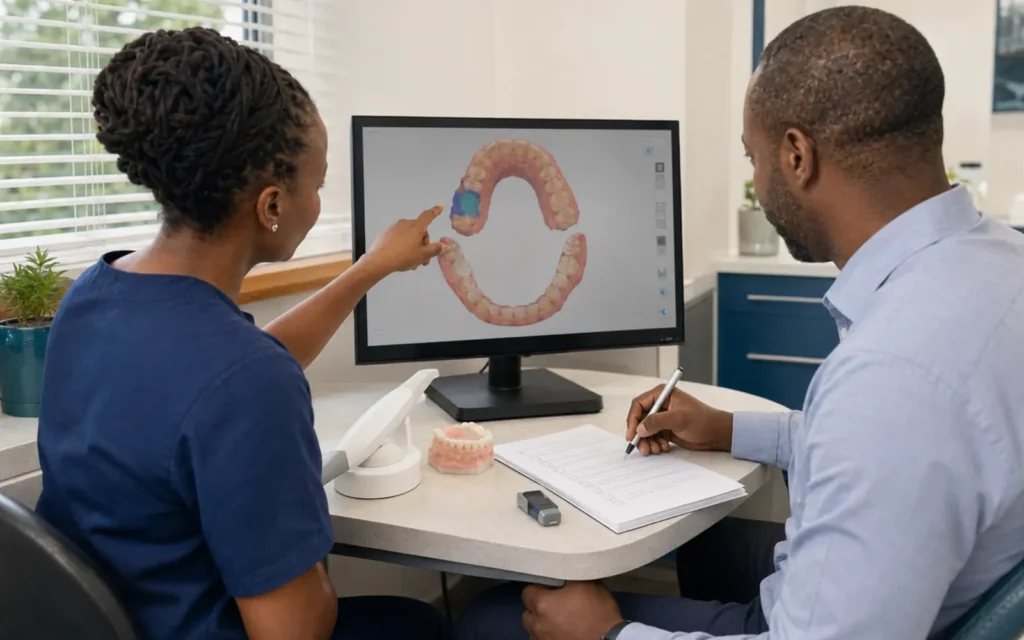
- Patient education using three-dimensional scans.
Do not count every possible service as guaranteed income. Use the clinic’s actual treatment mix, referral patterns and marketing capacity. A realistic forecast is more useful than an optimistic presentation from a salesperson.
Build a Monthly Break-Even Model
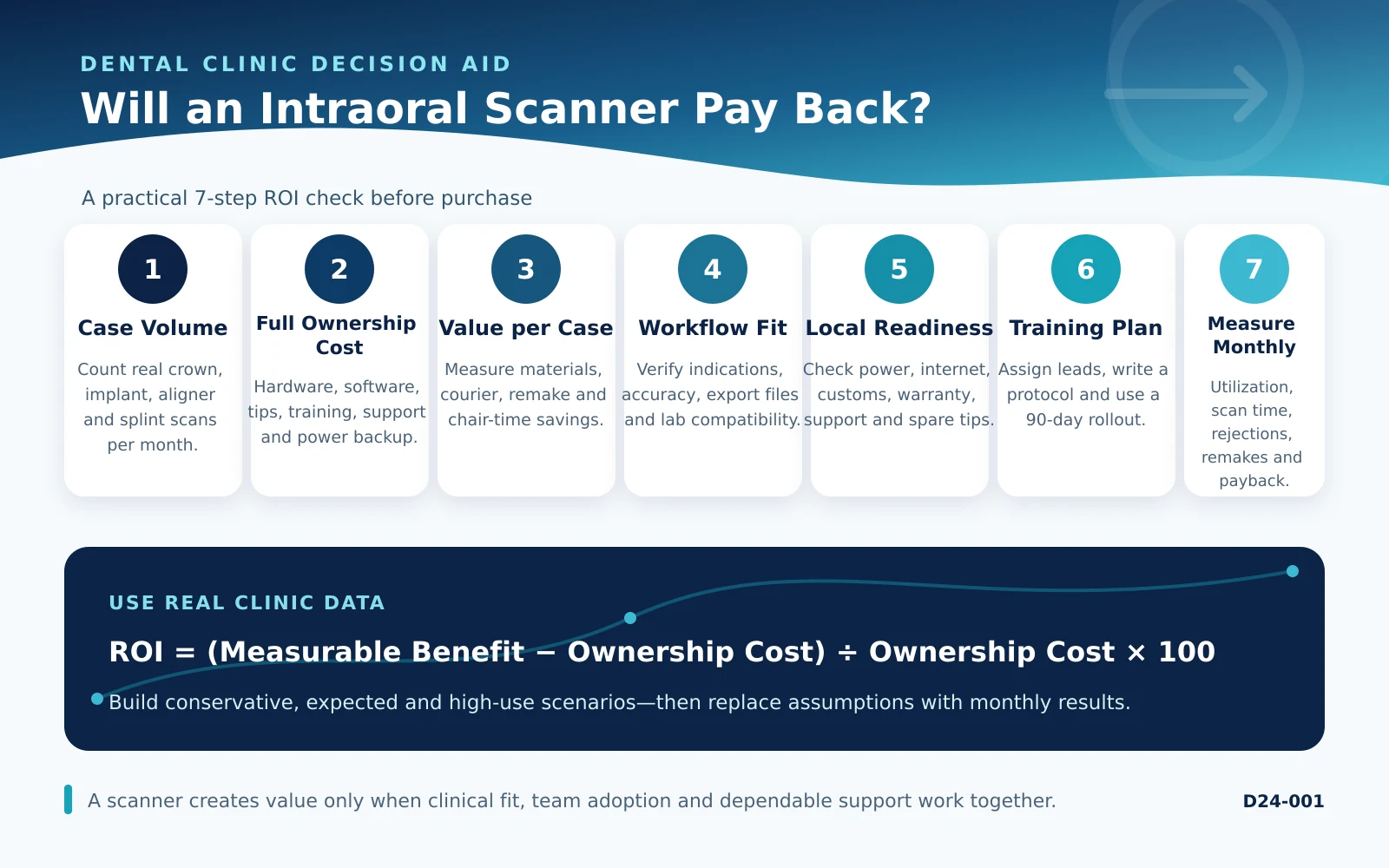
Create three scenarios: conservative, expected and high utilization. For each scenario, list the number of scans by indication, the saving or contribution per case and recurring monthly costs.
For example, a clinic might estimate value from:
- Ten crown or bridge scans.
- Four aligner records.
- Three implant scans.
- Reduced courier expense.
- Two avoided conventional-impression remakes.
The break-even point is the month when cumulative benefits equal cumulative ownership cost. Review the model every quarter using actual figures.
Clinical Performance Still Comes First
ROI is irrelevant if the system does not support the clinic’s intended cases. Current evidence indicates that intraoral scanners perform well for many single-unit and short-span workflows. Full-arch and multi-implant cases are more technique-sensitive, and accuracy can be influenced by scan path, span length, soft tissue, moisture, reflective surfaces and operator experience.
Before purchase, verify:
- Indications supported by the manufacturer.
- Export formats and laboratory compatibility.
- Scan-body and implant-library compatibility.
- Accuracy evidence for the intended cases.
- Recommended computer specifications.
- Software update policy.
Training Determines Whether the Investment Works
A scanner rarely becomes productive simply because it is installed. Create a structured adoption plan:
- Train one lead dentist and one lead assistant.
- Begin with uncomplicated dentate scans and single-unit cases.
- Use a written scan and quality-control protocol.
- Review rejected files and remakes with the laboratory.
- Expand to implant and full-arch workflows only after competence is demonstrated.
Track scan time, rescans, laboratory rejection, remake rates and monthly utilization. These indicators show whether the investment is improving.
What African Dental Clinics Should Verify
Technical support is often as important as scanner specifications. Before placing an order, confirm who will provide remote and in-person support, how replacement tips are supplied, how warranty repairs are handled and what happens if the scanner must be sent abroad.
Also assess electricity stability, surge protection, internet bandwidth, cloud access, data-protection requirements and the laboratory’s ability to receive and process files. A system that fits the local operating environment will usually deliver better value than a more complex system with limited support.
Evaluating the Aidite Rapid 5 Through Denta24
The Aidite Rapid 5 Intraoral Scanner is listed by Denta24 within its digital dentistry portfolio. Clinics considering it should review the current specifications, software conditions, computer requirements, included accessories, warranty and support arrangements directly on the product page and with the Denta24 team.
The correct buying decision should connect the scanner’s verified capabilities with your case volume, laboratory network and implementation plan. Avoid selecting a scanner solely on promotional scan-speed claims.
A 90-Day Implementation Plan
- Days 1–15: installation, calibration, team training and test scans.
- Days 16–30: digital records and straightforward single-unit cases.
- Days 31–60: routine restorative use and laboratory feedback.
- Days 61–90: carefully selected aligner or implant workflows.
At the end of 90 days, compare actual utilization with the assumptions in the ROI model. Correct workflow problems early rather than allowing the scanner to become an expensive device used only occasionally.
Intraoral Scanner ROI: Practical Checks for African Clinics

For African clinics, intraoral scanner ROI is not a product-only decision. It must also account for case volume, laboratory distance, customs and import lead time, software access, power protection, training capacity and after-sales support. A resilient intraoral scanner ROI plan should remain workable when supply, connectivity, service access or patient follow-up is less predictable than expected.
Before adoption, document who is responsible, which current instructions for use apply, how outcomes will be measured and what will trigger referral, retraining or a change in protocol. The goal of intraoral scanner ROI is to calculate total ownership cost, build three utilization scenarios, and verify the scanner against the clinic’s real restorative, implant and orthodontic case mix.
- Verify case volume before implementation or purchase.
- Verify laboratory distance before implementation or purchase.
- Verify customs and import lead time before implementation or purchase.
- Verify software access before implementation or purchase.
- Verify power protection before implementation or purchase.
- Verify training capacity and after-sales support before implementation or purchase.
Use intraoral scanner ROI as an operational decision that is reviewed after real cases. Record complications, remakes, chair time, consumable use, stock-outs and team feedback, then refine the protocol from evidence rather than marketing claims.
Related Denta24 reading: digital dentistry equipment trends for 2026. This context helps place intraoral scanner ROI within a broader clinical and digital strategy.
Conclusion
Intraoral Scanner ROI succeeds when the evidence, local workflow and review plan remain aligned. An intraoral scanner can create strong clinical and financial value, but only when the clinic buys for a defined workflow, trains the team and measures utilization. The best ROI comes from a combination of suitable technology, predictable case volume, laboratory cooperation and reliable support.
How is intraoral scanner ROI calculated?
For context, intraoral scanner ROI should always be adapted to the individual case and the current evidence. Divide the net financial benefit created by the scanner by the total ownership cost, then multiply by 100. Use real savings, added contribution and recurring costs over the same period.
What costs should be included beyond the purchase price?
Include computer upgrades, software, subscriptions, tips, training, calibration, maintenance, support, shipping, tax, power protection and expected downtime.
How many scans per month are needed to justify a scanner?
There is no universal number. The break-even volume depends on local fees, laboratory costs, case mix and the amount saved or earned per digital case.
Can a small clinic achieve a positive ROI?
Yes, particularly when the scanner replaces significant impression and courier costs or enables profitable services. Low utilization, however, can delay payback.
Which procedures create the greatest scanner value?
Common value drivers include crowns, bridges, aligners, implant prosthetics, splints, retainers and improved laboratory communication.
Does a scanner eliminate conventional impressions?
No. Difficult subgingival, edentulous, full-arch or moisture-challenged situations may still require conventional or hybrid methods.
What computer specifications are needed?
Use the manufacturer’s current validated requirements for processor, memory, graphics, storage and operating system. Do not assume an ordinary office computer is sufficient.
How important is scanner training?
Training is critical because scan strategy, data quality, speed, rescanning and team confidence directly affect utilization and ROI.
What should African clinics verify before purchase?
Verify support, spare tips, warranty handling, customs, power protection, internet needs, data access and laboratory compatibility.
How long should ROI be monitored?
Monitor monthly for at least the first year, then review annually or whenever software fees, services or case volume change.
References and Further Reading
- Accuracy and clinical performance of intraoral scanners: umbrella review
- Full-arch intraoral scans versus conventional impressions
- Aidite Rapid 5 on Denta24
Professional disclaimer: This article is intended for dental education and purchasing support. Clinical decisions must be based on the patient’s condition, professional judgment, applicable regulations and the manufacturer’s current instructions for use.