 Endodontic Rotary Files
 Finishing Burs
 High-Speed Burs
 Low-Speed Drills
 Cosmetic Accessories
 Home Whitening Kits
 Clinic Whitening Kits
 Implant Accessories
 Implant Fixtures
 Prosthetic Components
 Surgical Implant Tools
 CAD & CAM Materials
 Lab Consumables
 Lab Equipment
 Digital Dentistry Devices
 Endodontic Equipment
 General Clinic Equipment
 Restorative Equipment
 Surgical Equipment
 Hand Files
 Irrigation & Medicaments
 Post & Core
 Rotary Files
 Sealers
 Brackets & Wires
 Clear Aligners
 Orthodontic Accessories
 Bonding & Adhesive Systems
 Finishing & Polishing
 Matrix Systems
 Etching Materials
 Composite Materials
 Occlusion Checking
 Bone & Grafting Materials
 Surgical Accessories
 Surgical Consumables
 Cementation
 Impression & Registration Materials
 Temporary Restorations
 Periodontal Instruments & Accessories
 Periodontal Treatment Materials


Clear Aligners for Dental Clinics in Africa: Case Selection, Workflow and Profitability

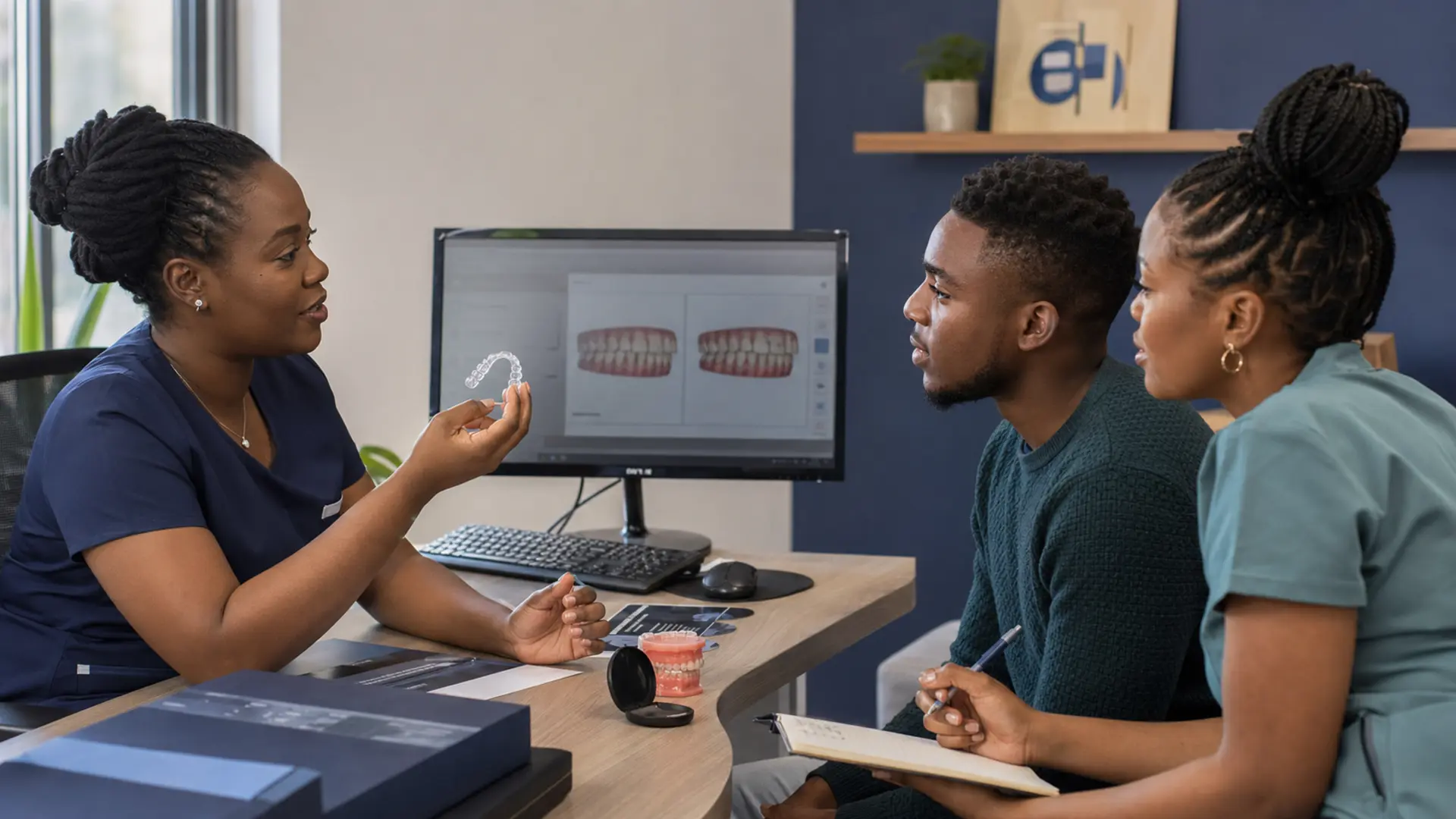
Clear Aligners For Dental Clinics should be evaluated through clinical evidence, workflow fit and local operating conditions. A sound clear aligners for dental clinics decision connects verified performance with the team, patients and resources that will support it in daily practice.
Clear aligners can expand a clinic’s orthodontic services, but they are not simply transparent appliances ordered after a scan. Predictable treatment depends on diagnosis, case selection, biomechanics, patient compliance and retention.
In many African markets, patients are increasingly aware of discreet orthodontic options. Clinics may also see aligners as a new revenue stream. The safest business model begins with limited indications, appropriate training and clear referral boundaries.
Quick answer: Clear aligners are most predictable for carefully selected mild-to-moderate cases managed by trained clinicians. Profitability depends on correct pricing, efficient records, patient compliance, realistic refinement allowances and a retention plan.
Table of Contents
Which Cases Are Suitable?
Clear aligners can be effective for selected crowding, spacing, relapse, arch coordination and controlled tooth movement. Suitability depends on the exact movement required, periodontal health, skeletal relationship and patient cooperation.
Cases requiring complex root movement, major extrusion, significant skeletal correction, difficult impacted teeth or advanced multidisciplinary care may need specialist management or fixed appliances.
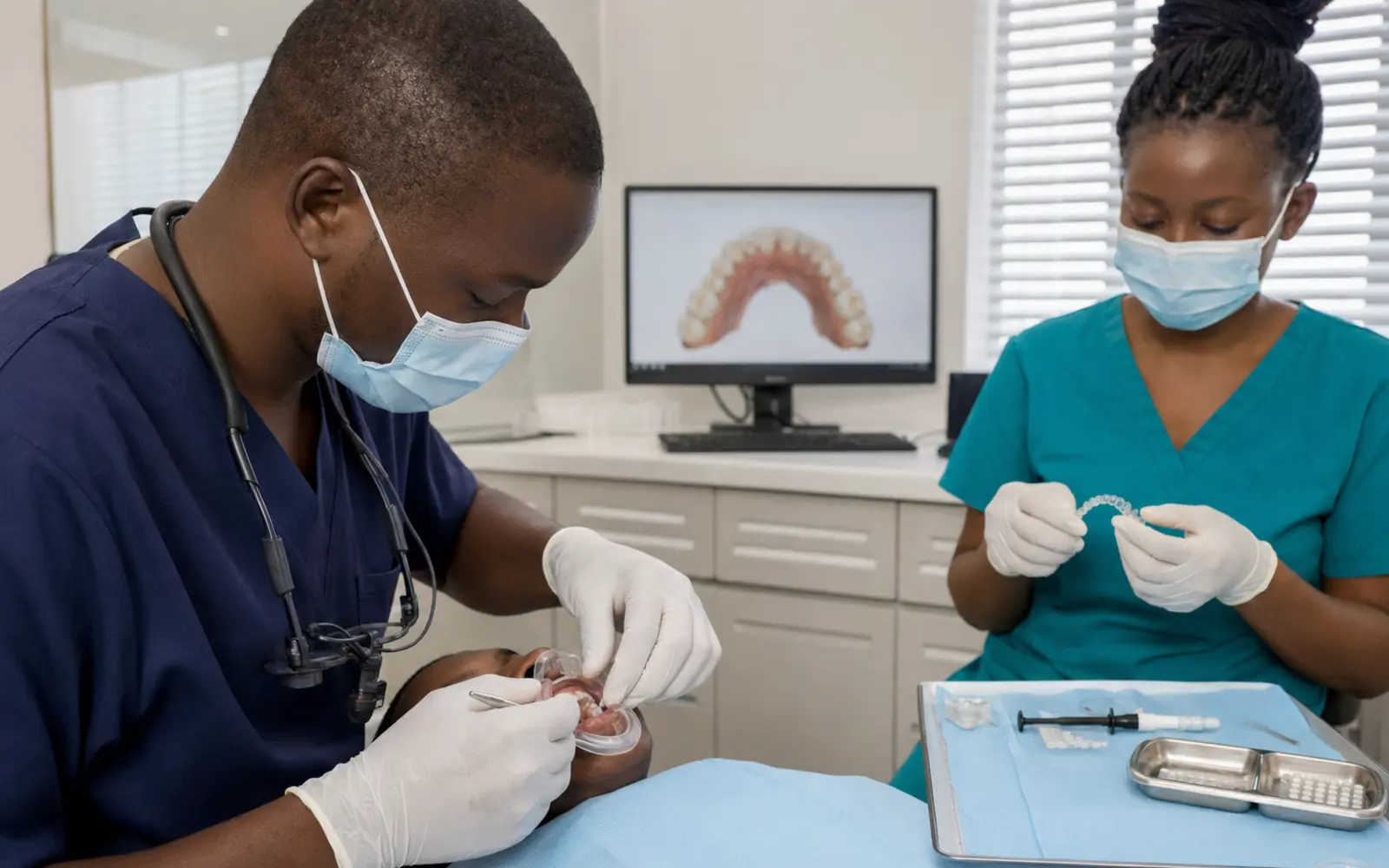
Complete Records Before Treatment
A proper assessment may include:
- Medical and dental history.
- Extraoral and intraoral examination.
- Periodontal evaluation.
- Photographs.
- Radiographs when indicated.
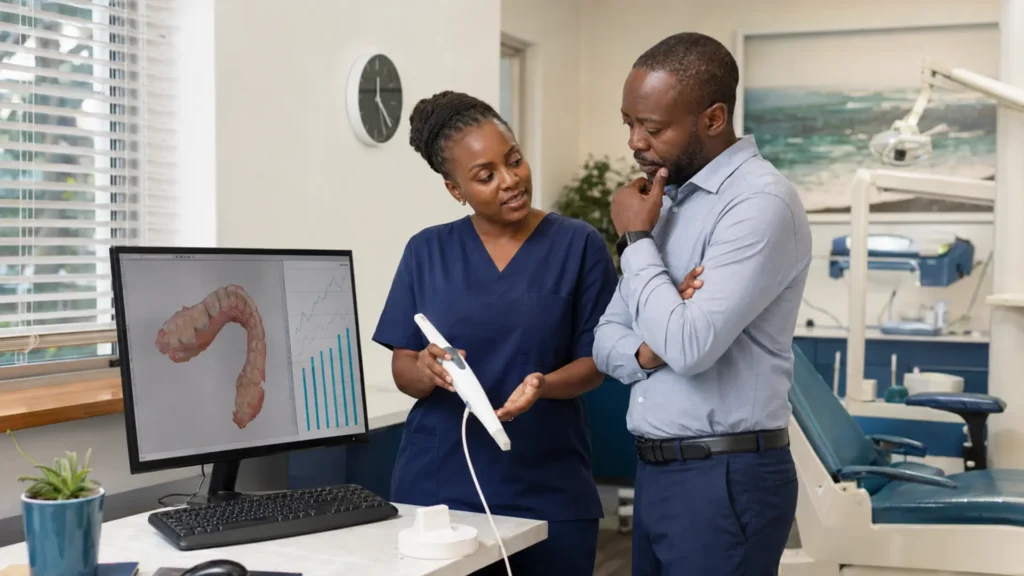
- Digital scans or accurate impressions.
- Occlusal and functional analysis.
A digital setup is not a diagnosis. The clinician must decide whether the proposed movement is biologically and mechanically realistic.
The Digital Workflow
- Capture complete records.
- Submit the prescription and treatment goals.
- Review the digital setup tooth by tooth.
- Approve or request modifications.
- Place attachments and perform IPR as planned.
- Deliver aligners with written instructions.
- Monitor tracking and oral health.
- Plan refinement and retention.
Attachments and IPR
Attachments help produce force systems for rotation, extrusion, root control and anchorage. Their position and shape are not decorative; they are part of the biomechanics.
Interproximal reduction creates controlled space. It should be prescribed, measured and documented. Excessive or poorly controlled IPR can create sensitivity, shape changes or periodontal concerns.
Patient Compliance
Aligners generally require extended daily wear. Patients who remove them frequently, lose trays or change stages too quickly may experience loss of tracking.
At consultation, explain:
- Expected wear time.
- Cleaning and storage.
- Eating and drinking restrictions.
- What to do if an aligner is lost.
- How attachments may affect appearance.
- Possibility of refinements.
- Need for lifelong retention.
Monitoring Treatment
At every review, assess:
- Tracking and fit.
- Attachment integrity.
- Oral hygiene and gingival health.
- Occlusion.
- Unwanted movement.
- Compliance.
- Need to pause, backtrack or refine.
Remote monitoring can assist selected cases, but it does not remove the need for appropriate clinical examination.
Refinements Are Part of the Workflow
A refinement is an additional series of aligners used when the achieved position differs from the planned result or when further correction is required. Clinics should include a reasonable refinement allowance in treatment time, consent and pricing.
Retention
Teeth can relapse after aligner treatment. Discuss the retainer type, wear schedule, replacement cost and monitoring before treatment begins. Retention should be part of the financial quotation, not an unexpected final charge.
Calculating Profitability
Include:
- Provider or laboratory fee.
- Scan and record time.
- Treatment-planning review.
- Attachment and IPR visits.
- Monitoring appointments.
- Refinements.
- Retainers.
- Training and marketing.
- Payment-plan risk.
Pricing should reflect clinical responsibility and chair time, not only aligner manufacturing cost.
African Market Considerations
Patients may travel long distances, making missed reviews more consequential. Select patients who can comply with follow-up and create a clear emergency communication pathway.
Affordability can be improved through staged payments, but the clinic should protect cash flow and define what is included. Consider language, digital access and the patient’s ability to replace lost aligners.
Bloom Aligner and Denta24
Denta24 includes Clear Aligners within its orthodontic portfolio, including Bloom Aligner references in its taxonomy. Clinics should confirm current provider requirements, case-submission process, training and treatment support before offering the service.
A Safe Launch Plan
- Complete recognized aligner education.
- Create case-selection and referral criteria.
- Start with mild, non-extraction cases.
- Use a standardized consent form.
- Review every digital setup carefully.
- Audit refinements, treatment time and patient satisfaction.
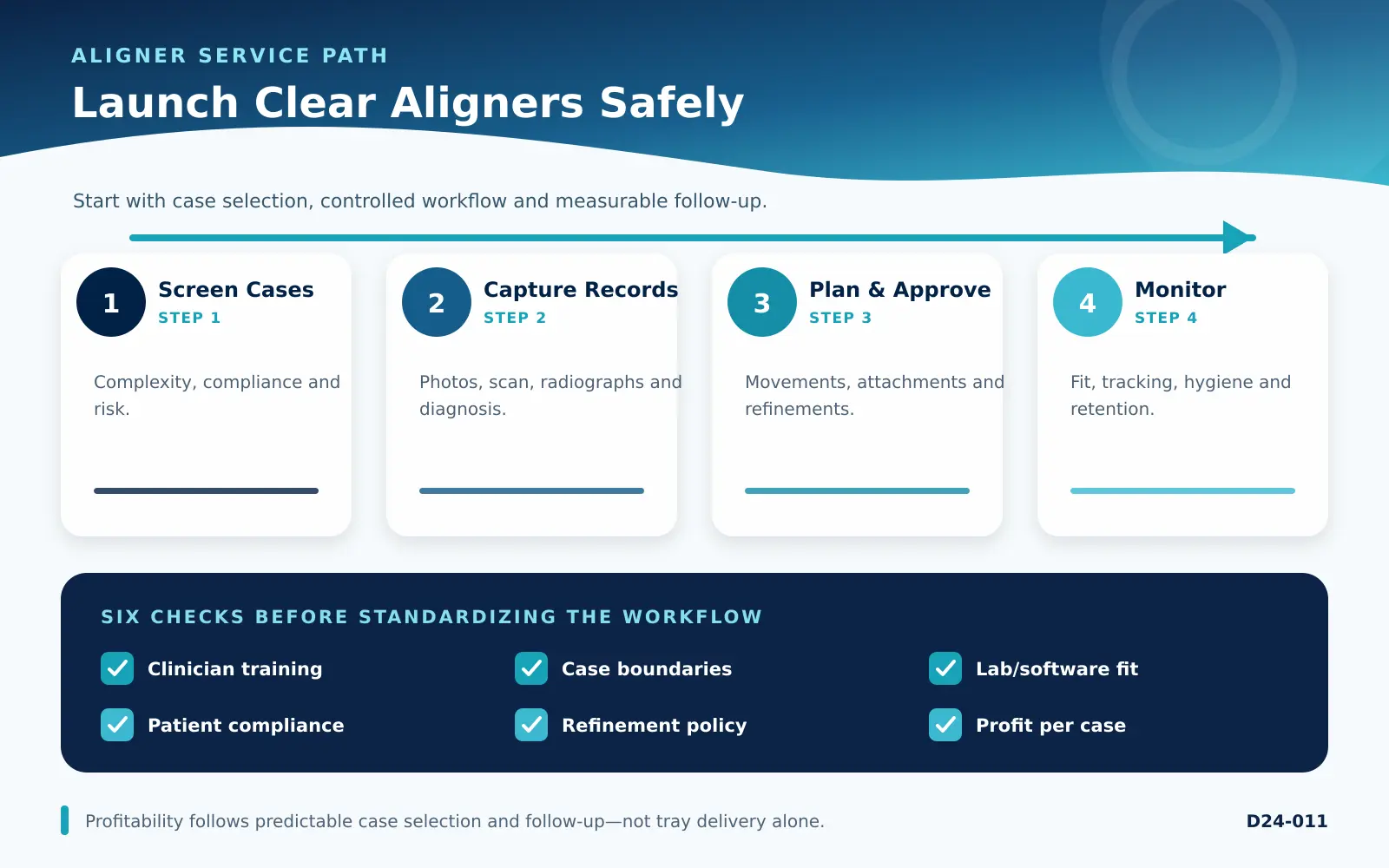
Clear Aligners For Dental Clinics: Practical Checks for African Clinics
For African clinics, clear aligners for dental clinics is not a product-only decision. It must also account for training access, imaging and scanning, patient affordability, compliance, remote monitoring, refinement logistics, retention, data transfer and referral pathways. A resilient clear aligners for dental clinics plan should remain workable when supply, connectivity, service access or patient follow-up is less predictable than expected.
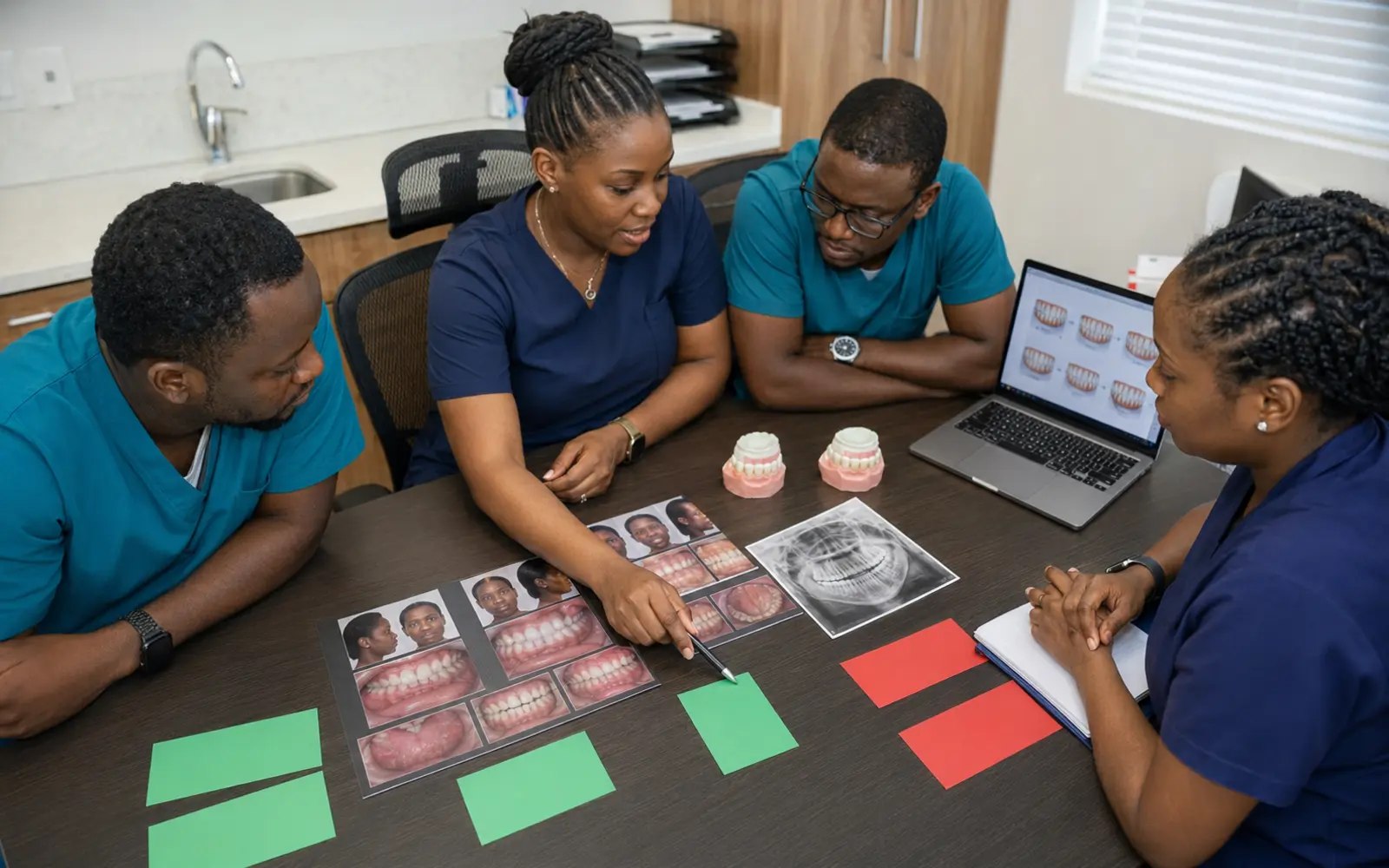
Before adoption, document who is responsible, which current instructions for use apply, how outcomes will be measured and what will trigger referral, retraining or a change in protocol. The goal of clear aligners for dental clinics is to define the clinic’s case-selection limits, escalation pathway and full cost per case before marketing aligner treatment or projecting profit.
- Verify training access before implementation or purchase.
- Verify imaging and scanning before implementation or purchase.
- Verify patient affordability before implementation or purchase.
- Verify compliance before implementation or purchase.
- Verify remote monitoring before implementation or purchase.
- Verify refinement logistics before implementation or purchase.
- Verify retention before implementation or purchase.
Use clear aligners for dental clinics as an operational decision that is reviewed after real cases. Record complications, remakes, chair time, consumable use, stock-outs and team feedback, then refine the protocol from evidence rather than marketing claims.
Related Denta24 reading: digital dentistry equipment trends. This context helps place clear aligners for dental clinics within a broader clinical and digital strategy.
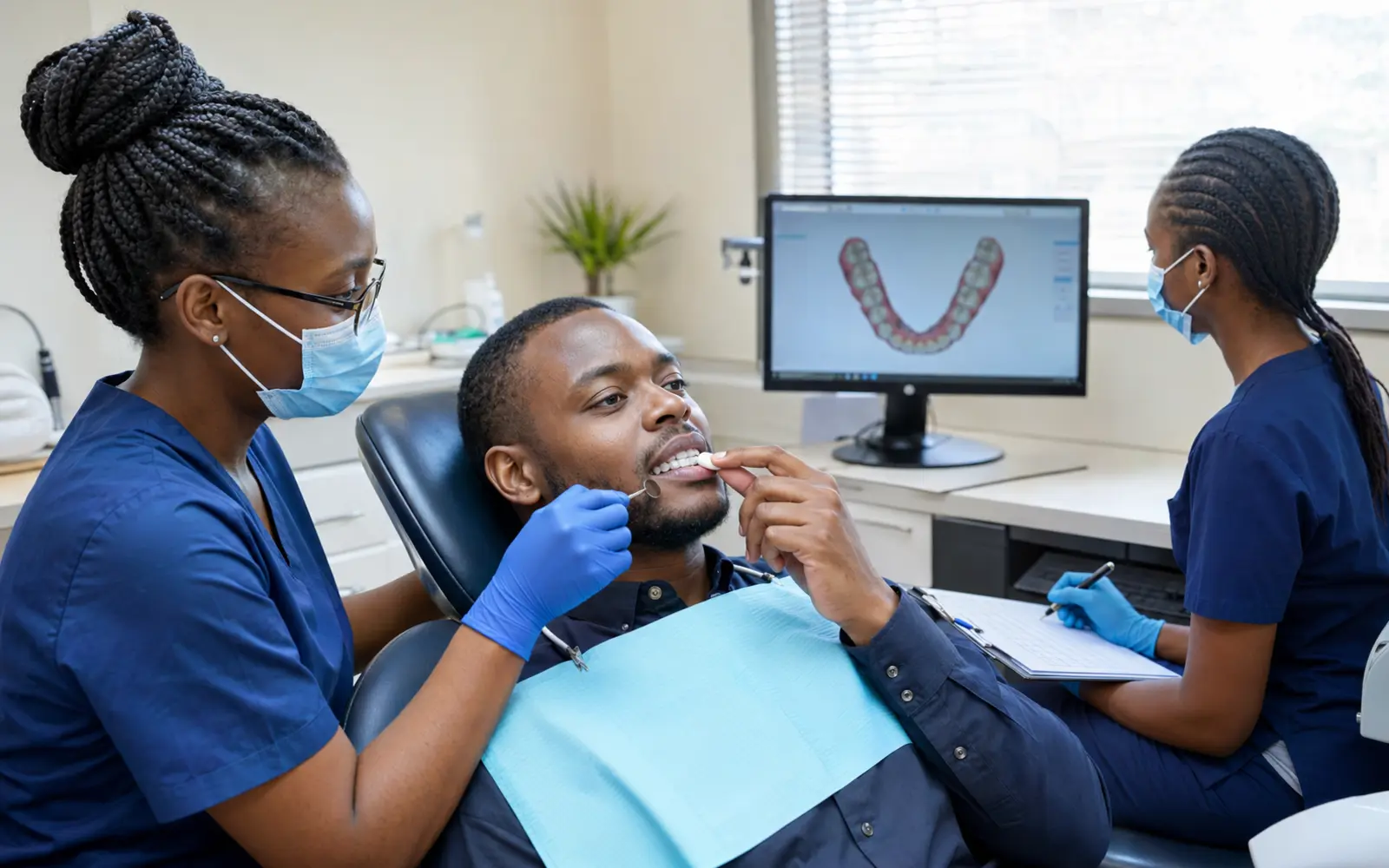
Conclusion
Clear Aligners For Dental Clinics succeeds when the evidence, local workflow and review plan remain aligned. Clear aligners can create clinical and commercial value when they are delivered as orthodontic treatment—not as a retail product. Strong diagnosis, realistic case selection and consistent monitoring protect both patients and the clinic.
Frequently Asked Questions
Which cases are most suitable for clear aligners?
For context, clear aligners for dental clinics should always be adapted to the individual case and the current evidence. Selected mild-to-moderate cases with realistic movement requirements and good patient compliance are generally the best starting point.
Can general dentists provide aligners?
This depends on training, competence, regulation and case complexity. Difficult cases should be referred.
What records are needed?
Records may include examination, photographs, radiographs, periodontal assessment, scans and occlusal records.
What are attachments used for?
They improve force delivery for movements such as rotation, extrusion, root control and anchorage.
How important is compliance?
Very important. Inadequate wear can cause poor tracking, delays and extra refinements.
What is interproximal reduction?
IPR is controlled enamel reduction between teeth to create space according to the treatment plan.
How often should patients be reviewed?
The interval depends on the case and system, but reviews must identify tracking, hygiene and biological problems.
Are refinements normal?
Yes. They are common enough that time and cost should be anticipated from the beginning.
What happens after treatment?
Retention is required to reduce relapse, and the plan should be agreed before active treatment.
How is profitability calculated?
Include manufacturing, records, chair time, planning, monitoring, refinements, retainers, training and payment risk.
References and Further Reading
Professional disclaimer: Orthodontic treatment requires appropriate training, diagnosis, monitoring and referral. Digital planning does not replace clinical responsibility.