
 Endodontic Rotary Files
 Finishing Burs
 High-Speed Burs
 Low-Speed Drills
 Cosmetic Accessories
 Home Whitening Kits
 Clinic Whitening Kits
 Implant Accessories
 Implant Fixtures
 Prosthetic Components
 Surgical Implant Tools
 CAD & CAM Materials
 Lab Consumables
 Lab Equipment
 Digital Dentistry Devices
 Endodontic Equipment
 General Clinic Equipment
 Restorative Equipment
 Surgical Equipment
 Hand Files
 Irrigation & Medicaments
 Post & Core
 Rotary Files
 Sealers
 Brackets & Wires
 Clear Aligners
 Orthodontic Accessories
 Bonding & Adhesive Systems
 Finishing & Polishing
 Matrix Systems
 Etching Materials
 Composite Materials
 Occlusion Checking
 Bone & Grafting Materials
 Surgical Accessories
 Surgical Consumables
 Cementation
 Impression & Registration Materials
 Temporary Restorations
 Periodontal Instruments & Accessories
 Periodontal Treatment Materials


Dentin Hypersensitivity Management Before Whitening and Restorative Care


Dentin Hypersensitivity Management should be evaluated through clinical evidence, workflow fit and local operating conditions. A sound dentin hypersensitivity management decision connects verified performance with the team, patients and resources that will support it in daily practice.
Dentin hypersensitivity is common, but it should never be treated as a diagnosis of convenience. A short sharp response to cold or air may arise from exposed dentin, while similar symptoms can be produced by caries, cracks, defective restorations or pulpal disease.
Sensitivity also matters before whitening and restorative procedures. Identifying high-risk patients and controlling triggers can improve comfort and reduce unplanned follow-up.
Quick answer: Effective hypersensitivity management begins with differential diagnosis, removal of contributing factors and use of an appropriate desensitizing strategy. Persistent, spontaneous or worsening pain requires further investigation.
Table of Contents
What Is Dentin Hypersensitivity?
It is typically described as a short, sharp pain from exposed dentin in response to thermal, evaporative, tactile, osmotic or chemical stimuli that cannot be explained by another dental disease.
The hydrodynamic theory proposes that movement of fluid within open dentinal tubules stimulates pulpal nerve responses.

Common Causes of Exposed Dentin
- Gingival recession.
- Periodontal treatment.
- Abrasion from traumatic brushing.
- Erosion from dietary or gastric acids.
- Cervical wear.
- Loss of smear layer.
- Recent restorative or whitening procedures.
Conditions That Must Be Excluded
Before prescribing a desensitizer, investigate:
- Caries.
- Cracked tooth or cusp.
- Leaking or high restoration.
- Reversible or irreversible pulpitis.
- Postoperative sensitivity.
- Occlusal trauma.
- Periodontal or endodontic pathology.
Spontaneous pain, lingering thermal pain, swelling or biting pain requires a broader diagnostic process.
Risk Assessment Before Whitening
Record baseline sensitivity and examine for recession, erosion, cracks and defective restorations. Discuss previous whitening reactions. Patients with existing sensitivity may need a modified concentration, exposure time or treatment schedule.
Do not begin elective bleaching when active disease or unexplained pain is present.
How Desensitizing Ingredients Work
Potassium salts
Potassium-based products are intended to reduce nerve excitability over time.
Fluoride and tubule-occluding agents
These may promote mineral deposition or reduce fluid movement by narrowing or blocking tubules.
Resin and adhesive approaches
In selected localized cases, sealing exposed dentin can provide longer-lasting control, but surface preparation and diagnosis are important.
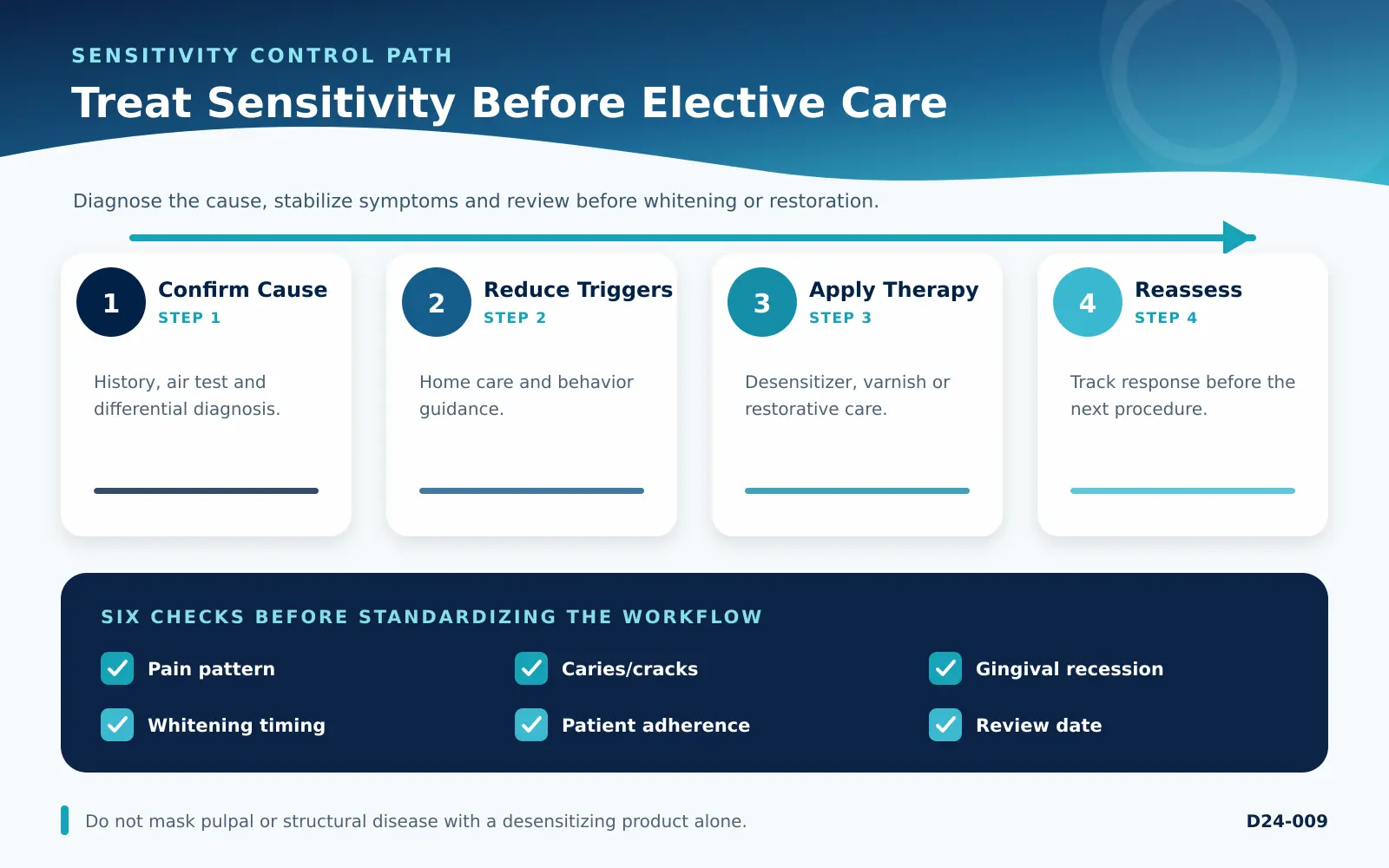
Stepwise Management
- Identify and treat disease.
- Modify traumatic brushing and dietary acids.
- Introduce a desensitizing toothpaste.
- Use in-office products for persistent localized symptoms.
- Consider resin sealing or restorative treatment when indicated.
- Review response and reassess diagnosis.
Managing Sensitivity During Whitening
Use the lowest effective protocol, protect soft tissues and follow the whitening product‘s exposure instructions. If sensitivity develops, options may include shortening sessions, increasing the interval between sessions or using an approved desensitizing product.
Severe symptoms should not simply be masked. Stop treatment and evaluate the cause.
Restorative Dentistry Considerations
Sensitivity after a restoration can result from bonding errors, contamination, inadequate curing, polymerization stress or occlusal interference. Applying desensitizer without correcting the cause may delay appropriate treatment.
FGM Desensibilize KF
FGM Desensibilize KF is listed by Denta24 as a professional desensitizing gel. Review the current concentration, application time, indications and relationship to whitening protocols before use.
Patient Instructions
- Use a soft brush and gentle technique.
- Avoid brushing immediately after acidic exposure.
- Reduce frequent acidic drinks and snacks.
- Use the recommended desensitizing toothpaste consistently.
- Report spontaneous, prolonged or worsening pain.
African Market Considerations
In settings where specialist referral may require travel, the initial diagnosis should be thorough. Simple preventive instructions and a documented review plan can reduce repeated emergency visits. Stock should be stored within the manufacturer’s temperature range and monitored during hot-weather transport.
Dentin Hypersensitivity Management: Practical Checks for African Clinics
For African clinics, dentin hypersensitivity management is not a product-only decision. It must also account for differential diagnosis, product access, patient follow-up, periodontal status, whitening supervision, oral-hygiene habits and affordability of repeated care. A resilient dentin hypersensitivity management plan should remain workable when supply, connectivity, service access or patient follow-up is less predictable than expected.

Before adoption, document who is responsible, which current instructions for use apply, how outcomes will be measured and what will trigger referral, retraining or a change in protocol. The goal of dentin hypersensitivity management is to diagnose the cause before treatment, remove aggravating factors, select an evidence-based intervention and review the response rather than masking persistent pain.
- Verify differential diagnosis before implementation or purchase.
- Verify product access before implementation or purchase.
- Verify patient follow-up before implementation or purchase.
- Verify periodontal status before implementation or purchase.
- Verify whitening supervision before implementation or purchase.
- Verify oral-hygiene habits and affordability of repeated care before implementation or purchase.
Use dentin hypersensitivity management as an operational decision that is reviewed after real cases. Record complications, remakes, chair time, consumable use, stock-outs and team feedback, then refine the protocol from evidence rather than marketing claims.
Related Denta24 reading: choosing suitable dental materials. This context helps place dentin hypersensitivity management within a broader clinical and digital strategy.

Conclusion
Dentin Hypersensitivity Management succeeds when the evidence, local workflow and review plan remain aligned. Dentin hypersensitivity is manageable when the clinician identifies the source and selects treatment according to severity and risk. A desensitizing product is one component of care, not a replacement for diagnosis.
Frequently Asked Questions
What is dentin hypersensitivity?
For context, dentin hypersensitivity management should always be adapted to the individual case and the current evidence. It is a short, sharp response from exposed dentin to thermal, tactile, evaporative, osmotic or chemical triggers.
What can mimic hypersensitivity?
Caries, cracks, pulpitis, defective restorations, occlusal trauma and postoperative sensitivity can produce similar symptoms.
Why can whitening cause sensitivity?
Peroxide can temporarily increase pulpal response and fluid movement, especially with stronger or longer exposure.
Who is at higher risk?
Patients with recession, erosion, exposed dentin, previous sensitivity or cracks may be more susceptible.
How do potassium products work?
They are intended to reduce nerve excitability, while other ingredients may help occlude tubules.
What is the role of fluoride?
Fluoride may support remineralization and contribute to tubule occlusion depending on the formulation.
Should desensitizer be used before every whitening case?
No. Use should be based on individual risk and the whitening and desensitizing product protocols.
Can bonding agents reduce sensitivity?
They can seal tubules in selected cases, but require correct diagnosis and technique.
How soon should symptoms improve?
Transient symptoms may resolve, but persistent, spontaneous or worsening pain should be investigated.
What home advice should be given?
Recommend gentle brushing, suitable toothpaste, reduced acid exposure and clear instructions for follow-up.
References and Further Reading
Professional disclaimer: Sensitivity may indicate dental disease. Diagnose the cause before recommending treatment.