 Endodontic Rotary Files
 Finishing Burs
 High-Speed Burs
 Low-Speed Drills
 Cosmetic Accessories
 Home Whitening Kits
 Clinic Whitening Kits
 Implant Accessories
 Implant Fixtures
 Prosthetic Components
 Surgical Implant Tools
 CAD & CAM Materials
 Lab Consumables
 Lab Equipment
 Digital Dentistry Devices
 Endodontic Equipment
 General Clinic Equipment
 Restorative Equipment
 Surgical Equipment
 Hand Files
 Irrigation & Medicaments
 Post & Core
 Rotary Files
 Sealers
 Brackets & Wires
 Clear Aligners
 Orthodontic Accessories
 Bonding & Adhesive Systems
 Finishing & Polishing
 Matrix Systems
 Etching Materials
 Composite Materials
 Occlusion Checking
 Bone & Grafting Materials
 Surgical Accessories
 Surgical Consumables
 Cementation
 Impression & Registration Materials
 Temporary Restorations
 Periodontal Instruments & Accessories
 Periodontal Treatment Materials


Universal Dental Composite: How to Choose for Everyday Restorative Dentistry


Universal Dental Composite should be evaluated through clinical evidence, workflow fit and local operating conditions. A sound universal dental composite decision connects verified performance with the team, patients and resources that will support it in daily practice.
A universal composite is often expected to do many jobs: blend naturally in anterior teeth, resist wear in posterior teeth, sculpt easily, polish well and simplify inventory. No material performs identically in every clinical situation, but a carefully selected universal composite can cover a large percentage of daily restorative work.
For clinics managing long import lead times or limited storage, a streamlined composite system can reduce expired stock and simplify staff training. The goal is not to own the largest shade range. It is to build a dependable restorative inventory around the clinic’s most frequent cases.
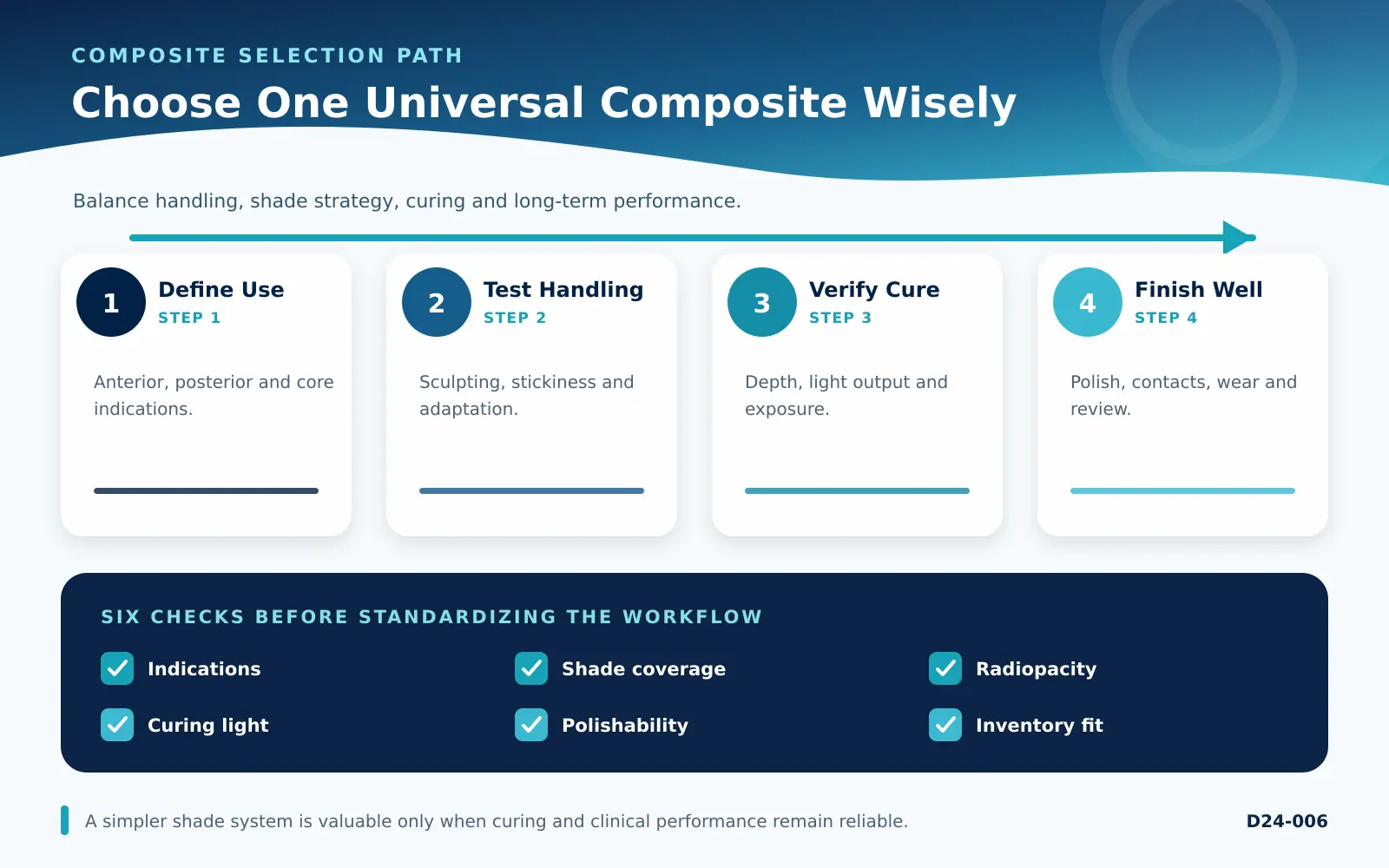
Quick answer: Select a universal composite by clinical indication, handling, shade strategy, radiopacity, wear resistance, polishability and compatibility with the curing light and adhesive system—not by filler percentage or marketing language alone.
Table of Contents
What Does “Universal Composite” Mean?
The term usually describes a resin composite intended for both anterior and posterior restorations, often with a simplified shade system. It may be supplied in several body shades, opacities or a single-shade concept.
“Universal” does not mean suitable for every procedure. Flowable liners, bulk-fill restorations, core build-ups, highly aesthetic layering and indirect repairs may still require specialized materials.
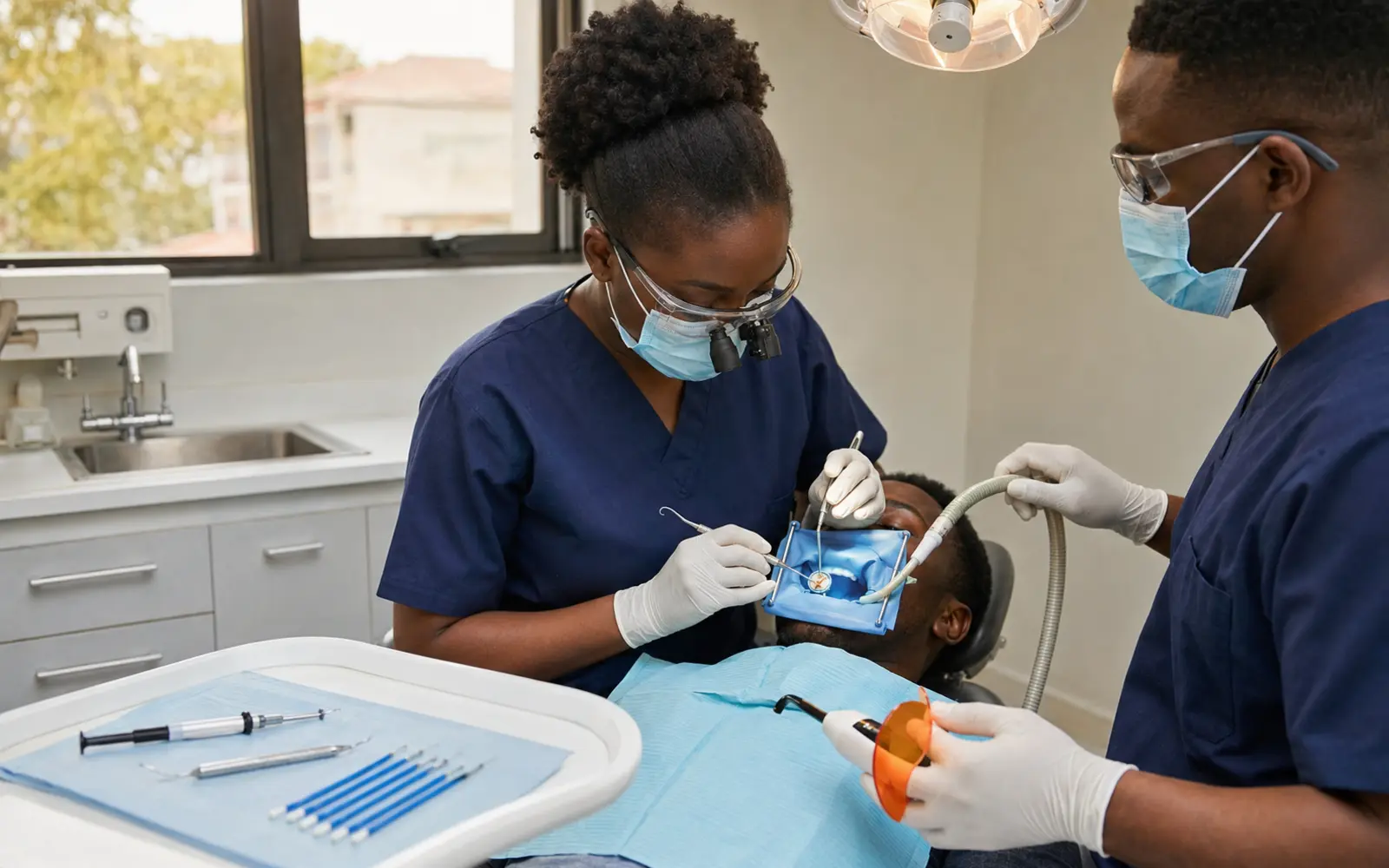
Start with the Clinic’s Case Mix
Review the previous three to six months of restorative work. Determine the percentage of:
- Small and moderate posterior restorations.
- Large load-bearing restorations.
- Anterior Class III, IV and V cases.
- Diastema closure and reshaping.
- Repair procedures.
- Pediatric or geriatric cases.
A clinic dominated by routine posterior care may prioritize sculptability, contact formation, wear resistance and radiopacity. A cosmetic practice may need a more flexible opacity and shade system.
Filler Technology: Important but Not Sufficient
Fillers influence viscosity, strength, wear, shrinkage, polish and optical behavior. However, a higher filler percentage does not automatically mean better clinical performance. Particle distribution, resin chemistry, coupling and curing all matter.
Request complete technical information and clinical evidence rather than comparing one number on the package.
Handling and Sculptability
Handling is highly operator-dependent. Evaluate whether the composite:
- Sticks to the instrument.
- Slumps before curing.
- Adapts to internal walls.
- Holds occlusal anatomy.
- Allows clean proximal contour.
- Responds well to brushing or modelling instruments.
Test a new material in controlled cases before changing the entire clinic inventory.
Shade and Opacity Strategy
A simplified shade system can reduce stock, but it must match the patient population and aesthetic expectations. Consider:
- Common tooth shades in the practice.
- Need for dentin, enamel or opaque shades.
- Masking discolored substrates.
- Thickness-related color changes.
- Use of a shade guide before isolation.
Document the shade and lot used, particularly in aesthetic cases that may require future repair.
Curing Depth and Light Compatibility
Composite performance depends on adequate polymerization. Check the recommended increment thickness and exposure time. Verify that the curing light emits the wavelength required by the photoinitiator.
Maintain the light by cleaning the tip and measuring output. Distance, angulation, dark shades and opaque materials can reduce energy reaching the bottom of the increment.
Strength, Wear and Fracture Risk
Posterior restorations require suitable mechanical properties, but restoration design and remaining tooth structure are equally important. A strong composite cannot compensate for unsupported cusps, poor isolation or uncontrolled occlusion.
For extensive posterior defects, assess whether cuspal coverage or an indirect restoration is more appropriate.
Radiopacity
Radiopacity helps the clinician distinguish the restoration from tooth structure and identify recurrent caries, voids or overhangs. Materials with inadequate radiographic contrast can complicate follow-up.
Finishing and Polishing
A composite that retains polish may reduce surface staining and plaque accumulation, especially in anterior and cervical areas. Evaluate the full system of finishing burs, discs, strips, cups and pastes.
Good initial contour reduces the amount of aggressive finishing required.
Clinical Technique Matters More Than Brand Switching
Failures commonly relate to:
- Incorrect diagnosis.
- Moisture contamination.
- Inadequate bonding protocol.
- Thick increments.
- Insufficient curing.
- Open contacts.
- High occlusion.
- Poor finishing.
Changing composite will not solve a protocol problem. Audit the complete procedure before assuming the material is responsible.
Inventory Planning for African Clinics
Store composite within the manufacturer’s temperature range and protect it from heat and direct light. In hot climates, monitor storage areas and transport conditions. If refrigeration is recommended, allow material to reach appropriate working conditions before use.
Use first-expire-first-out rotation and avoid buying many rarely used shades. A core inventory might include the most common body shades, one opaque option, one enamel option and a compatible flowable material.
Exploring Restorative Materials on Denta24
Denta24 organizes products under Restorative Materials. When comparing composites, review the current manufacturer’s instructions, shade guide, curing requirements, pack size and clinical indications.
A Practical Evaluation Checklist
- Define the primary indications.
- Review independent and manufacturer evidence.
- Confirm curing-light compatibility.
- Test handling in a small number of cases.
- Assess shade match and polishing.
- Track sensitivity, fracture and repair.
- Review inventory turnover after three months.
Universal Dental Composite: Practical Checks for African Clinics
For African clinics, universal dental composite is not a product-only decision. It must also account for shade demand, curing-light output, storage temperature, supply consistency, inventory turnover, staff familiarity and repairability of common restorations. A resilient universal dental composite plan should remain workable when supply, connectivity, service access or patient follow-up is less predictable than expected.

Before adoption, document who is responsible, which current instructions for use apply, how outcomes will be measured and what will trigger referral, retraining or a change in protocol. The goal of universal dental composite is to evaluate the composite as part of a complete adhesive and curing protocol and avoid choosing from filler percentage or promotional strength claims alone.
- Verify shade demand before implementation or purchase.
- Verify curing-light output before implementation or purchase.
- Verify storage temperature before implementation or purchase.
- Verify supply consistency before implementation or purchase.
- Verify inventory turnover before implementation or purchase.
- Verify staff familiarity and repairability of common restorations before implementation or purchase.
Use universal dental composite as an operational decision that is reviewed after real cases. Record complications, remakes, chair time, consumable use, stock-outs and team feedback, then refine the protocol from evidence rather than marketing claims.
Related Denta24 reading: selecting high-quality dental materials. This context helps place universal dental composite within a broader clinical and digital strategy.
Conclusion
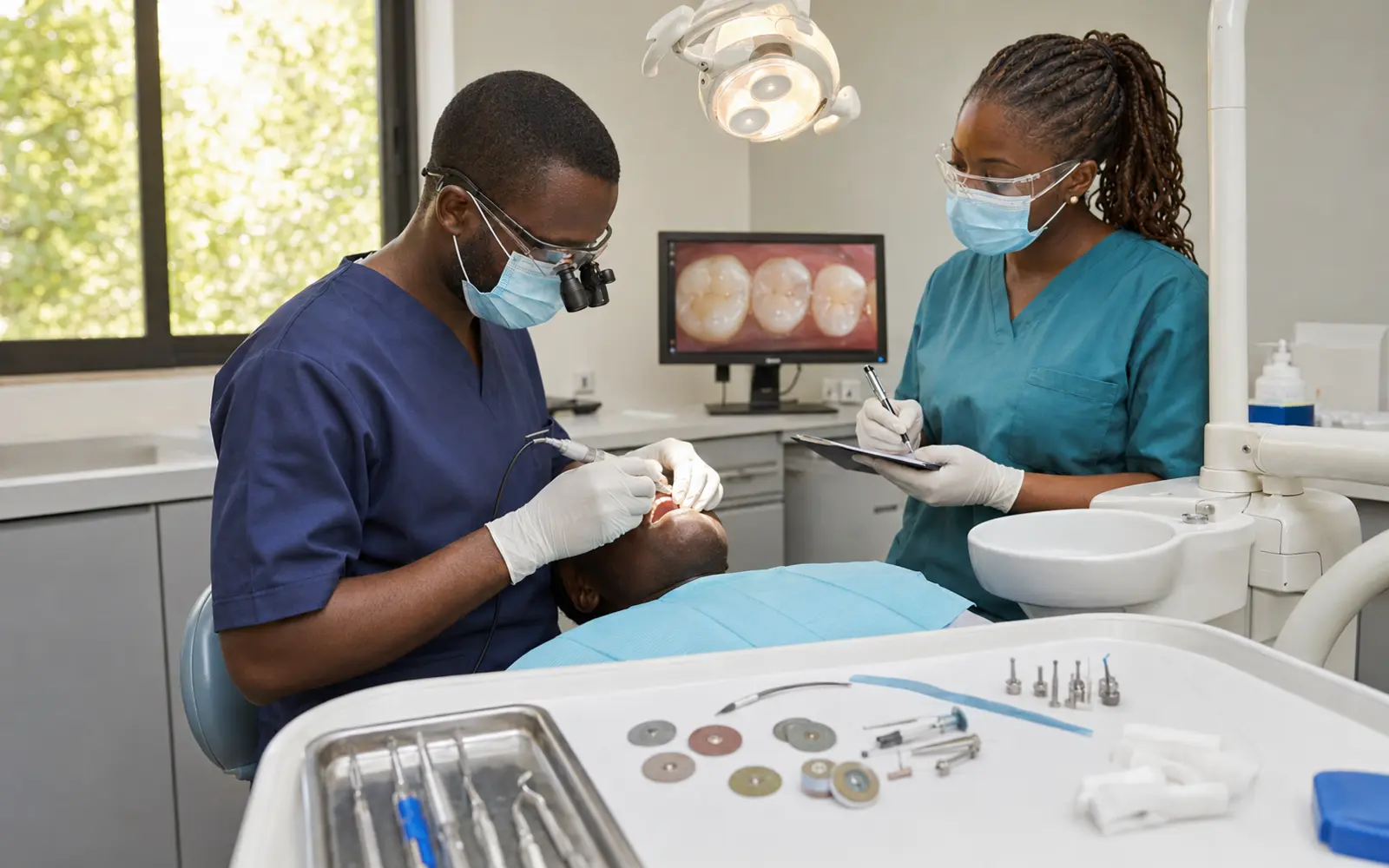
Universal Dental Composite succeeds when the evidence, local workflow and review plan remain aligned. The best universal composite is the one that fits the clinic’s case mix, technique and inventory system. A controlled range, supported by reliable curing and bonding protocols, is usually more valuable than a large collection of materials used inconsistently.
Frequently Asked Questions
What makes a composite universal?
For context, universal dental composite should always be adapted to the individual case and the current evidence. It is designed to cover a broad range of anterior and posterior indications with manageable shades and handling.
Is one composite suitable for every restoration?
No. Flowable, bulk-fill, core build-up, highly aesthetic or indirect-repair cases may require other materials.
How important is filler content?
Filler affects properties, but the percentage alone does not predict handling or long-term clinical performance.
What handling properties should be tested?
Assess stickiness, sculptability, slump, adaptation, extrusion and behavior under clinic lighting.
How many shades should a clinic stock?
Stock enough to cover common cases, then add special opacities or enamel shades according to actual demand.
Why does radiopacity matter?
It helps distinguish the restoration and evaluate margins, recurrent caries and voids on radiographs.
How does the curing light affect performance?
Incorrect wavelength, low output, excessive distance or insufficient exposure can reduce polymerization.
What causes postoperative sensitivity?
Possible causes include diagnostic errors, contamination, bonding technique, shrinkage stress, occlusion and inadequate curing.
How should composite be stored in hot climates?
Follow the manufacturer’s temperature range, protect from heat and light and monitor transport and storage.
How should a new composite be evaluated?
Use a controlled trial and track handling, shade, finishing, sensitivity, fractures and recalls.
References and Further Reading
Professional disclaimer: Use restorative products according to their current instructions for use and the clinical needs of the individual patient.