 Endodontic Rotary Files
 Finishing Burs
 High-Speed Burs
 Low-Speed Drills
 Cosmetic Accessories
 Home Whitening Kits
 Clinic Whitening Kits
 Implant Accessories
 Implant Fixtures
 Prosthetic Components
 Surgical Implant Tools
 CAD & CAM Materials
 Lab Consumables
 Lab Equipment
 Digital Dentistry Devices
 Endodontic Equipment
 General Clinic Equipment
 Restorative Equipment
 Surgical Equipment
 Hand Files
 Irrigation & Medicaments
 Post & Core
 Rotary Files
 Sealers
 Brackets & Wires
 Clear Aligners
 Orthodontic Accessories
 Bonding & Adhesive Systems
 Finishing & Polishing
 Matrix Systems
 Etching Materials
 Composite Materials
 Occlusion Checking
 Bone & Grafting Materials
 Surgical Accessories
 Surgical Consumables
 Cementation
 Impression & Registration Materials
 Temporary Restorations
 Periodontal Instruments & Accessories
 Periodontal Treatment Materials


Bioceramic vs Resin Based Sealer: Evidence, Handling and Retreatment

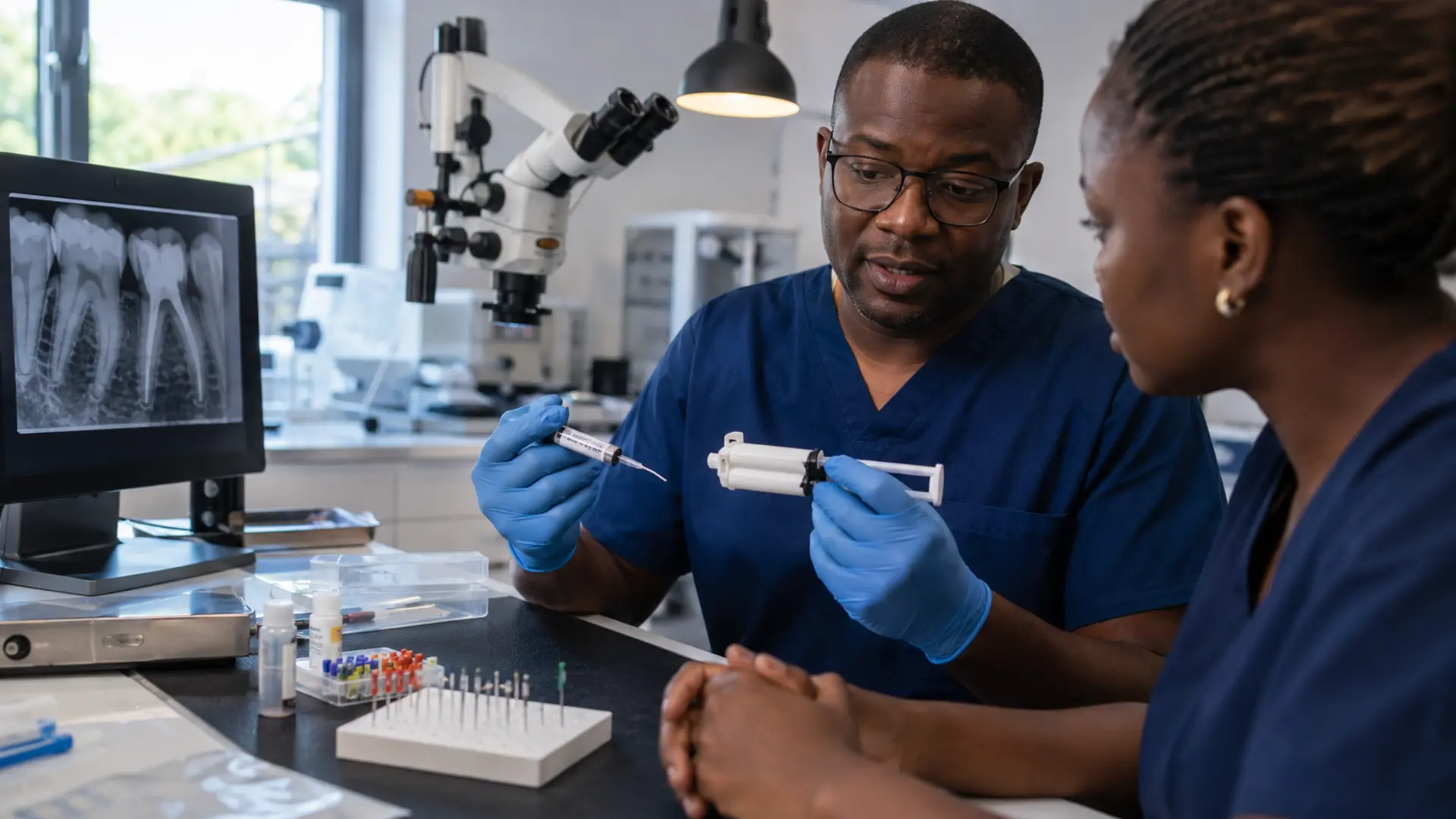
Bioceramic Vs Resin Based Sealer should be evaluated through clinical evidence, workflow fit and local operating conditions. A sound bioceramic vs resin based sealer decision connects verified performance with the team, patients and resources that will support it in daily practice.
Endodontic sealers fill the interface between gutta-percha and canal walls, enter irregularities and support the seal of the obturation. The current market includes hydraulic calcium-silicate products commonly called bioceramic sealers and established resin-based systems.
The decision should be linked to obturation technique, moisture control, retreatment strategy and evidence—not to the assumption that one chemistry is universally superior.
Quick answer: Bioceramic sealers offer hydraulic setting and calcium-silicate chemistry, while resin-based sealers offer familiar handling and established performance. Select the material as part of a complete obturation and retreatment protocol.
Table of Contents
Bioceramic Sealer Chemistry
Many bioceramic sealers are calcium-silicate-based hydraulic materials. They use moisture in the canal environment to support setting. Manufacturers may describe bioactivity based on mineral interaction or apatite-like formation under test conditions.
Clinical claims should remain consistent with the product evidence and indications.
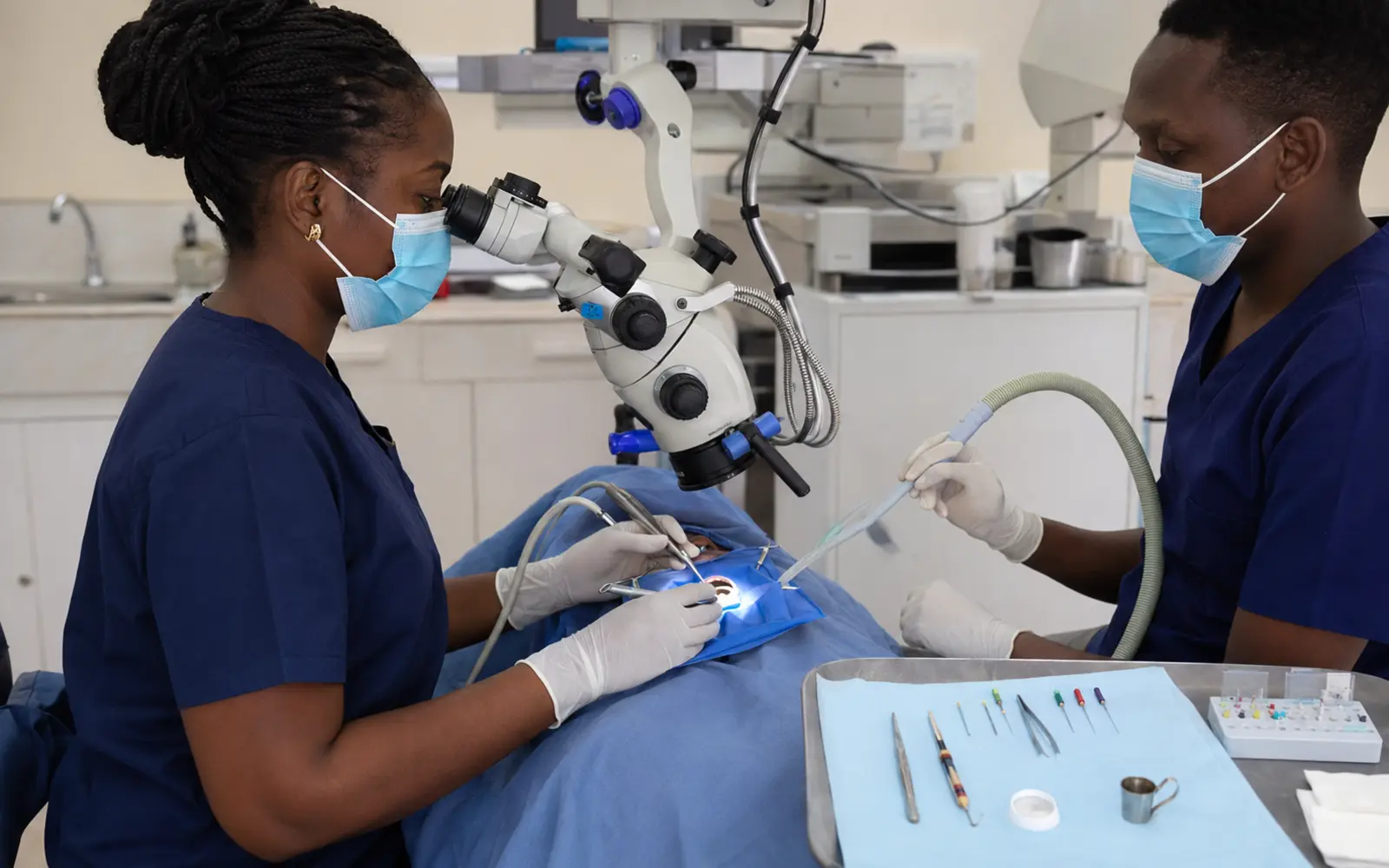
Resin-Based Sealer Chemistry
Resin sealers often use epoxy or methacrylate chemistry. Epoxy-resin sealers have a long clinical history and are used with lateral condensation, warm techniques or other gutta-percha methods depending on the product.
Handling and Flow
Sealer should flow sufficiently to fill irregularities without excessive extrusion. Compare:
- Working time.
- Delivery method.
- Film thickness.
- Radiopacity.
- Setting conditions.
- Solubility and dimensional behavior.
- Compatibility with heat.
Moisture Management
Hydraulic sealers require a suitable moisture environment, but the canal should not be flooded. Resin-based systems may be more sensitive to residual moisture. Follow the exact drying instructions for the selected product.
Obturation Technique
Some hydraulic sealers are commonly used with a matched single-cone technique. The prepared canal shape and cone fit are important because sealer should not replace the solid core.
For warm vertical compaction, confirm that the sealer is validated for the temperature and technique. Heat can alter flow or setting in some materials.
Sealer Thickness
Ideally, sealer forms a thin interface around the gutta-percha. Excessive sealer volume may increase void risk and complicate retreatment. Achieve an appropriate master-cone fit and avoid using sealer to compensate for poor preparation.
Extrusion Beyond the Apex
Extrusion can occur with excessive material, open apices, overinstrumentation or poor length control. It should not be considered a required sign of success. Respect apical anatomy and deliver material conservatively.
Retreatment
Bioceramic-sealer obturations are generally retreatable, but removal can be more difficult depending on canal anatomy, material distribution and technique. Resin-sealer cases also require mechanical and chemical approaches.
If the clinic frequently manages retreatment, select a system with a clear retreatment protocol and maintain suitable instruments and solvents where indicated.
Evidence and Long-Term Outcomes
Laboratory properties do not always predict clinical success. Endodontic outcome depends heavily on diagnosis, disinfection, apical control, coronal seal and restoration. A sealer cannot compensate for inadequate microbial control.
Selection Checklist
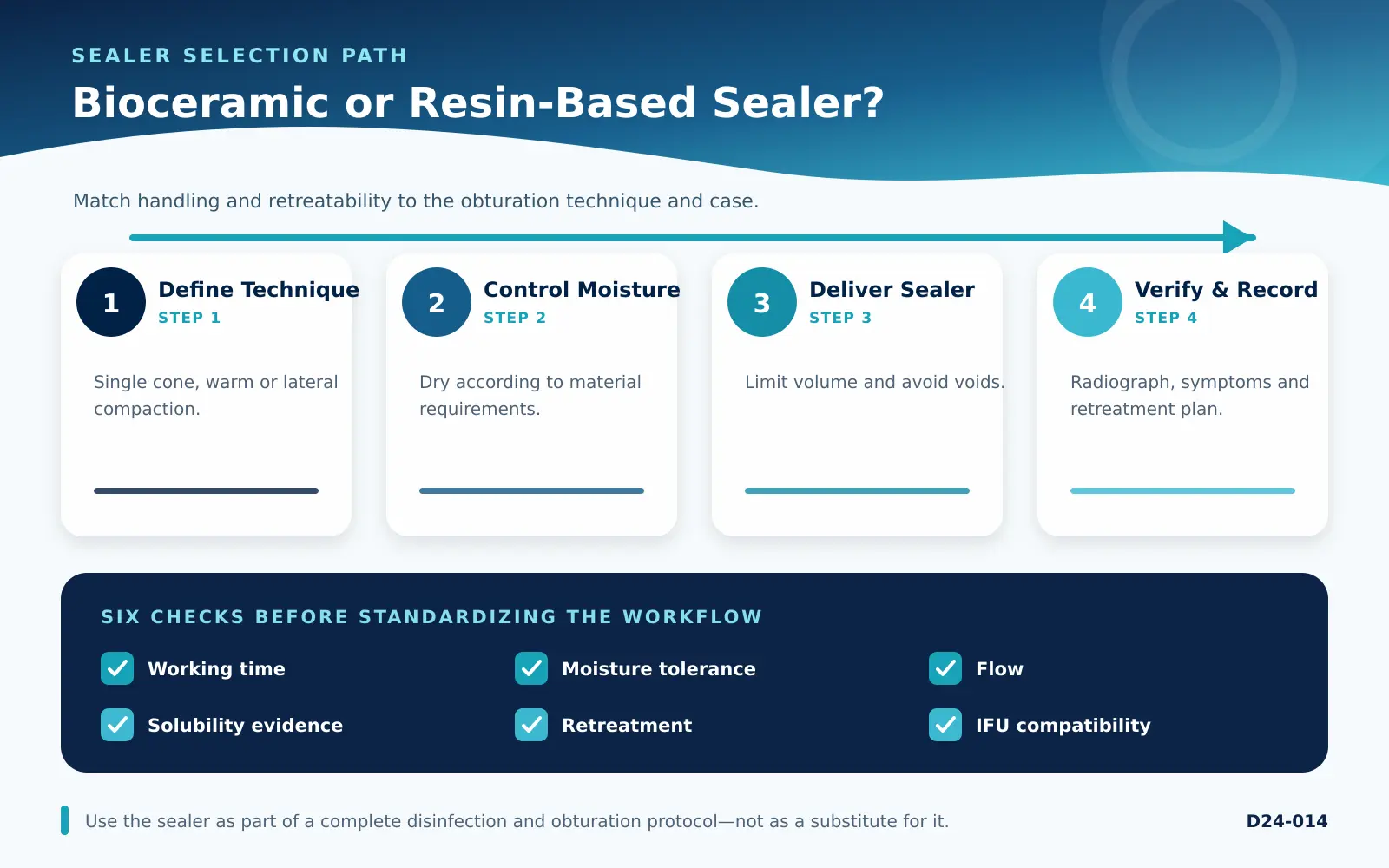
- Define the obturation technique.
- Confirm heat compatibility.
- Review drying and setting requirements.
- Assess radiopacity and delivery.
- Plan retreatment.
- Confirm storage and shelf life.
- Train the team on one standardized protocol.
Denta24 Sealer Category
Denta24 organizes products under Endodontic Sealers. Verify the current material chemistry, indications, pack configuration and instructions before purchase.
African Market Considerations
Select products with reliable supply and storage conditions. An obturation protocol should not depend on a sealer that cannot be replaced consistently. In regions with limited specialist referral, retreatability and training deserve particular attention.
Bioceramic Vs Resin Based Sealer: Practical Checks for African Clinics
For African clinics, bioceramic vs resin based sealer is not a product-only decision. It must also account for storage, expiration, moisture conditions, obturation technique, retreatment resources, supplier traceability, training and availability of matching cones. A resilient bioceramic vs resin based sealer plan should remain workable when supply, connectivity, service access or patient follow-up is less predictable than expected.
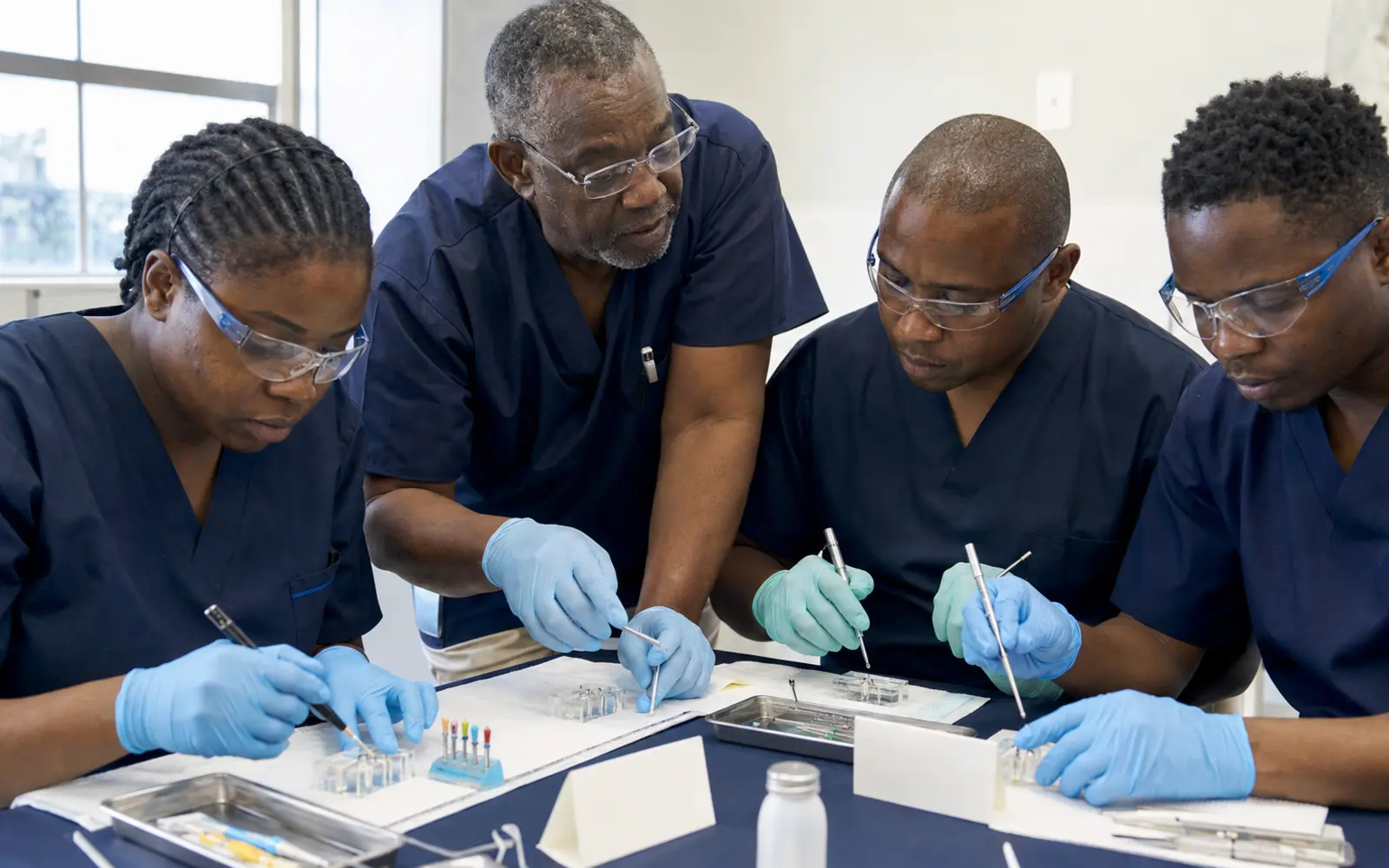
Before adoption, document who is responsible, which current instructions for use apply, how outcomes will be measured and what will trigger referral, retraining or a change in protocol. The goal of bioceramic vs resin based sealer is to choose a sealer as part of the complete cleaning, shaping and obturation strategy and plan retreatability before adopting a new technique.
- Verify storage before implementation or purchase.
- Verify expiration before implementation or purchase.
- Verify moisture conditions before implementation or purchase.
- Verify obturation technique before implementation or purchase.
- Verify retreatment resources before implementation or purchase.
- Verify supplier traceability before implementation or purchase.
- Verify training and availability of matching cones before implementation or purchase.
Use bioceramic vs resin based sealer as an operational decision that is reviewed after real cases. Record complications, remakes, chair time, consumable use, stock-outs and team feedback, then refine the protocol from evidence rather than marketing claims.
Related Denta24 reading: guide to dental material selection. This context helps place bioceramic vs resin based sealer within a broader clinical and digital strategy.
Conclusion
Bioceramic Vs Resin Based Sealer succeeds when the evidence, local workflow and review plan remain aligned. Bioceramic and resin-based sealers can both support successful obturation when matched to the clinical technique. The most important decision is to use a validated system consistently and maintain high standards of canal disinfection and coronal restoration.
Frequently Asked Questions
What is a bioceramic sealer?
For context, bioceramic vs resin based sealer should always be adapted to the individual case and the current evidence. It is generally a hydraulic calcium-silicate material that sets through moisture-related reactions.
What is a resin-based sealer?
It is commonly an epoxy or methacrylate material with different handling and setting characteristics.
Are bioceramic sealers bioactive?
Some show mineral interaction in laboratory testing, but clinical claims should remain evidence-based.
Do they require moisture?
Hydraulic sealers use moisture, but canals should be prepared according to the exact IFU.
Which sealer is easier to retreat?
Retreatment depends on material, technique and anatomy. Neither is universally simple.
Can bioceramic sealers be used with heat?
Only if the product is validated for the intended warm technique and temperature.
Is a single-cone technique sufficient?
It can be appropriate with selected systems, but preparation, cone fit and case selection are important.
How important is sealer thickness?
A thin, controlled layer is preferred. Excessive sealer can increase voids and retreatment difficulty.
What causes extrusion?
Overinstrumentation, excess volume, open apices and inadequate length control can contribute.
How should a sealer be selected?
Match chemistry, obturation technique, retreatment plan, handling, storage and evidence to the case.
References and Further Reading
Professional disclaimer: Use endodontic sealers according to current manufacturer instructions and an appropriate obturation protocol.