 Endodontic Rotary Files
 Finishing Burs
 High-Speed Burs
 Low-Speed Drills
 Cosmetic Accessories
 Home Whitening Kits
 Clinic Whitening Kits
 Implant Accessories
 Implant Fixtures
 Prosthetic Components
 Surgical Implant Tools
 CAD & CAM Materials
 Lab Consumables
 Lab Equipment
 Digital Dentistry Devices
 Endodontic Equipment
 General Clinic Equipment
 Restorative Equipment
 Surgical Equipment
 Hand Files
 Irrigation & Medicaments
 Post & Core
 Rotary Files
 Sealers
 Brackets & Wires
 Clear Aligners
 Orthodontic Accessories
 Bonding & Adhesive Systems
 Finishing & Polishing
 Matrix Systems
 Etching Materials
 Composite Materials
 Occlusion Checking
 Bone & Grafting Materials
 Surgical Accessories
 Surgical Consumables
 Cementation
 Impression & Registration Materials
 Temporary Restorations
 Periodontal Instruments & Accessories
 Periodontal Treatment Materials


Bone Grafting Materials in Implant Dentistry: Grafts, Membranes and Selection

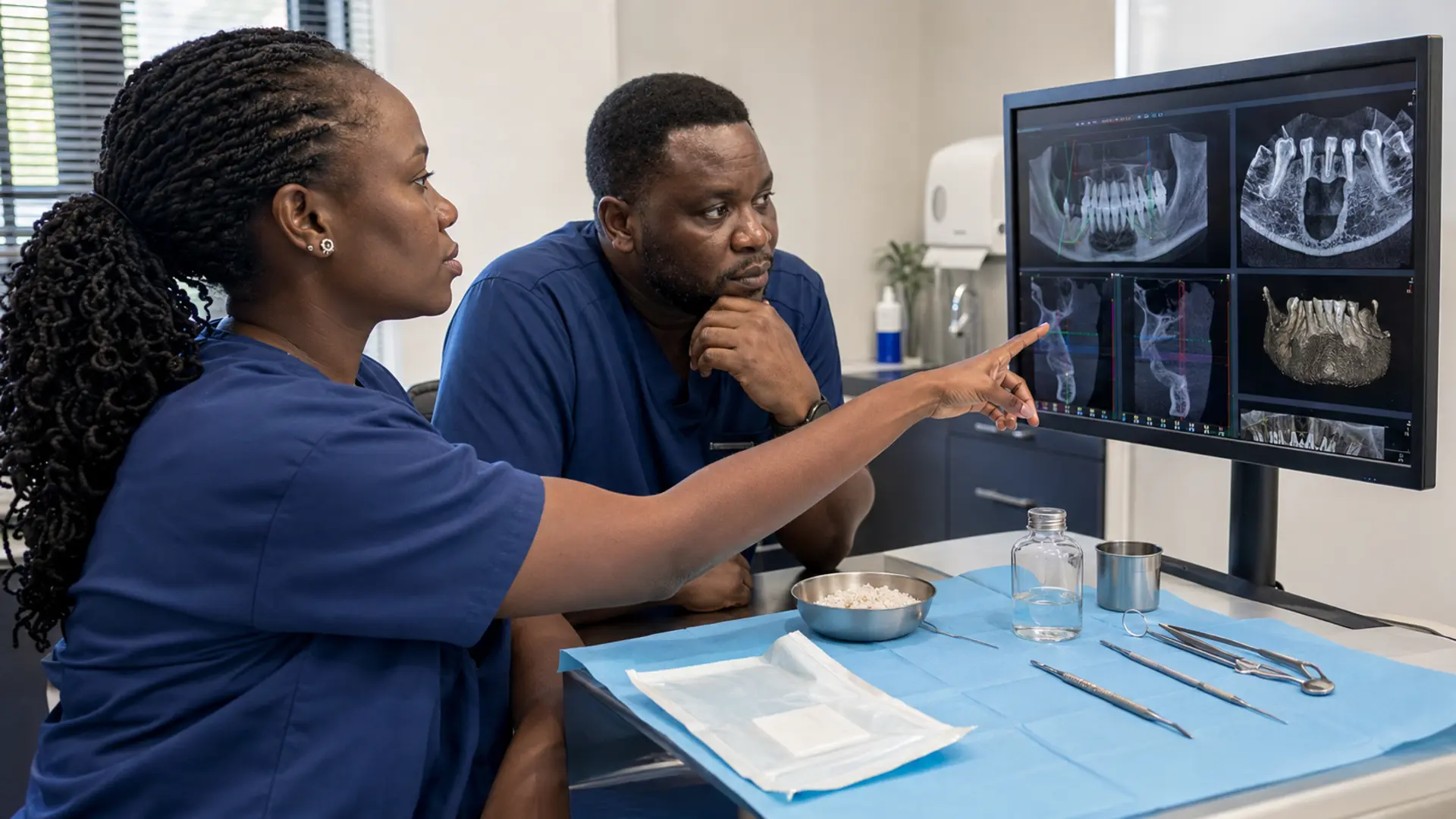
Bone Grafting Materials In Implant Dentistry should be evaluated through clinical evidence, workflow fit and local operating conditions. A sound bone grafting materials in implant dentistry decision connects verified performance with the team, patients and resources that will support it in daily practice.
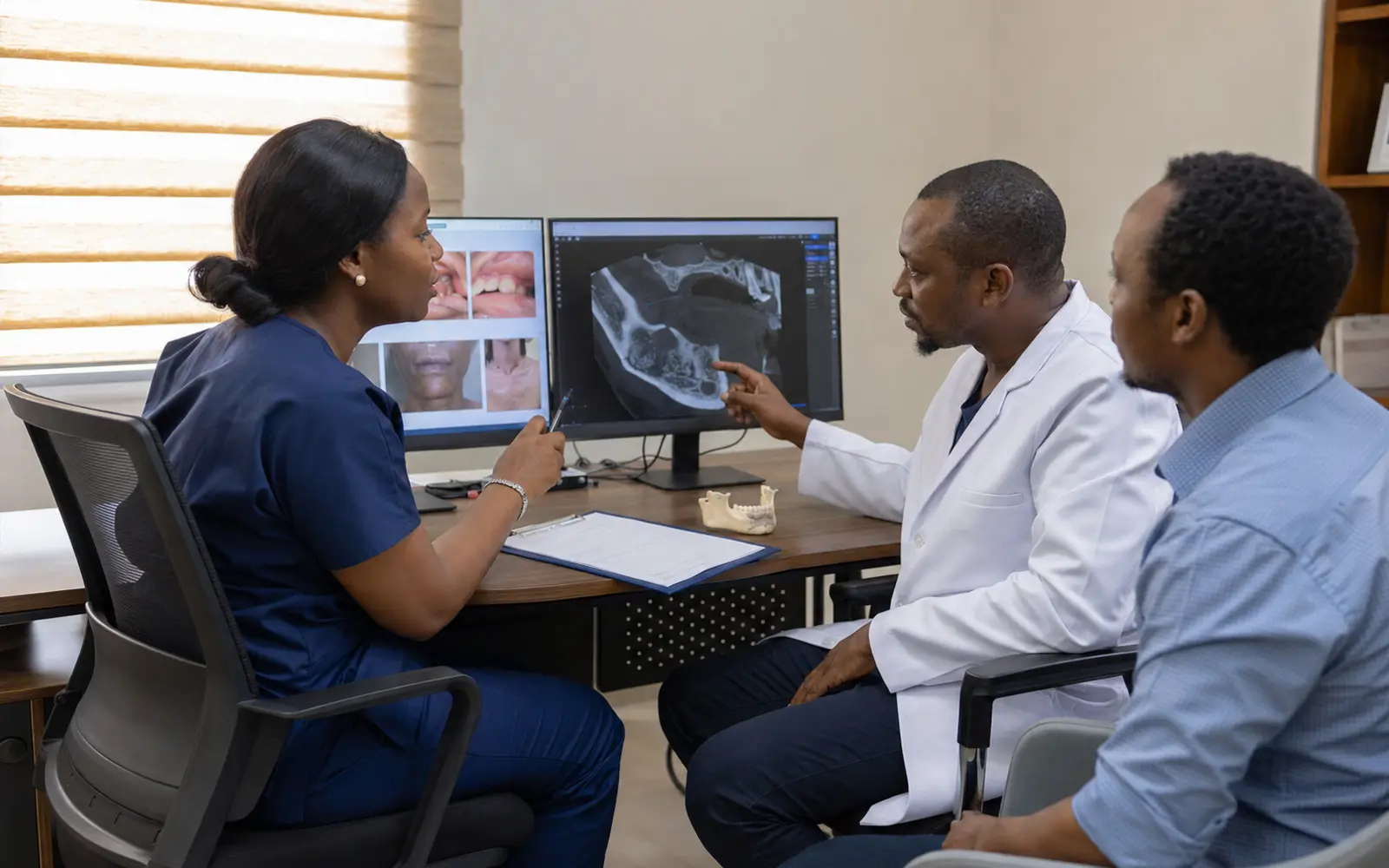
Bone grafting is used to preserve or rebuild tissue where implant placement would otherwise be compromised. The available materials differ in origin, biological behavior, resorption, handling and evidence. No graft is automatically best for every defect.
The first decision is not the brand. It is the biological objective: preserve a socket, augment a horizontal defect, support sinus elevation or reconstruct a more complex deficiency. The clinician’s training and the patient’s risk profile are equally important.
Quick answer: Select graft and membrane materials according to defect anatomy, healing potential, space maintenance, resorption rate, surgical technique and regulatory status. Advanced augmentation should be referred when it exceeds the clinician’s competence or facilities.
Table of Contents
Why Bone Grafting Is Performed
After extraction, the ridge changes in width and height. Trauma, infection, periodontal disease and long-term tooth loss can further reduce volume. Grafting may be considered for:
- Socket preservation.
- Horizontal ridge augmentation.
- Vertical augmentation.
- Sinus floor elevation.
- Peri-implant defect management.
- Regeneration around selected teeth.
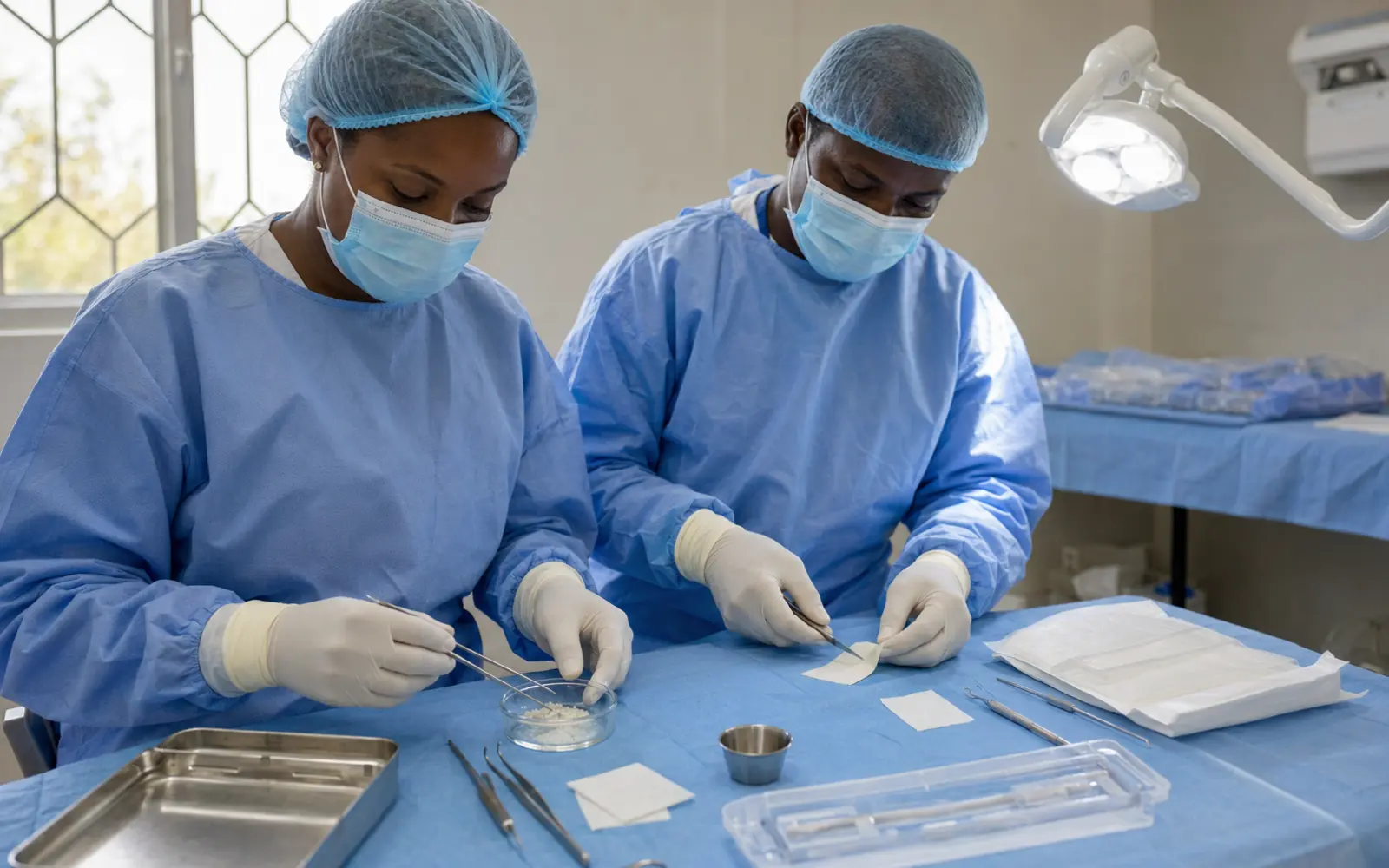
Biological Terms
Osteogenic refers to living bone-forming cells.
Osteoinductive describes signals that encourage cells to develop toward bone-forming pathways.
Osteoconductive describes a scaffold that supports bone growth along its structure.
Marketing may use these terms broadly. Review product-specific evidence and origin.
Autogenous Bone
Autogenous graft comes from the same patient. It can provide cells, matrix and signals, but harvesting increases surgical time, morbidity and limited volume.
It may be used alone or combined with another material in selected defects.
Allografts
Allografts are derived from human donor tissue and processed according to regulated tissue-banking systems. Products differ in mineral content, processing and particle form.
Verify documentation, origin, sterility, storage and regulatory acceptance in the target country.
Xenografts
Xenografts come from another species, commonly bovine or porcine sources. Many are slowly resorbing osteoconductive scaffolds useful for space maintenance.
Discuss material origin with patients when cultural, religious or personal considerations may affect consent.
Synthetic Materials
Alloplastic materials include calcium phosphates, beta-tricalcium phosphate and other synthetic scaffolds. Their resorption and mechanical behavior vary.
Synthetic origin may simplify some consent concerns, but the clinical indication and evidence still matter.
Particle Size and Resorption
Smaller particles may provide greater surface area and adapt to irregularities, while larger particles may maintain space differently. Resorption should match the desired healing period. Rapid loss may reduce volume; very slow replacement may leave residual particles.
Barrier Membranes
Guided bone regeneration uses a membrane to limit soft-tissue invasion and maintain a regenerative space. Resorbable collagen membranes avoid a removal procedure but vary in durability. Non-resorbable membranes can maintain space strongly but require advanced handling and may need removal.
Stability and Closure
Successful regeneration depends on more than the graft:
- Blood supply.
- Space maintenance.
- Graft stability.
- Primary wound closure where required.
- Infection control.
- Patient smoking and systemic risk.
- Postoperative protection.
Socket Preservation vs Major GBR
Socket preservation is not equivalent to vertical or extensive horizontal augmentation. Complexity, complication risk and evidence differ. A clinician competent in uncomplicated socket preservation may not be prepared for advanced membrane fixation or vertical reconstruction.
Product Documentation
Before use, verify:
- Material origin and composition.
- Sterility and lot traceability.
- Expiry and storage.
- Local regulatory status.
- Hydration or preparation protocol.
- Membrane indication and handling.
- Manufacturer’s clinical evidence.
Denta24 Surgery Category
Denta24 includes Bone & Grafting Materials under its Surgery Field taxonomy. Confirm current product availability and documentation before planning treatment.
African Market Considerations
Import lead time and product registration can affect graft availability. Do not begin a staged treatment without confirming that all required membrane, fixation and implant components can be supplied. Maintain traceability for every implanted material.
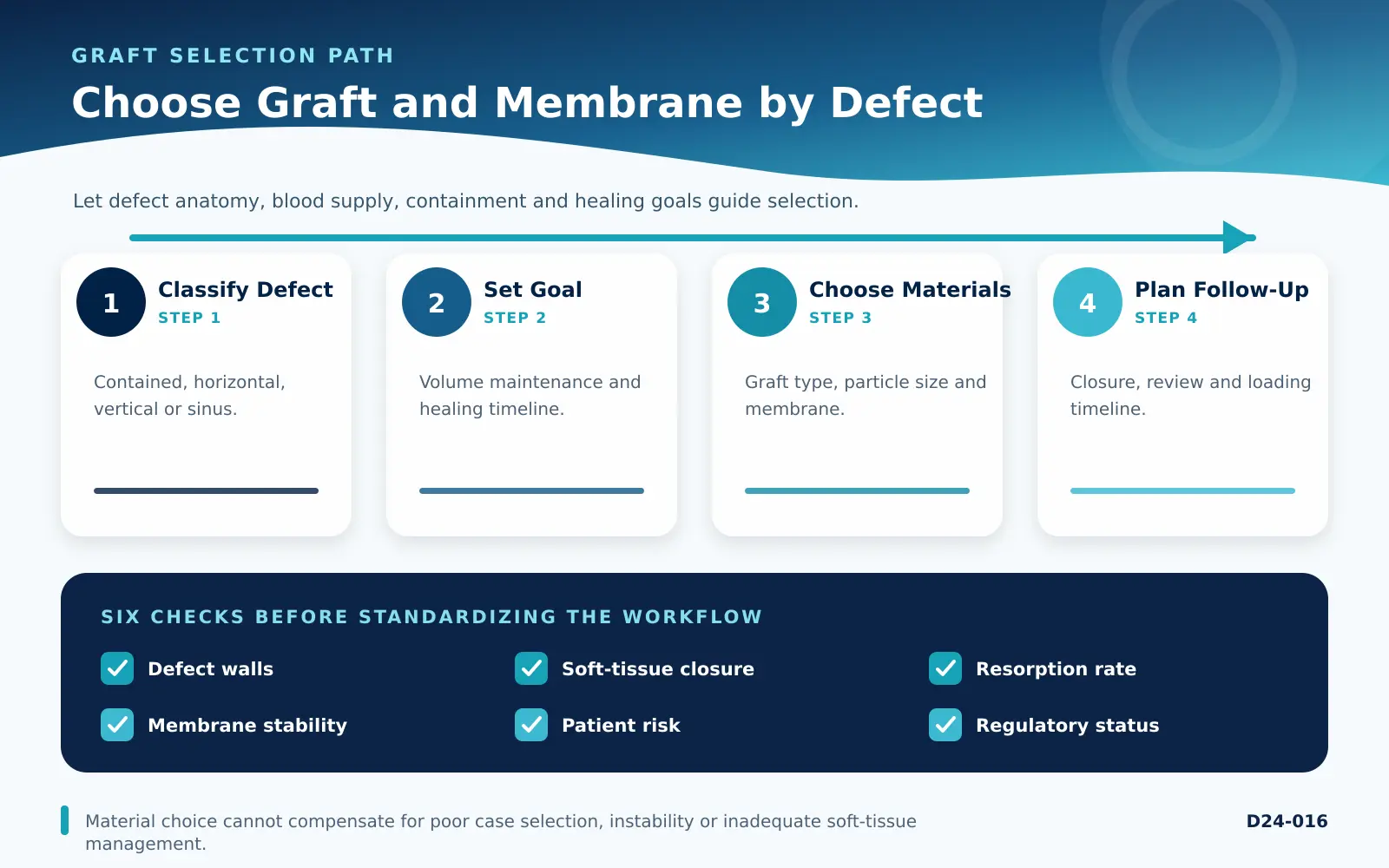
Bone Grafting Materials In Implant Dentistry: Practical Checks for African Clinics
For African clinics, bone grafting materials in implant dentistry is not a product-only decision. It must also account for regulatory status, donor or animal-origin documentation, sterile handling, storage, defect anatomy, membrane availability, follow-up, cost and referral options. A resilient bone grafting materials in implant dentistry plan should remain workable when supply, connectivity, service access or patient follow-up is less predictable than expected.
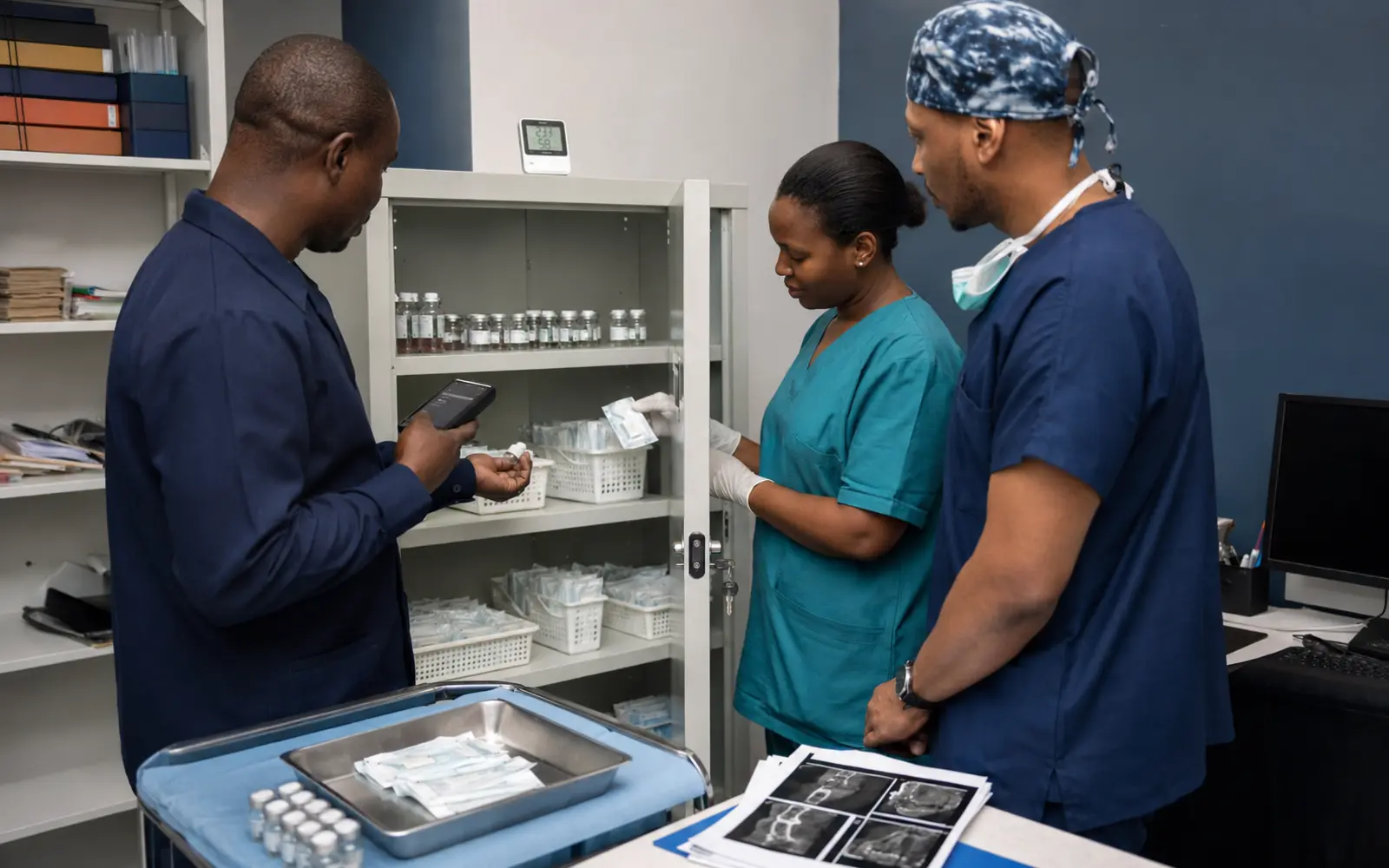
Before adoption, document who is responsible, which current instructions for use apply, how outcomes will be measured and what will trigger referral, retraining or a change in protocol. The goal of bone grafting materials in implant dentistry is to select the graft and membrane only after diagnosis of the defect and patient factors, and document origin, lot, expiry and the manufacturer’s current instructions.
- Verify regulatory status before implementation or purchase.
- Verify donor or animal-origin documentation before implementation or purchase.
- Verify sterile handling before implementation or purchase.
- Verify storage before implementation or purchase.
- Verify defect anatomy before implementation or purchase.
- Verify membrane availability before implementation or purchase.
- Verify follow-up before implementation or purchase.
Use bone grafting materials in implant dentistry as an operational decision that is reviewed after real cases. Record complications, remakes, chair time, consumable use, stock-outs and team feedback, then refine the protocol from evidence rather than marketing claims.
Related Denta24 reading: modern dental implant procedures. This context helps place bone grafting materials in implant dentistry within a broader clinical and digital strategy.
Conclusion
Bone Grafting Materials In Implant Dentistry succeeds when the evidence, local workflow and review plan remain aligned. Bone graft selection is a clinical decision based on biology, anatomy and technique. A well-documented, appropriately selected material supports treatment, but it cannot replace sound flap design, stability, closure and patient risk management.
Frequently Asked Questions
What are the main graft types?
For context, bone grafting materials in implant dentistry should always be adapted to the individual case and the current evidence. Autografts, allografts, xenografts and synthetic materials are the main categories.
What does osteoconductive mean?
It describes a scaffold that supports bone growth along its surface.
What does osteoinductive mean?
It refers to signaling potential that encourages cells toward bone-forming pathways.
Why is autogenous bone biologically active?
It can provide living cells, matrix and signals, but harvesting adds morbidity.
What is the role of a membrane?
It helps exclude faster-growing soft tissue and maintains space for regeneration.
How is particle size selected?
Selection depends on defect, handling, surface area, space maintenance and product evidence.
Does every extraction socket need grafting?
No. The decision depends on anatomy, risk, timing and the restorative plan.
Can any dentist perform grafting?
The clinician must have appropriate training, facilities and referral judgment for the complexity.
What documentation should be checked?
Verify origin, sterility, regulation, lot, expiry, storage and instructions.
Which graft is best?
There is no universal best material. Select according to the biological and clinical objective.
References and Further Reading
- ITI guidance on bone-defect morphology and barrier-membrane selection
- Denta24 surgery materials
- Systematic review of bone graft materials
Professional disclaimer: Bone grafting is a surgical procedure requiring appropriate training, consent, regulation and management of complications.