 Endodontic Rotary Files
 Finishing Burs
 High-Speed Burs
 Low-Speed Drills
 Cosmetic Accessories
 Home Whitening Kits
 Clinic Whitening Kits
 Implant Accessories
 Implant Fixtures
 Prosthetic Components
 Surgical Implant Tools
 CAD & CAM Materials
 Lab Consumables
 Lab Equipment
 Digital Dentistry Devices
 Endodontic Equipment
 General Clinic Equipment
 Restorative Equipment
 Surgical Equipment
 Hand Files
 Irrigation & Medicaments
 Post & Core
 Rotary Files
 Sealers
 Brackets & Wires
 Clear Aligners
 Orthodontic Accessories
 Bonding & Adhesive Systems
 Finishing & Polishing
 Matrix Systems
 Etching Materials
 Composite Materials
 Occlusion Checking
 Bone & Grafting Materials
 Surgical Accessories
 Surgical Consumables
 Cementation
 Impression & Registration Materials
 Temporary Restorations
 Periodontal Instruments & Accessories
 Periodontal Treatment Materials


Zirconia vs E.max Crowns: A Chairside Decision Guide

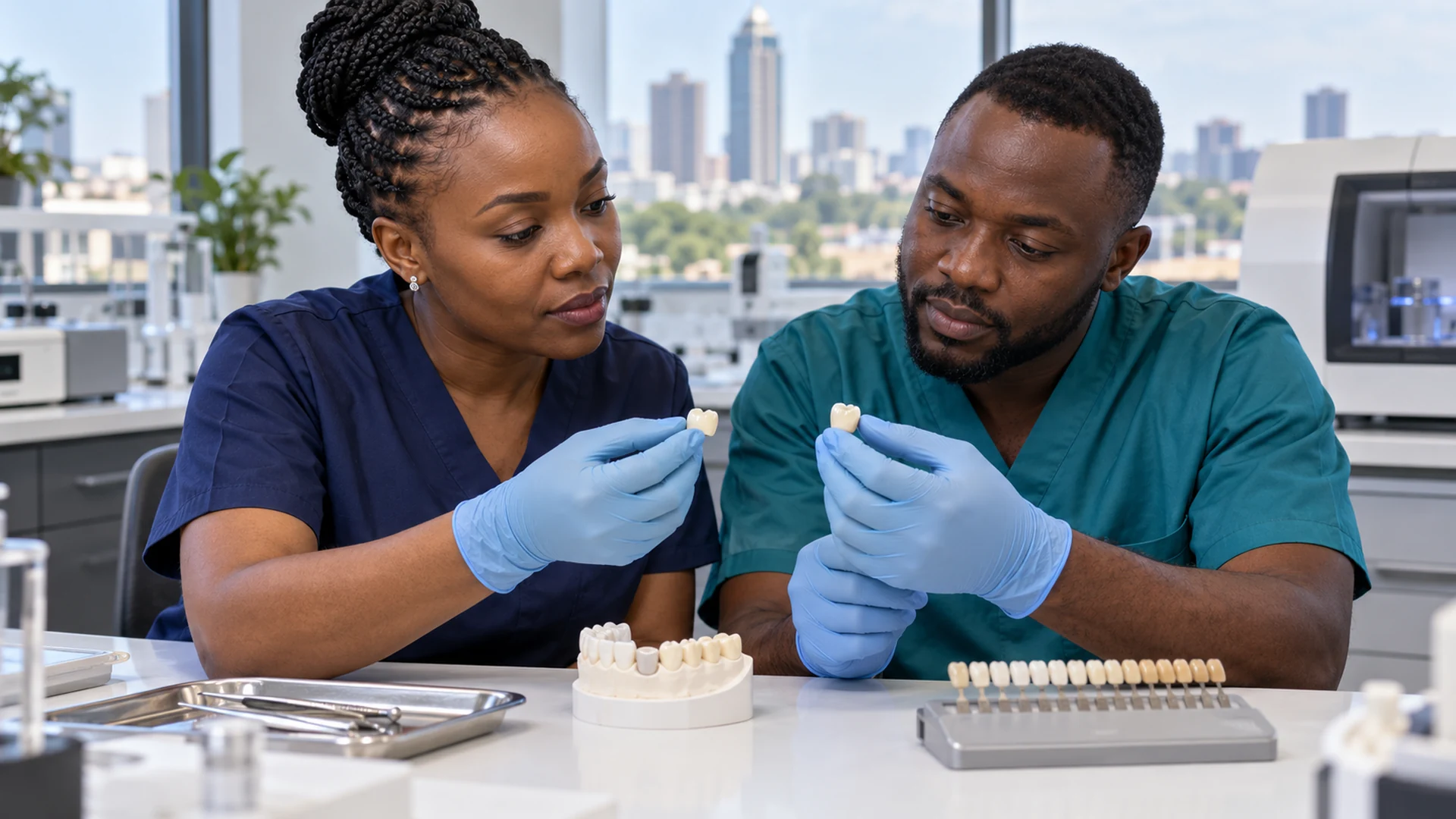
A patient needs a posterior crown, wants a natural appearance and has limited room for reduction. Another needs a single anterior crown next to an unusually translucent incisor. The same material order will not answer both problems. A useful comparison of zirconia vs E.max crowns begins with those clinical constraints, before a laboratory product is selected.
This guide concerns custom crowns for natural teeth. Implant-supported crowns require additional decisions about components and retention. The aim is to send a prescription that the technician can act on, and to avoid discovering a material or bonding mismatch at the fitting appointment.
Start with five findings from the examination
Record tooth position, remaining tooth structure, available restorative space, substrate shade and functional loading. Include the patient’s expectations and the condition of the periodontium. A crown that looks attractive on a shade tab still needs a preparation and occlusion that support its intended use.
- Tooth and visibility: note how much of the tooth and gingival margin appears during speech and smiling.
- Structure: document existing restorations, cracks, preparation height and the location of margins.
- Space: assess the room available for the prescribed material, including functional movements.
- Substrate: photograph the prepared tooth when its colour may affect the final result.
- Loading: identify wear, parafunction, opposing restorations and any plan for protection.
What the material names actually tell you
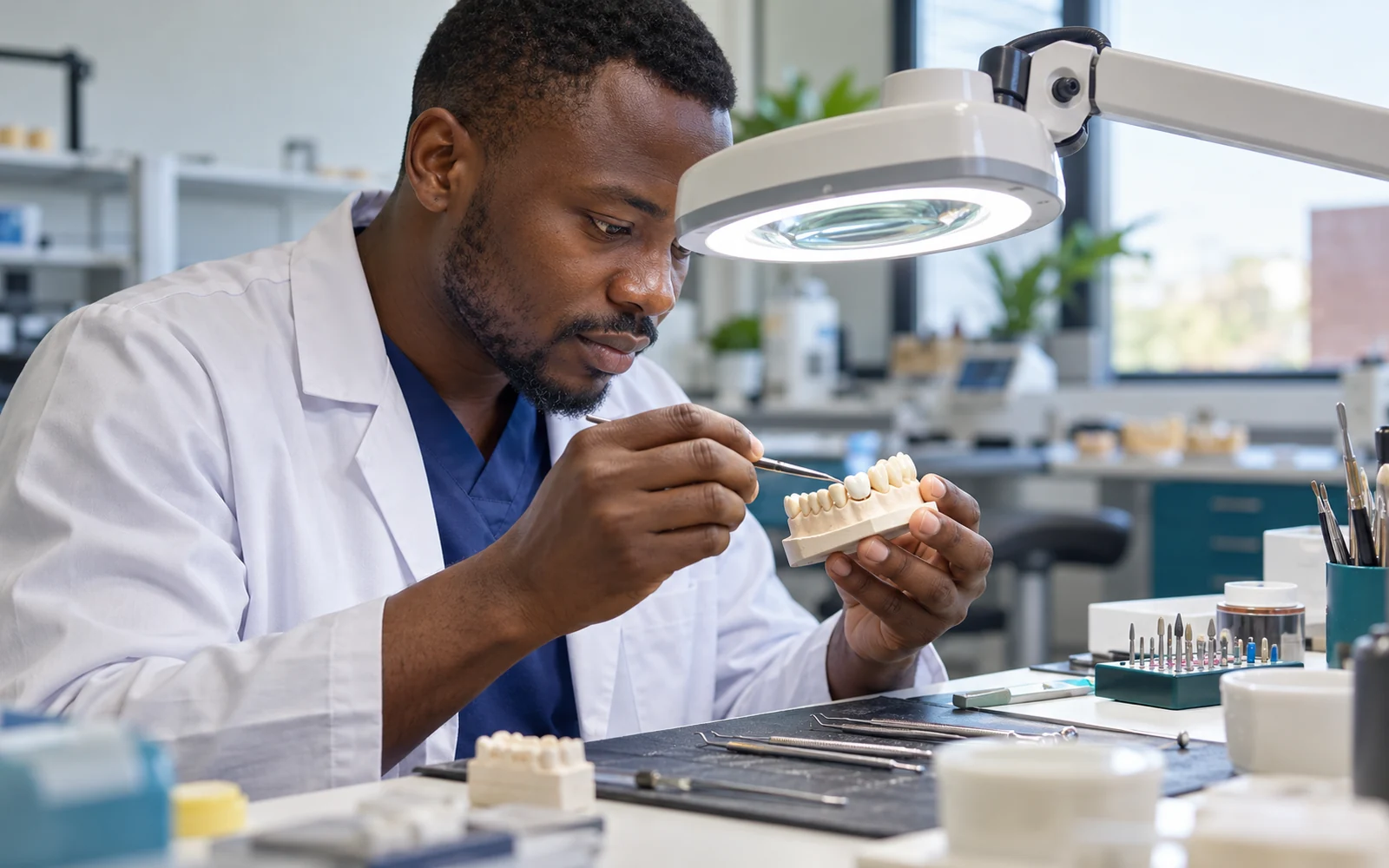
In a zirconia vs E.max crowns comparison, lithium disilicate is an etchable glass-ceramic used for several indirect restorations. Zirconia is an oxide ceramic with a different surface chemistry. Within each family, products differ. Ivoclar’s IPS e.max CAD documentation describes a particular lithium-disilicate system; its instructions do not automatically describe every laboratory restoration sold under a similar label.
Likewise, “multilayer” describes a material architecture or optical progression, not a complete clinical indication. Confirm the actual product, its approved uses and its processing requirements. Denta24’s existing zirconia selection guide provides background on why strength and translucency cannot be reduced to one universal specification.
Zirconia vs E.max crowns at the prescribing stage
| Clinical question | What to discuss with the laboratory |
|---|---|
| Single visible anterior tooth | Neighbouring tooth texture, translucency, preparation shade and the proposed ceramic system. |
| Posterior tooth with heavy loading | Available space, functional contacts, the exact material indication and a protective plan. |
| Dark underlying tooth | Masking needs and the effect of ceramic opacity and cement shade. |
| Short or compromised preparation | Retention, resistance, isolation and whether the planned adhesive approach is achievable. |
| Uncertain clinical records | Resolve the missing information before approving manufacture. |
The table is a conversation framework, not a rule that one material always belongs in the front and the other in the back. Manufacturer indications and the particular clinical case determine suitability.
Zirconia vs E.max crowns: agree on cementation
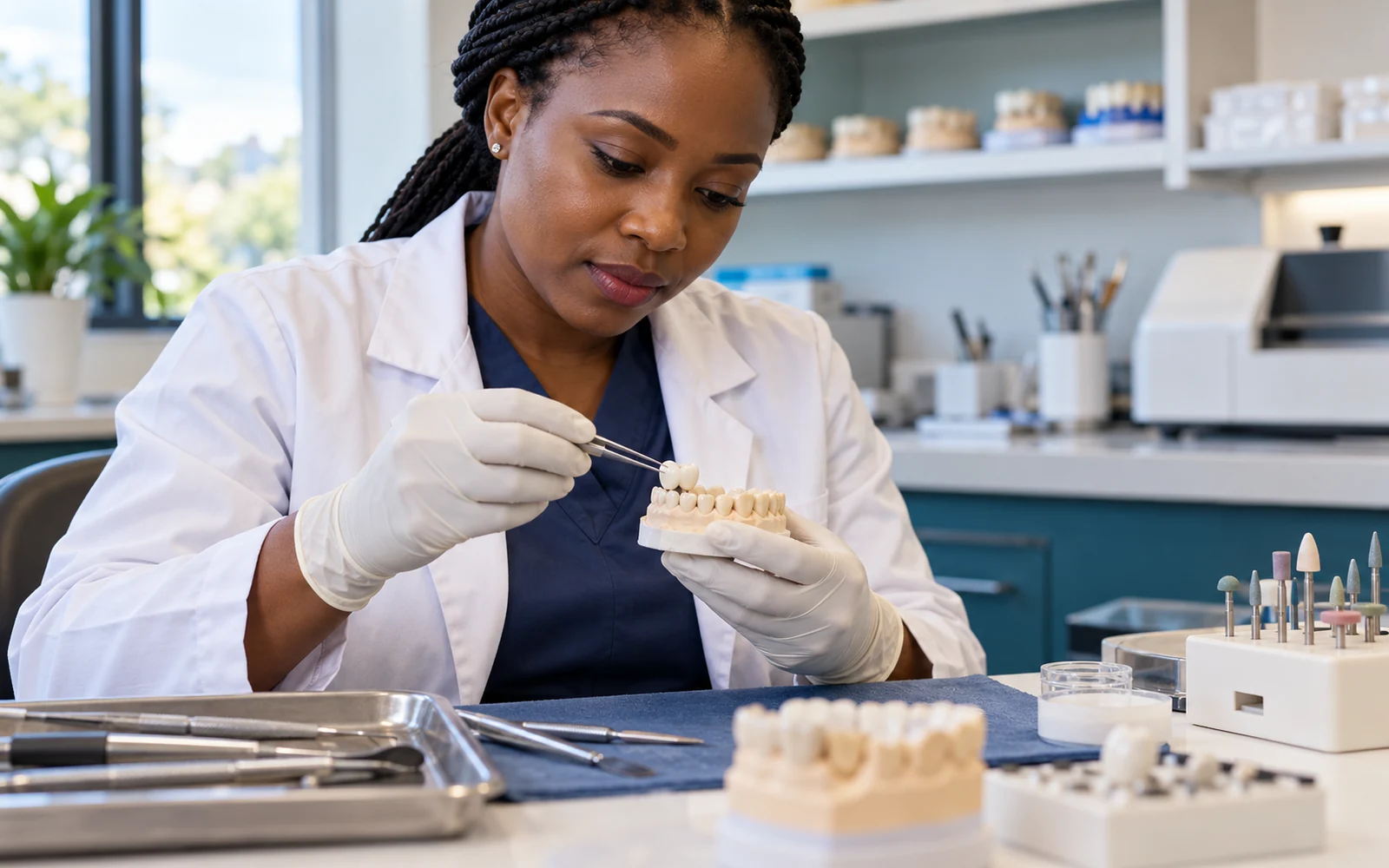
For zirconia vs E.max crowns, the restoration’s inner surface and the tooth require compatible preparation. Glass-ceramic and zirconia protocols differ; do not transfer hydrofluoric-acid instructions from glass-ceramic to zirconia. Obtain the exact restoration, pretreatment and cement instructions rather than selecting a universal sequence from memory.
Ivoclar describes more than one placement approach for its Prime Zirconia system. That illustrates why preparation design and the prescribed product matter. It is not evidence that every zirconia crown can be cemented in the same way. Confirm how a restoration should be cleaned after try-in and who is responsible for any laboratory surface treatment.
Build a short case-specific checklist: restoration identity; surface already treated or untreated; tooth isolation plan; adhesive and cement compatibility; curing access; and excess-removal method. If one item is unresolved, ask before the delivery appointment.
Write a laboratory prescription that prevents a remake
Send the preparation and opposing scans, the bite record, tooth identification, shade information and photographs appropriate to the case. Highlight the finish line and any area that needs clarification. A technician should not have to infer whether an indistinct scan edge is the true margin.
In a zirconia vs E.max crowns prescription, specify the clinical priority in ordinary language: for example, matching a translucent adjacent incisor, masking a dark preparation, or accommodating a known functional contact. Ask the laboratory to flag inadequate space instead of compensating silently. Use the digital and conventional impression comparison when choosing a dependable record for difficult margins.
Use the new Denta24 crown services deliberately
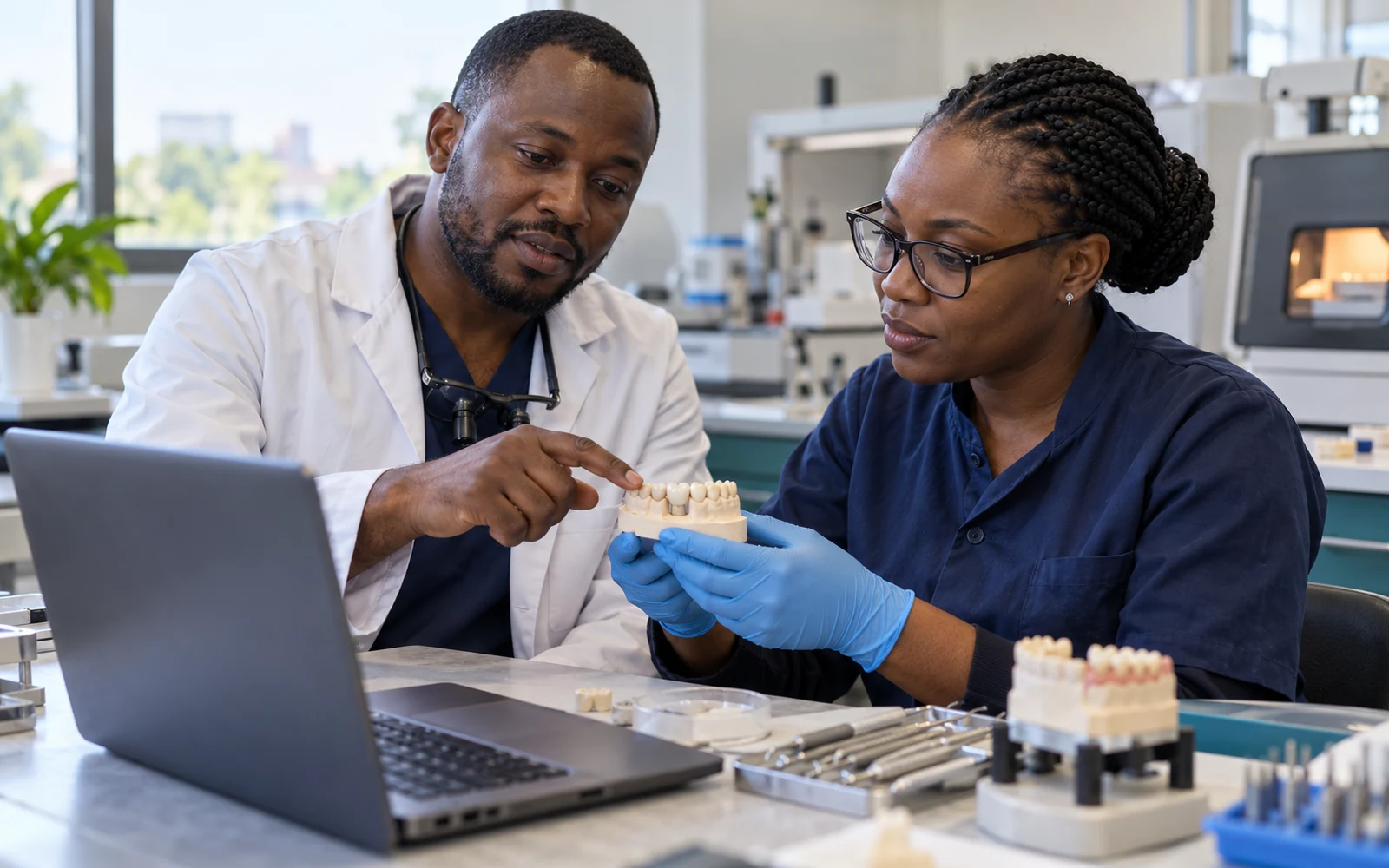
The Multilayer Zirconia Crown and E-max Crown listings are custom restoration services from Emotion Dental Laboratory. The listed workflow lets the clinician select the service, upload the case scan, choose teeth and shade, and communicate through the Denta24 account.
Use those options after clinical selection. Ask what material will be used, which records are required, what the quoted service includes and how a fit or shade concern will be handled. A “Premium” label should lead to a clear explanation of the service difference; it should not substitute for a documented specification.
For practices sending cases across borders, include time for laboratory clarification, transport and a possible adjustment. Confirm destination availability and the case timetable before promising a fitting date to the patient.
Three questions before approving manufacture
- Can the laboratory identify the ceramic and confirm that the submitted preparation supports its intended use?
- Are the records sufficient to reproduce the margin, contacts, bite and desired appearance?
- Can the clinic carry out the agreed cementation and maintenance plan?
Check whether a new crown is the right first step
If the concern is a localised defect in an existing restoration, assess its extent before automatically replacing the whole restoration. The FDI’s repair policy supports a diagnosis-led decision. Record why repair, replacement or a different approach fits the tooth. That assessment should precede a comparison of two new crown services.
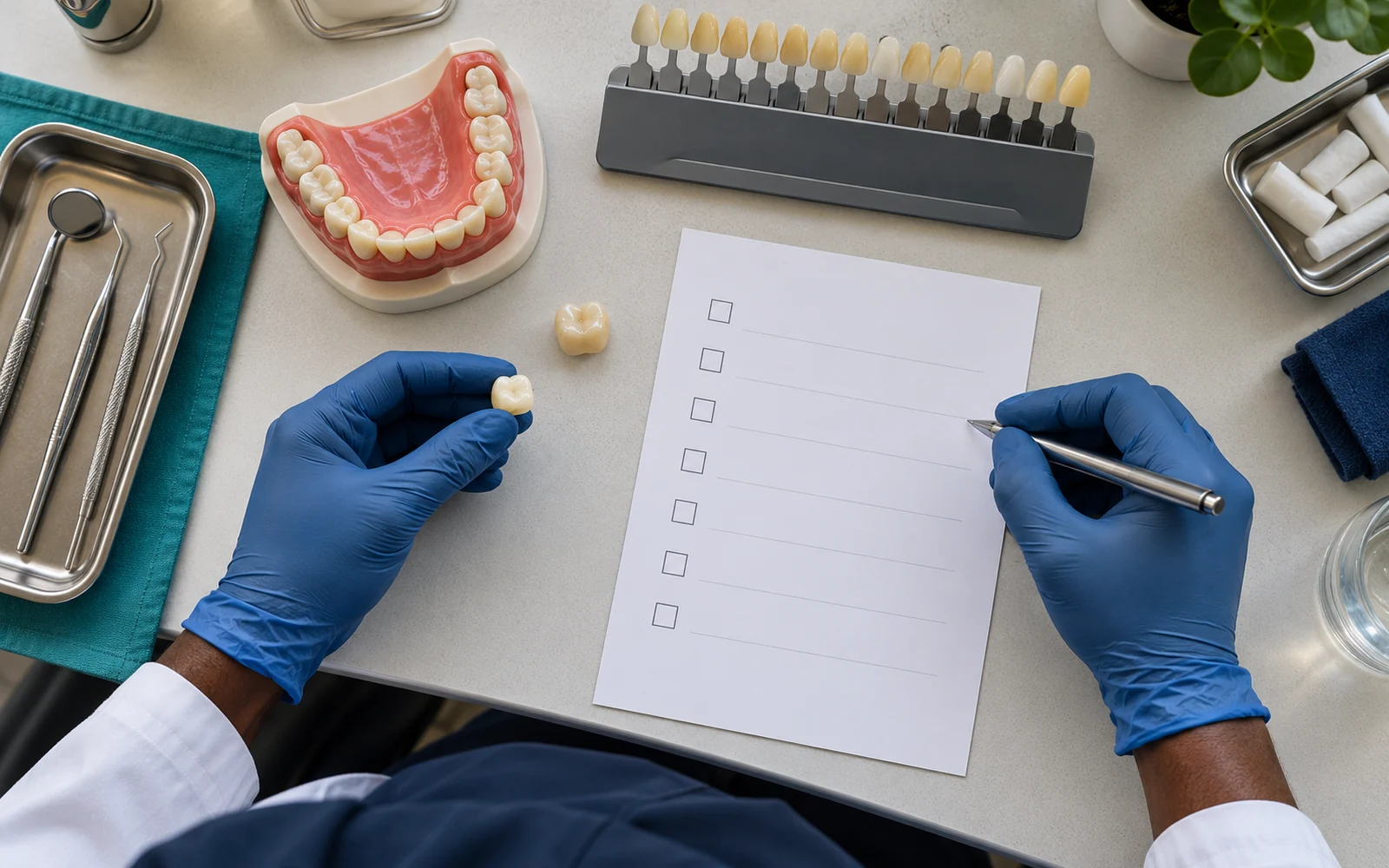
A sound zirconia vs E.max crowns decision is the result of a shared clinical and laboratory prescription. Compare the options, resolve material and record questions, then submit the case. That sequence makes the product choice useful to the patient instead of leaving the most important decisions until try-in.
FAQs: zirconia vs E.max crowns
Is zirconia always better for posterior crowns?
No. A zirconia vs E.max crowns comparison must consider the exact system, available space, preparation, bite and clinical indication. A material-family name alone cannot decide the case.
Is E.max the same as every glass-ceramic?
No. IPS e.max identifies manufacturer systems. Confirm the exact material and fabrication method of the restoration being prescribed.
How should I compare zirconia vs E.max crowns for an anterior tooth?
Assess neighbouring teeth, substrate shade, available space, margin position and bonding conditions, then discuss the proposed ceramic with the technician.
Can a dark preparation affect the result?
Yes. Record the substrate shade and discuss masking, ceramic opacity and the proposed cement before manufacture.
Does multilayer mean higher strength?
Not by itself. Obtain the manufacturer’s material identification and indications rather than inferring strength from the word multilayer.
Can the same etching protocol be used for both ceramics?
No. Their surface chemistry differs. Follow the exact restoration and cement instructions, including the cleaning method after try-in.
What should accompany a crown scan?
Include the opposing record, bite, tooth identification, shade information and useful photographs, plus any specific functional or esthetic concern.
Do Premium listings prove different material properties?
A service label does not establish composition or strength. Ask for the documented material and an explanation of what the service includes.
Are the Denta24 crown listings ready-made teeth?
The reviewed listings describe custom laboratory services. The clinician submits case records and communicates the restoration requirements.
When should the laboratory query a case?
Before manufacture when the margin, space, bite, material indication or prescription is unclear. Resolve the issue while records can still be improved.
Clinical selection and cementation remain case-specific. Confirm the exact restoration system and current instructions before use.
Images are AI-generated editorial illustrations, not patient records or photographs of specific branded products.