
 Endodontic Rotary Files
 Finishing Burs
 High-Speed Burs
 Low-Speed Drills
 Cosmetic Accessories
 Home Whitening Kits
 Clinic Whitening Kits
 Implant Accessories
 Implant Fixtures
 Prosthetic Components
 Surgical Implant Tools
 CAD & CAM Materials
 Lab Consumables
 Lab Equipment
 Digital Dentistry Devices
 Endodontic Equipment
 General Clinic Equipment
 Restorative Equipment
 Surgical Equipment
 Hand Files
 Irrigation & Medicaments
 Post & Core
 Rotary Files
 Sealers
 Brackets & Wires
 Clear Aligners
 Orthodontic Accessories
 Bonding & Adhesive Systems
 Finishing & Polishing
 Matrix Systems
 Etching Materials
 Composite Materials
 Occlusion Checking
 Bone & Grafting Materials
 Surgical Accessories
 Surgical Consumables
 Cementation
 Impression & Registration Materials
 Temporary Restorations
 Periodontal Instruments & Accessories
 Periodontal Treatment Materials


Dental Clinic Procurement in Africa: Prevent Stockouts, Expiry and Counterfeit Risk


Dental Clinic Procurement In Africa should be evaluated through clinical evidence, workflow fit and local operating conditions. A sound dental clinic procurement in Africa decision connects verified performance with the team, patients and resources that will support it in daily practice.
A dental clinic can lose revenue and compromise care even when demand is strong. A missing implant component can postpone treatment; expired adhesive can waste money; an unverified supplier can introduce counterfeit or improperly stored products.
Procurement is therefore a clinical governance function, not only an administrative task. The most effective system links approved materials, inventory levels, supplier verification and batch traceability.
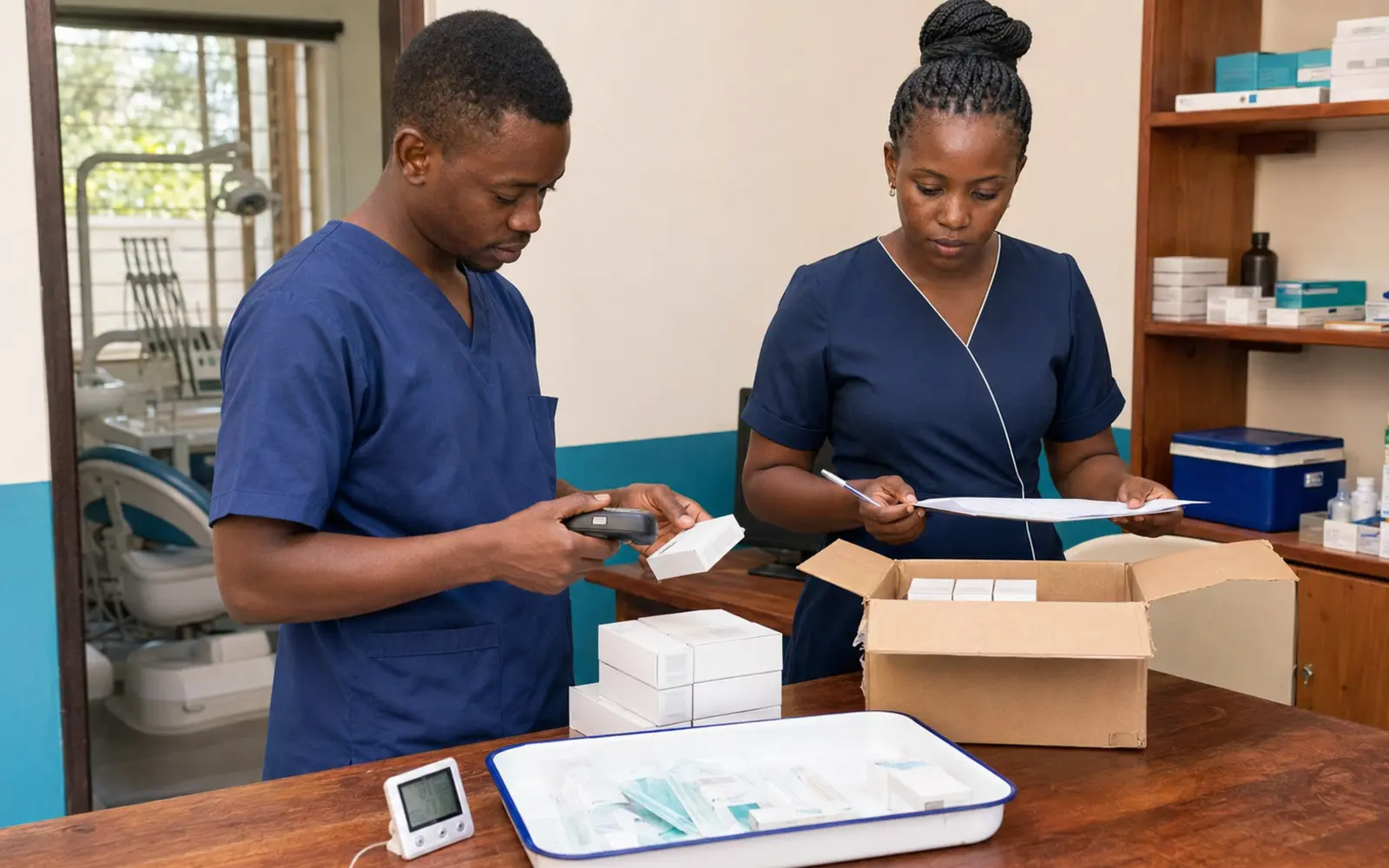
Quick answer: Build dental procurement around a controlled approved-product list, defined reorder points, first-expire-first-out rotation, supplier due diligence and compatibility checks before each purchase.
Table of Contents
Why Dental Procurement Fails
Common causes include:
- No record of actual consumption.
- Emergency ordering.
- Long or unpredictable import lead times.
- Too many brands performing the same function.
- Failure to track expiry and lot numbers.
- Unclear clinical specifications.
- Unverified online suppliers.
- Incompatible equipment and accessories.
Create an Approved Product List
For every clinical category, define approved options and acceptable substitutes. Record:
- Product and manufacturer.
- Clinical indication.
- Pack size.
- Storage requirements.
- Compatible equipment or materials.
- Regulatory and supplier documents.
- Minimum and maximum stock.
Standardization improves training and reduces duplicate inventory.
Classify Inventory by Criticality
Critical stock stops treatment when unavailable, such as anesthetic, sterilization supplies or a required implant component.
Routine stock is used frequently but may have substitutes.
Special-order stock is purchased for a specific patient or procedure.
Safety stock should be highest for critical, fast-moving and long-lead-time items.
Calculate Reorder Points
A simple reorder point is:
Average use during lead time + Safety stock
If a clinic uses ten units per week and delivery takes four weeks, the clinic needs at least forty units during lead time, plus a buffer for delay or demand variation.
Prevent Expiry Waste
Use first-expire-first-out rotation. Record expiry during receiving and place shorter-dated stock at the front. Review slow-moving items monthly.
A discounted large order is not economical when the product expires before use.
Verify Suppliers
Check:
- Legal company identity.
- Authorized contact information.
- Traceable product origin.
- Manufacturer or distributor relationship.
- Invoices and lot documentation.
- Warranty and return terms.
- Storage and transport conditions.
- References and complaint process.
Reduce Counterfeit Risk
Purchase through traceable channels. Inspect seals, printing, lot numbers, language, instructions and condition. Compare suspicious products with official manufacturer information and isolate them until verified.
Do not use a product merely because the packaging looks familiar.
Compatibility Checks
Before ordering, confirm compatibility for:
- Implant connections and prosthetic parts.
- Files and endodontic motors.
- Scanner software and laboratories.
- Adhesives and dual-cure cements.
- Printing resin and printer/curing units.
- Zirconia and sintering programs.
- Autoclave packaging and cycles.
Receiving and Traceability
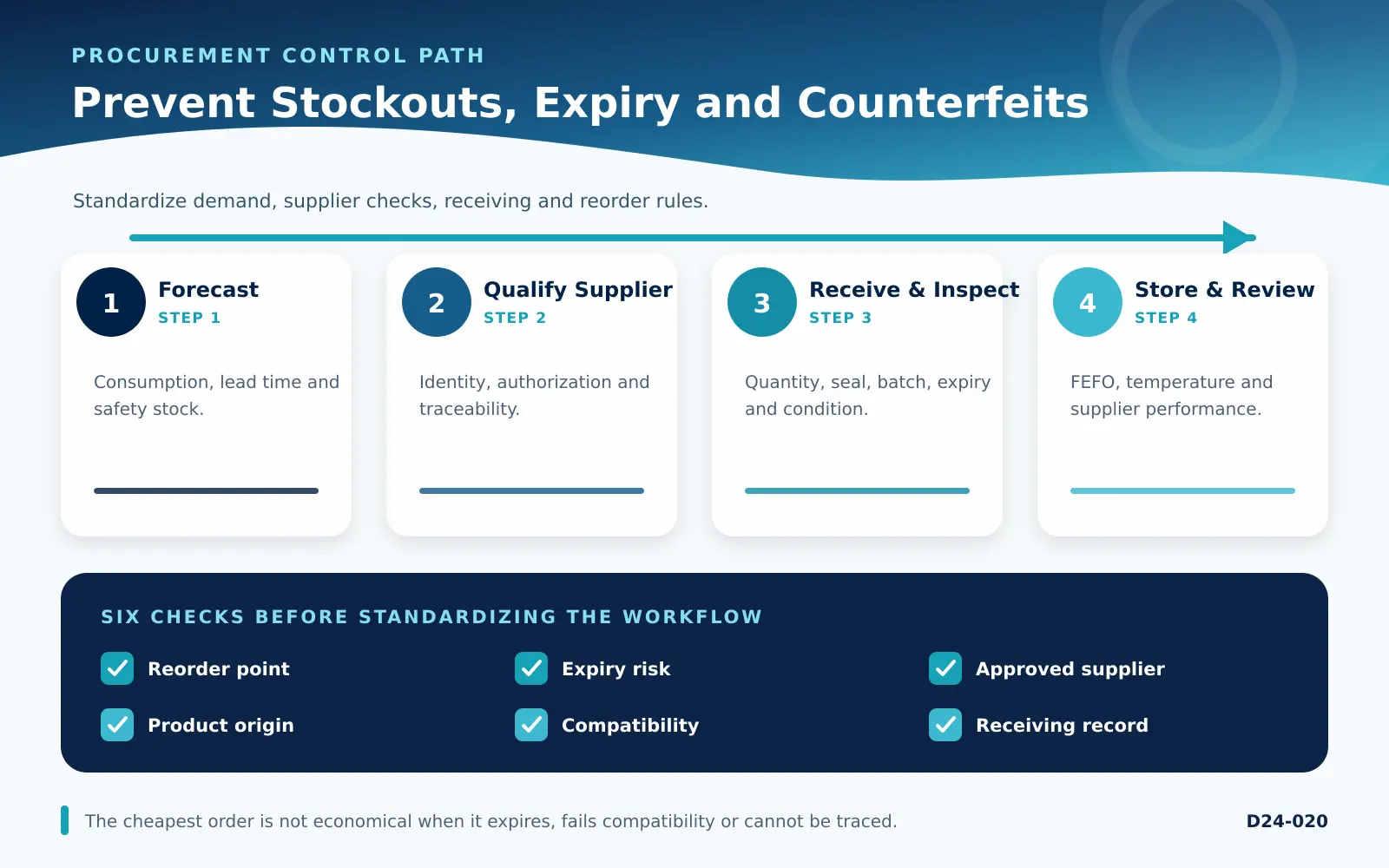
At receipt, check quantity, damage, expiry, batch, temperature conditions and documentation. Record where implantable or critical materials are used.
A receiving checklist prevents unsuitable products from entering clinical stock.
Storage
Monitor room and refrigerator temperature where required. Protect materials from direct sunlight, excessive heat and humidity. Do not assume air-conditioned office conditions are adequate in storage rooms that are closed overnight.
Supplier Scorecard
Evaluate suppliers quarterly using:
- On-time delivery.
- Order accuracy.
- Product condition.
- Documentation.
- Technical response.
- Return handling.
- Price stability.
- Availability of critical stock.
Procurement KPIs
- Stockout rate.
- Expired-stock value.
- Emergency-order count.
- Inventory value.
- Average lead time.
- Consumption variance.
- Supplier rejection rate.
- Percentage of approved products.
Denta24 as a Purchasing Platform
Denta24 operates an e-commerce and professional supply model for dental products. Clinics can explore the Denta24 Shop and request product specifications, compatibility details and commercial documentation before ordering.
African Market Considerations
Import time, customs, currency movement and fragmented distribution require better forecasting. Maintain more safety stock for critical items with long lead times, but avoid overstocking products with short expiry or changing technology.
Dental Clinic Procurement In Africa: Practical Checks for African Clinics
For African clinics, dental clinic procurement in Africa is not a product-only decision. It must also account for long import lead times, currency changes, minimum order quantities, storage conditions, local registration, batch traceability, counterfeit risk and emergency stock. A resilient dental clinic procurement in Africa plan should remain workable when supply, connectivity, service access or patient follow-up is less predictable than expected.
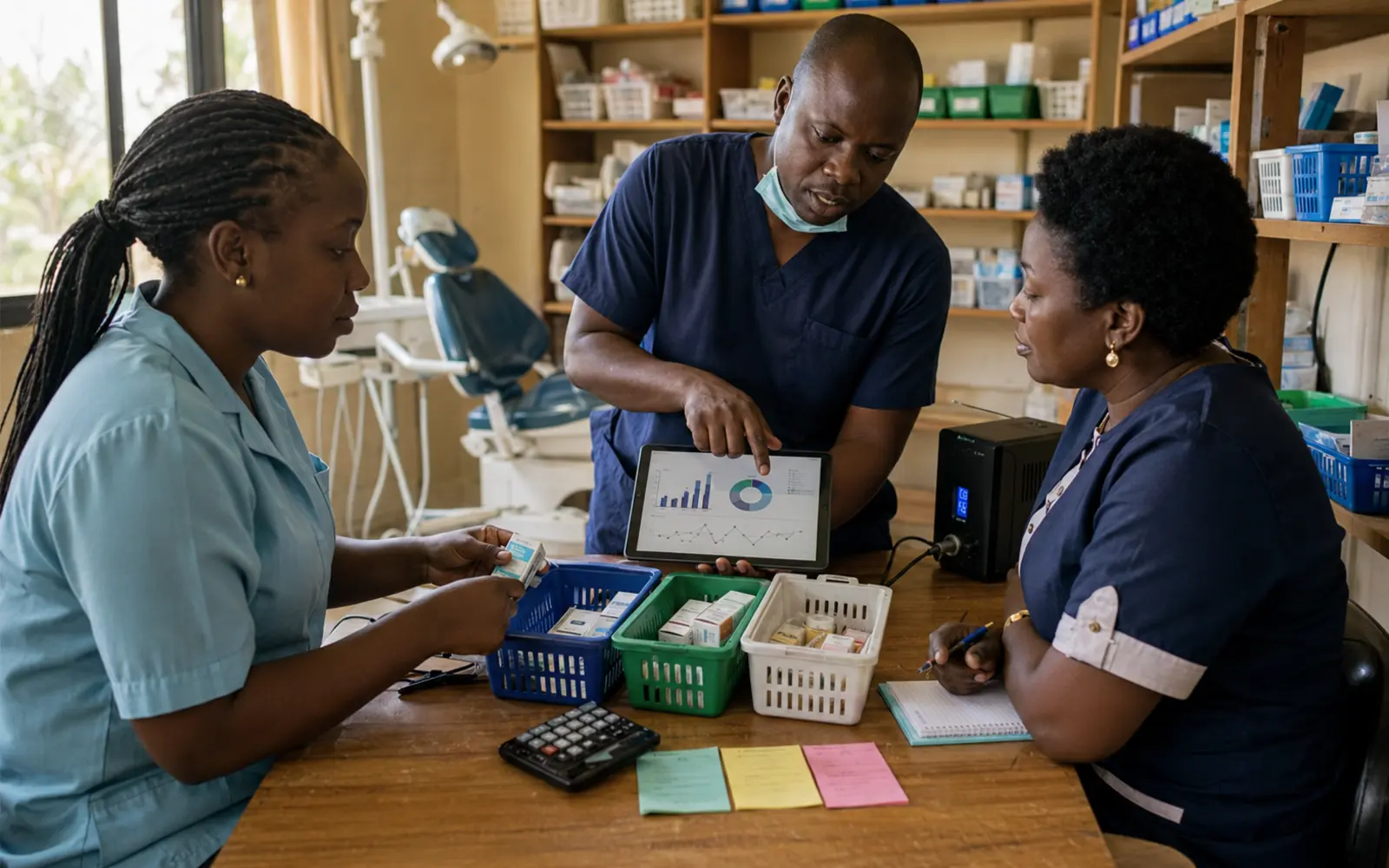
Before adoption, document who is responsible, which current instructions for use apply, how outcomes will be measured and what will trigger referral, retraining or a change in protocol. The goal of dental clinic procurement in Africa is to calculate reorder points from consumption and lead time, qualify suppliers, check every batch and separate critical stock from slow-moving inventory.
- Verify long import lead times before implementation or purchase.
- Verify currency changes before implementation or purchase.
- Verify minimum order quantities before implementation or purchase.
- Verify storage conditions before implementation or purchase.
- Verify local registration before implementation or purchase.
- Verify batch traceability before implementation or purchase.
- Verify counterfeit risk and emergency stock before implementation or purchase.
Use dental clinic procurement in Africa as an operational decision that is reviewed after real cases. Record complications, remakes, chair time, consumable use, stock-outs and team feedback, then refine the protocol from evidence rather than marketing claims.
Related Denta24 reading: scaling practice efficiency through e-commerce. This context helps place dental clinic procurement in Africa within a broader clinical and digital strategy.

Conclusion
Dental Clinic Procurement In Africa succeeds when the evidence, local workflow and review plan remain aligned. Good procurement protects clinical continuity, cash flow and patient safety. Standardize products, measure consumption, verify suppliers and make every order traceable.
Frequently Asked Questions
What causes stockouts?
For context, dental clinic procurement in Africa should always be adapted to the individual case and the current evidence. Unpredictable consumption, long lead times, poor reorder rules, supplier failure and unrecorded use are common causes.
What is a reorder point?
It is the stock level that triggers a new order based on consumption, lead time and safety stock.
Which items need safety stock?
Critical, fast-moving and long-lead-time items whose absence stops care.
How can expiry waste be reduced?
Use FEFO rotation, smaller orders, batch tracking and purchasing based on real consumption.
How should suppliers be verified?
Check legal identity, authorization, origin, traceability, documentation, references and terms.
How can counterfeit risk be reduced?
Buy through traceable channels, inspect packaging and verify suspicious items with the manufacturer.
Why is compatibility a procurement issue?
Incompatible implants, motors, adhesives, scanners or laboratory systems can create failure and waste.
How should temperature-sensitive products be managed?
Confirm transport and storage ranges, monitor conditions and reject unresolved temperature excursions.
What KPIs should be tracked?
Track stockouts, expiry, emergency orders, value, lead time, supplier performance and consumption variance.
How often should the approved list be reviewed?
Review at least annually and whenever protocols, regulations, suppliers or evidence change.
References and Further Reading
- Denta24 Shop
- WHO Africa oral-health workforce and disease burden
- Frontiers: oral-health systems and access in Africa
Professional disclaimer: Verify local regulatory requirements, storage conditions and product documentation before purchasing or using dental materials.